You’re in the final circle in Apex, the enemy is one shot, and you pull the trigger... only to be greeted by a lag spike and a "You Are the Champion" screen for the other team. Sound familiar? For South African gamers, high ping and unpredictable lag are constant frustrations. Now, with Wi-Fi 7 arriving, the big question is on everyone's mind: will this new tech finally solve our local server lag woes and deliver the low Wi-Fi 7 ping South Africa has been dreaming of? 🚀
Understanding Wi-Fi 7 and Local Latency
Before we dive into server ping, let's get one thing straight: Wi-Fi 7, or IEEE 802.11be, is a monumental leap for your home network. It's not just a speed bump; it's a complete overhaul designed for the high-demand, multi-device chaos of a modern home.
It uses three key technologies to achieve this:
- 320 MHz Channels: Think of these as doubling the lanes on a highway. More data can travel simultaneously, reducing congestion.
- Multi-Link Operation (MLO): This is the magic. Your device can connect to your router using multiple frequency bands (2.4GHz, 5GHz, and 6GHz) at the same time, creating a more stable and faster connection.
- 4K-QAM: A more efficient way of packing data into the signal, boosting raw speeds significantly.
For gamers, this translates to drastically lower local latency—the time it takes for data to travel from your PC to your router. This is a critical first step in improving your overall connection, forming the foundation of your entire wireless networking setup.
The Hard Truth: Wi-Fi 7 Ping and South African Servers
So, does this fix your 80ms ping to the local Cape Town servers? The short answer is... no.
Your total ping is a sum of many parts. Wi-Fi 7 can perfect the connection inside your house, but it can't change the physics of data travelling across the country. The biggest factors affecting your server ping are:
- Your ISP and Fibre Line: The quality and routing of your internet service provider are paramount.
- Physical Distance: The kilometres between you and the game server.
- Server Load: How many players are connected to that specific server.
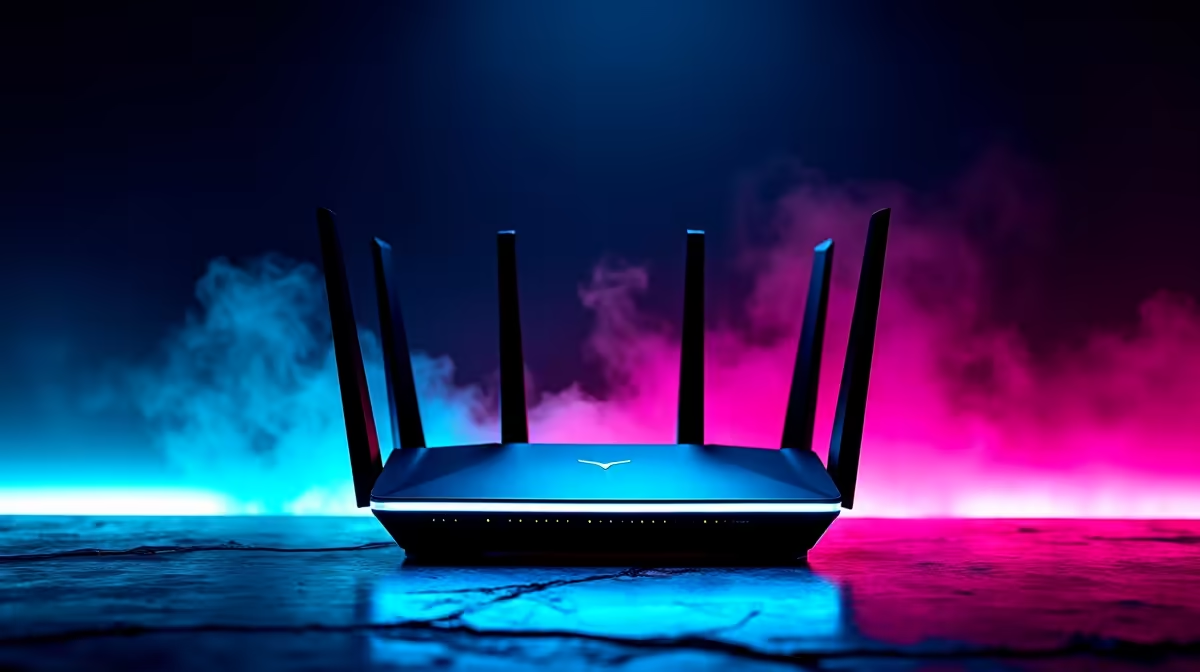
Upgrading to one of the latest fibre routers can ensure you're getting the most out of your line, but the ultimate Wi-Fi 7 ping in South Africa is still bound by your external connection. Think of it this way: Wi-Fi 7 builds a perfect, multi-lane highway from your PC to your front door, but it has no control over the traffic and potholes on the public roads to the server.
Building a Lag-Proof Setup: A Holistic Approach
While Wi-Fi 7 isn't a silver bullet for server ping, eliminating local lag is still a massive advantage. A stable, lightning-fast home network ensures that your own gear is never the bottleneck. Here’s how to build a truly optimised gaming network. ✨
Wired vs. Wireless: The Ongoing Battle
For pure, undisputed stability, a direct cabled connection is still king. A solid wired networking setup using high-quality ethernet cables guarantees zero interference. However, Wi-Fi 7 is the first wireless standard that comes incredibly close to mimicking that wired feel. For those who can't run cables through their house, a top-tier Wi-Fi 7 system with the right wireless routers is the next best thing.
Optimising Every Link in the Chain
A network is only as strong as its weakest link. To truly benefit from next-gen speeds, every component needs to be up to scratch.
- Your PC's Connection: Your PC or laptop needs a compatible Wi-Fi 7 card. Upgrading your motherboard or using dedicated network adapters is essential to unlock these new speeds.
- Coverage is Key: In a larger South African home, a single router might not cut it. Use wireless range extenders to eliminate dead spots and ensure a strong signal in your gaming room.
- Managing Multiple Devices: If you have a complex setup with a console, PC, and smart TV, dedicated switches can help manage traffic efficiently for your wired devices.
- Stable Power, Stable Play: Don't forget the heart of your PC. Inconsistent power can cause bizarre issues, including network dropouts. A reliable Corsair power supply ensures every component runs flawlessly. 🔧
Pro Tip: Prioritise Your Game Traffic ⚡
modern gaming routers have a Quality of Service (QoS) setting. Enable it and set your gaming PC or console as the highest priority device. This tells your router to handle gaming data packets first, reducing local network jitter and lag, especially when others are streaming Netflix. A rock-solid [Full Modular Corsair power supply](https: www.evetech.co.za PC-Components corsair-power-supply-78?attributes-modular=Full+Modular) also ensures your network card gets clean, stable power, preventing unexpected dropouts during a crucial match.
Ultimately, while the dream of a sub-10ms Wi-Fi 7 ping in South Africa to local servers isn't realistic, the technology is still a massive win. By eliminating lag, packet loss, and instability within your own home, you're giving yourself the most responsive connection possible. You'll react faster, your inputs will be instant, and your network will never be the reason you lost that 1v1.
Ready to Banish Local Lag for Good? A faster, more reliable home network is the foundation of competitive gaming. From next-gen routers to the adapters you need to get connected, we've got the gear to give you the edge. Explore our range of wireless networking hardware and build the ultimate lag-free setup today.