Quick Answer
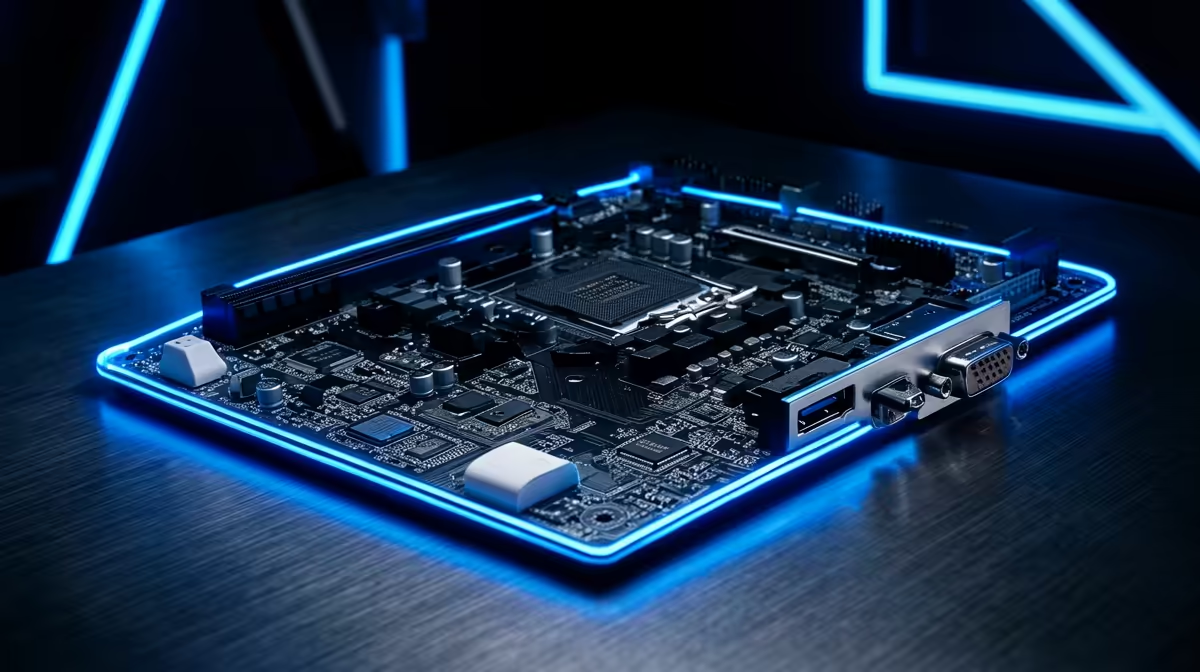
For Premiere Pro editing, a motherboard matters mainly for connectivity and stability, not raw speed: pick a B650 (AMD) or B860 (Intel) board with two M.2 slots and good rear USB, around R2,500-R4,500 at Evetech. You rarely need a premium X670 or Z890 board just for editing.
When the motherboard matters for editing
Editing benefits from fast storage and connectivity more than from a high-end chipset. A board with at least two M.2 NVMe slots lets you separate your OS drive from a fast scratch and media drive, which speeds 4K timeline work. Plenty of rear USB and a USB-C port help with card readers and external SSDs. Stable power delivery matters if you run a higher-core CPU for exports.
When you can skip the premium board
A flagship X670E or Z890 board adds overclocking headroom and extra PCIe lanes that editing rarely uses. For a pure editing rig, a solid B650 or B860 board does everything; put the saved money into 32GB DDR5-6000 (around R1,400-R1,900) and a fast NVMe scratch disk, which cut export times.
SA buyer notes
Buy locally for warranty and confirm the board's BIOS supports your exact CPU. Two M.2 slots and good USB are the features that actually help an editor day to day.
FAQ
Does the motherboard speed up Premiere exports?
Barely. Export speed comes from the CPU, GPU, RAM, and storage. The board matters for fast M.2 storage and connectivity, not raw render speed.
What motherboard for a Premiere editing PC?
A B650 (AMD) or B860 (Intel) board with two M.2 slots and good rear USB, around R2,500-R4,500. A premium chipset is rarely needed for editing.
How many M.2 slots do I need for editing?
At least two, so you can separate the OS drive from a fast scratch and media drive, which noticeably smooths 4K timeline work.
Premiere build, prioritise a board with two M.2 slots so you can split OS and scratch storage; put the chipset savings into 32GB DDR5-6000 and a fast NVMe drive instead.