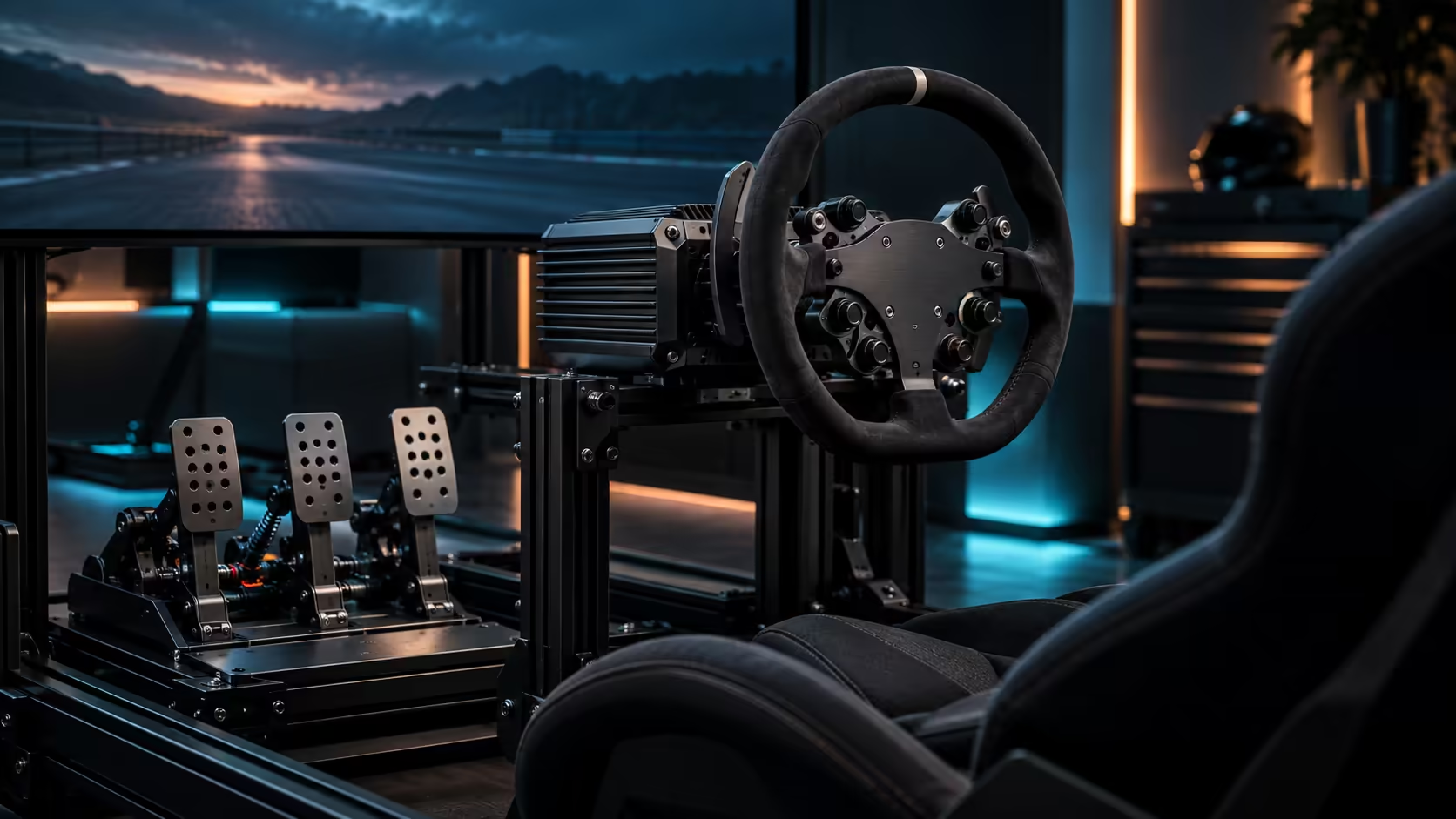
Control in competitive sim racing is not about how hard the wheel fights you back, it is about how early it tells you something is about to go wrong. A 9Nm wheel base improves control by delivering that warning with more force and less delay, not by making the wheel physically harder to turn.
Quick Answer
Yes, but through information rather than resistance. A 9Nm base reports a front tyre losing grip clearly enough to act on before the slide becomes a spin, and the Alpha EVO's freedom from cogging inside the R14,999 bundle keeps that message clean even at the small steering angles where competitive drivers make their finest corrections.
📡 Why more torque means more warning, not more difficulty
Grip loss at the front tyres shows up in force feedback as a sudden lightening of resistance, the wheel effectively going quiet right as the front end starts to slide. A base with more available torque can represent that drop-off with a bigger, clearer signal than a low-torque base straining near its own ceiling, which makes the moment easier to catch and correct before it becomes a spin rather than a save.
This is separate from overall strength settings, which stay under your control regardless of the base's ceiling. A 9Nm base run at a moderate output still has more headroom in reserve to represent a sudden event clearly than a lower-torque base run at its maximum, because the lower-torque base has nowhere left to go when the moment actually needs it.
🧲 Why zero-cogging matters more at competitive-level small inputs
Competitive drivers make their most important corrections in tiny increments, 1 or 2 degrees of steering right around centre, exactly where magnetic cogging in an ordinary motor is most noticeable and most likely to bury genuine tyre information under motor texture. A zero-cogging design removes that interference at the source, which means the small corrections that separate a clean lap from a messy one are being made against a clean signal rather than a slightly muddied one.
That clarity compounds over a race distance. A driver reacting a fraction of a second faster to a genuine loss of grip, corner after corner, gains real time over a full session even if the advantage in any single corner looks small.
🏁 What torque alone cannot do
None of this replaces practice, car setup, or racecraft, and a 9Nm base does not make a slower driver faster on its own. What it removes is one specific source of ambiguity, force feedback that either lacks the strength to communicate clearly or muddies the signal with unwanted motor texture, leaving the driver's own skill as the remaining variable rather than the hardware. Weigh torque figures and drive type against price using the sim racing listings, cross-referenced with racing simulation, then turn to simulation accessories for the mounting hardware that lets any base actually deliver what its torque figure promises.
Frequently Asked Questions
Does more torque make a wheel harder to drive?
Not if the output setting is adjusted sensibly. Torque is a ceiling, not a fixed strength, so a 9Nm base can be run at a comfortable level while still having headroom in reserve for sharp events.
Does zero-cogging design actually matter for competitive racing?
Yes, specifically for small corrections near centre, which is where competitive drivers spend much of their attention. Cogging interference is most noticeable exactly there.
Can a better wheel base make up for a lack of practice?
No. It removes ambiguity from the feedback signal, which helps a skilled driver react faster, but it does not replace racecraft, setup knowledge, or seat time.
Ready to race on a clearer signal?
Compare torque and drive type on the Racing Simulation shelf before your next competitive session.