Let's address the elephant in the room. You probably searched for how to use AutoCAD for video editing... but AutoCAD is built for precision drafting, not cutting cinematic montages. However, if you want to turn stunning 3D architectural renders into slick video presentations, you are in the exact right place. Let's look at how South African creators bridge the gap between CAD and video.
The Reality of How to Use AutoCAD for Video Editing 🏗️
AutoCAD is brilliant for precision design. It renders incredible 3D models and detailed walkthroughs. But it lacks timelines, audio tracks, and snappy transitions. You simply cannot natively edit video inside the software.
To get your designs screen-ready, you must render your AutoCAD animations as video files first. Once exported as an AVI or MP4, you can drop them into dedicated editing software. If your current rig stutters during these heavy renders, it might be time to check out the best gaming PC deals. A modern system handles both complex CAD rendering and heavy video processing with absolute ease.
Exporting Your AutoCAD Animations
Before you can edit anything, you need raw footage. AutoCAD allows you to create complex motion path animations. You can set up a virtual camera to fly through your 3D building or mechanical part.
When exporting, always choose a high resolution and steady frame rate. This ensures your final video looks professional to clients. Keep in mind that rendering 4K walkthroughs requires serious hardware muscle. If you prefer a ready-to-go solution without the hassle of building, browsing pre-built PC deals is a smart move for creators on a tight deadline.
Rendering Pro Tip ⚡
When exporting animations from AutoCAD, render in uncompressed AVI if you have the storage space. This gives you the highest quality file to bring into your video editing software before final compression.
Choosing the Right Hardware for the Job 💻
Moving from CAD to video editing demands a lot from your system. AutoCAD relies heavily on single-core CPU performance for drafting. Video editing, however, loves multi-core processors. Finding that sweet spot is crucial for a hybrid workflow.
Furthermore, video editing software relies heavily on hardware acceleration. A powerful GPU will slash your render times and keep your timeline playback smooth. If you are upgrading a custom workstation, you should definitely buy graphics cards that feature ample VRAM.
For architects and designers who are always moving between construction sites and the office, mobility is key. High-performance notebooks for sale offer desktop-level power right in your backpack.
Bringing It All Together in Post-Production 🎬
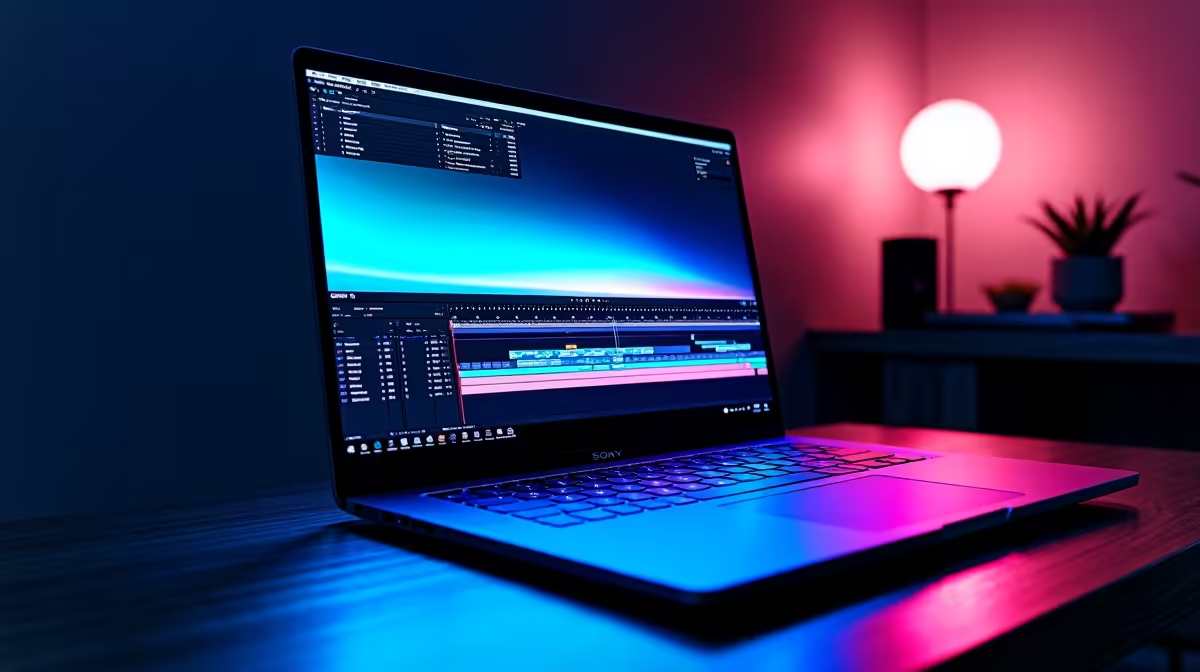
Once your AutoCAD renders are complete, import them into software like DaVinci Resolve or Premiere Pro. Here, the real magic happens. You can add background music, professional voiceovers, and sleek text overlays. Adding motion blur to your fly-throughs creates a much more cinematic feel.
You can also colour correct the footage to make those architectural textures pop. Building a workflow that handles heavy 3D drafting and high-res video editing doesn't have to drain your budget. Keep an eye on our weekly specials to upgrade your setup while stretching your hard-earned ZAR further.
Ready to Find Your Perfect Match? The Mac vs Windows debate is complex, but for maximum power, choice, and value in South Africa, Windows is hard to beat. Explore our massive range of laptop specials and find the perfect machine to conquer your world.