The Challenge: When Old Tech Hits a Wall
Meet Jono, a Joburg-based content creator and competitive gamer. His trusty laptop, powered by a 4-core, 8-thread processor from a few generations back, was once a beast. But now? It’s a bottleneck. Streaming Warzone while running Discord and OBS caused crippling frame drops, and rendering his 4K YouTube videos felt like it took a lifetime. The stuttering wasn't just annoying; it was costing him followers and frustrating his workflow. His mission was clear: find a modern processor that could handle intense multitasking without breaking a sweat.
The Upgrade Path: Choosing a Modern Powerhouse 🔧
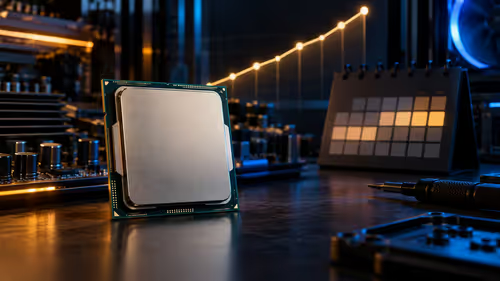
Sticking with an old architecture is like trying to win the Kyalami 9 Hour in a family sedan. It just won’t cut it. Jono’s solution wasn’t just more cores; it was a leap to a completely new CPU architecture, bringing with it smarter power management, higher instructions per clock (IPC), and faster connectivity.
Step 1: Assessing the Landscape
First, Jono needed to see what was out there. He wasn’t looking for the most expensive rig, but the best value for his hard-earned ZAR. Browsing the latest laptop specials for sale in South Africa gave him a solid baseline of what new tech costs today.
Step 2: Picking a Team
The modern CPU battlefield is dominated by two titans. On one side, you have powerful and efficient options with the latest AMD laptops on special, known for their excellent multi-core performance. On the other, the high-frequency horsepower found in many current Intel laptops on special makes them a top choice for pure gaming FPS. Jono weighed his primary use case—a mix of high-FPS gaming and heavy content creation—and realised either platform’s new generation would be a massive step up.
Pro Tweak Jono Used
He checked for modern video encoders. Newer CPUs often have dedicated hardware for AV1 encoding decoding, which drastically cuts down render times in DaVinci Resolve and improves stream quality on YouTube… a huge win for creators.
The Results: A Night-and-Day Difference ✨
After settling on a new-generation 8-core, 16-thread laptop, the performance uplift was immediate and massive. The new architecture wasn't just an incremental improvement; it was a total transformation of his workflow and gaming experience.
| Metric (Before vs. After) | Old 4-Core Laptop | New 8-Core Laptop | Performance Gain |
|---|---|---|---|
| Avg. FPS in Warzone | 65 FPS (stuttery) | 140 FPS (smooth) | +115% |
| 10-Min 4K Video Render | 48 Minutes | 11 Minutes | -77% Time |
| Multitasking Lag | Frequent Freezes | Zero Lag | Eliminated |
“I went from fighting my PC to just… working. The new laptop doesn’t even break a sweat. My stream is smoother, my renders are done in a flash, and I can finally focus on creating content instead of troubleshooting lag. It’s been an absolute game-changer.” – Jono, Content Creator
Ready for a Real Performance Boost? Stop letting an old processor dictate your potential. Explore our curated selection of the best gaming laptop deals to find the perfect upgrade for your needs.