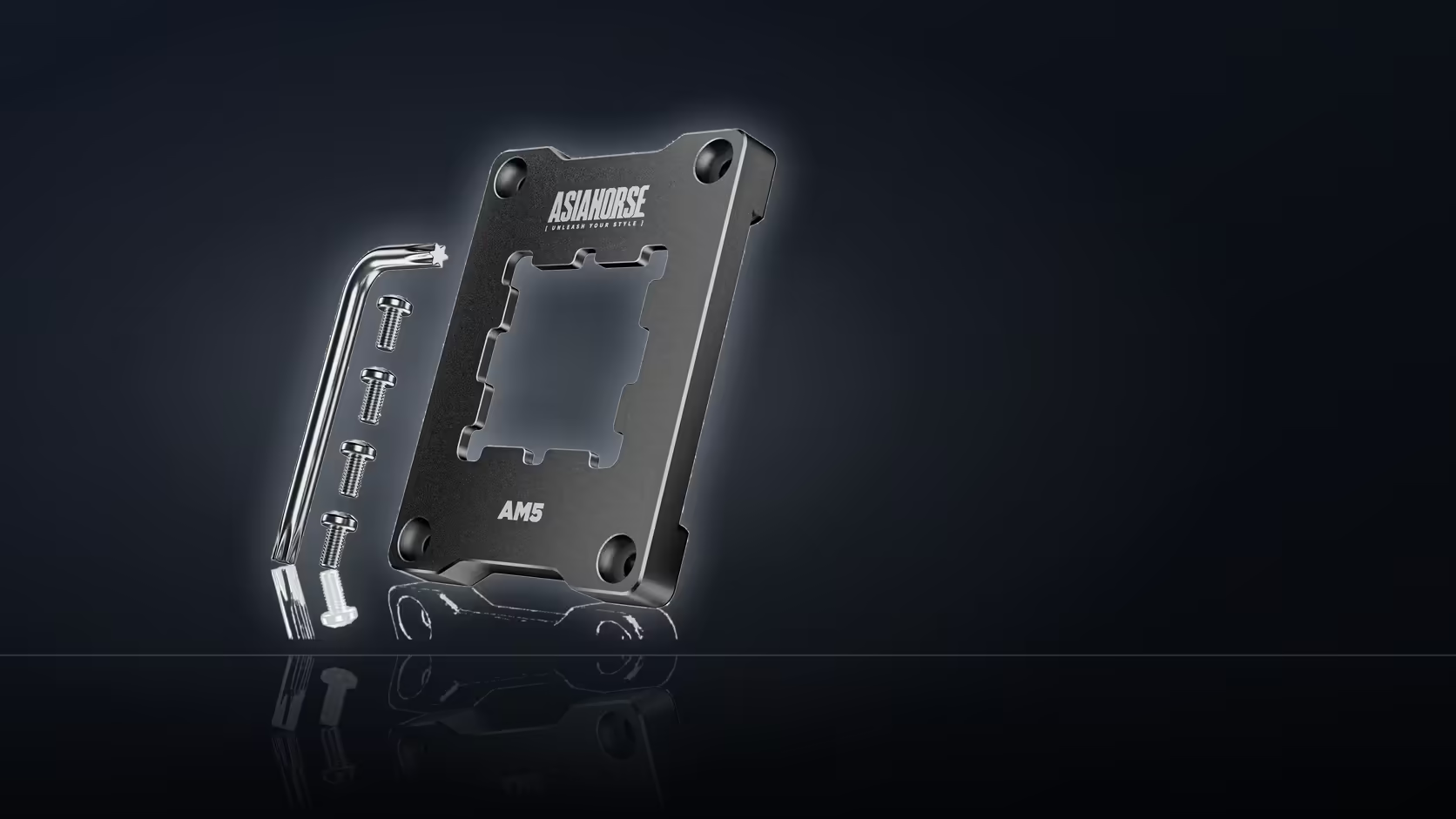
A CPU contact frame does not join the parts list as a new cooling component. It takes the place of something that is already on the board: the stock AM5 retention arms sitting either side of the socket. That distinction matters more than it sounds, because a shopper skimming a listing can easily assume they are adding a piece of cooling hardware when what they are actually buying is a swap for a bracket.
Quick Answer
The AsiaHorse Pulsar, at R299, is a machined aluminium bracket that replaces the AM5 board's stock retention arms around the socket. It carries no fan, no fins, and no thermal function of its own - its job is purely how the cooler gets clamped down once it's fitted. The cooler itself, and any thermal paste the job needs, remain entirely separate purchases.
🔩 What actually comes off the board
Every AM5 board ships with a pair of retention arms flanking the socket. They are the mechanical anchor point a tower cooler or AIO bracket hooks into, and on their own they do nothing to move heat. Fitting this frame means those two arms come off and the frame takes their spot, screwed down with the four screws and hex wrench that ship in the box.
That swap is the entire scope of the product. Nothing about the CPU, the motherboard's power delivery, or the cooler's own fan curve changes. What changes is the surface the cooler clamps against, and by extension how evenly pressure lands across the processor lid when the cooler goes back on.
🧊 Why "no thermal function" is the honest description
It would be easy to market a part like this as a cooling upgrade, but that overstates what an aluminium bracket can do. The listing itself is specific: the frame spreads mounting pressure for more consistent cooler contact, which is a mechanical design claim rather than a measured temperature promise. Anyone hoping for a direct drop in degrees from the frame alone is asking it to do a job it was never built for.
The cooler chosen for the build is still what determines how much heat actually leaves the chip. A budget air cooler paired with this frame is still a budget air cooler; a capable AIO paired with it is still a capable AIO. What the frame changes is how well either one sits against the processor, not how much heat either one can carry away.
Anyone doing this swap should also plan for thermal solutions as a separate line item, since removing the cooler to fit the frame means the old paste layer is disturbed and needs replacing before reassembly.
🛠️ Reversibility and what stays the same
Because the frame is a direct swap for parts that are already there, the change is reversible. The original retention arms unbolt with the same two screws that go back in if a board is ever sold on or moved to a different cooling setup. Nothing about the socket, the pin layout, or the board's compatibility with AM5 coolers changes because the retention hardware changed.
That also means anyone shopping the wider CPU coolers range doesn't need to factor the frame into cooler selection first. The frame sits underneath whatever cooler is chosen; it does not dictate which cooler will fit.
Frequently Asked Questions
What is being replaced?
The stock AM5 retention arms, which are the standard brackets sitting either side of the socket on the board.
Does it cool anything itself?
No. It has no fins, no fan and no thermal function of its own beyond how it clamps the cooler down.
What is its purpose then?
Spreading mounting pressure across the processor, which the description links to more consistent cooler contact.
Is the cooler still needed?
Entirely. The frame changes how the cooler is held rather than replacing any part of the cooling itself.
What is it made from?
All-aluminium with an anodised finish, which is a machined mechanical part rather than a thermal one.
Can the original arms go back?
They can, which is why storing them together during the job is worth doing.
Ready to see what actually cools your build?
Browse Evetech's CPU cooler range and pick the tower or AIO that does the thermal work this frame is built to support.