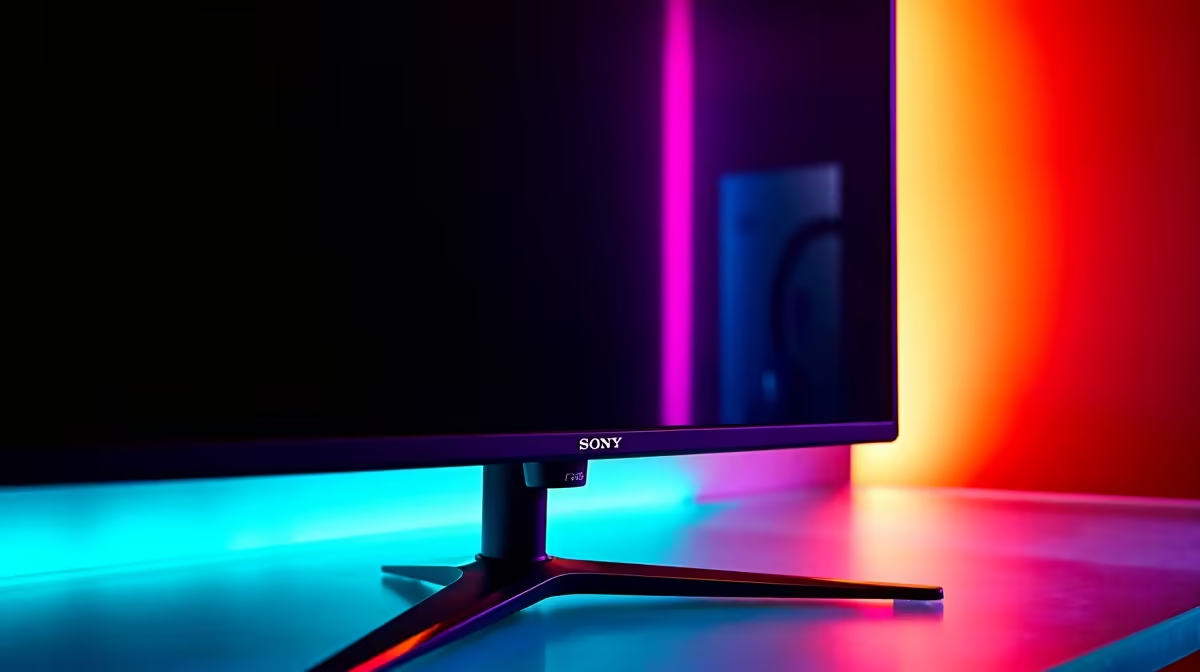
Staring at a wall of monitor specs can feel like decoding a secret language. IPS, TN, VA... what does it all mean for your gaming rig or workstation? Choosing the right panel is one of the most important decisions for your setup. For anyone looking at IPS monitors in South Africa, understanding the difference between a TN or VA panel isn't just tech talk; it's the key to unlocking the perfect visual experience for your needs and budget.
The Great Panel Debate: IPS vs. TN vs. VA
At the heart of every monitor is its panel technology. This determines everything from colour vibrancy to response speed. Let's break down the big three so you can find your perfect match.
Twisted Nematic (TN): Built for Speed ⚡
TN panels are the original flat-screen technology and are famous for one thing: speed. They boast the fastest response times and highest refresh rates on the market, making them a favourite for competitive gamers.
- Pros: Extremely fast, minimal motion blur, and generally more affordable. You can often find some great deals on monitors with TN panels.
- Cons: Weaker colour reproduction and limited viewing angles. If you look at the screen from the side, you'll notice colours shifting dramatically.
- Best For: Hardcore competitive gamers playing titles like Valorant or CS:GO, where every millisecond counts.
Vertical Alignment (VA): The Contrast King
VA panels are the middle ground, offering a fantastic blend of features. Their standout quality is their superior static contrast ratio, which is typically 3-5 times better than IPS or TN panels. This means deep, inky blacks and bright whites.
- Pros: Excellent contrast for rich, immersive images. Colours are far more vibrant than on a TN panel.
- Cons: Response times can be slower, sometimes leading to "ghosting" or "smearing" in very fast-paced scenes.
- Best For: Cinematic single-player games, watching movies, and general use. They are a popular choice for immersive curved monitors that pull you into the action.
In-Plane Switching (IPS): The Colour Champion ���
For those who demand the absolute best colour accuracy, IPS is the undisputed winner. An IPS monitor delivers stunning, consistent colours and the widest viewing angles available. What you see on screen is vibrant and true-to-life, no matter where you're sitting.
- Pros: Best-in-class colour reproduction and viewing angles. Modern IPS panels have also become incredibly fast, closing the gap on TNs.
- Cons: Lower contrast compared to VA panels (blacks can sometimes look greyish, known as "IPS glow"), and they often come with a higher price tag.
- Best For: Content creators, graphic designers, photographers, and gamers who prioritise visual fidelity over raw speed. You can browse our full range of PC monitors to see the variety available.
How to Choose the Right Monitor in South Africa
So, how do you decide between a TN or VA panel, or an IPS? The best choice depends entirely on you.
A competitive gamer in Johannesburg might prioritise a 240Hz TN panel, while a graphic designer in Cape Town will get more value from a colour-accurate IPS monitor. If you're looking for a do-it-all screen for work and play, a VA panel often hits that sweet spot. And for those who need pixel-perfect clarity for creative work, exploring stunning 4K monitors with IPS technology is a must. Don't forget niche options either, like the ultra-handy portable monitors for professionals on the move.
Ergonomics Pro Tip ✨
Your monitor's panel is crucial, but so is its position! Most stock stands are limited. Investing in a VESA-compatible monitor arm lets you adjust the height, tilt, and distance perfectly. This reduces neck strain and helps you find that perfect viewing angle. Check out our range of monitor accessories to complete your setup.
Beyond the Panel: What Else Matters?
While the panel type is a huge factor, don't forget these key specs:
- Resolution: The number of pixels on the screen (e.g., 1080p, 1440p, 4K). Higher resolution means a sharper image.
- Refresh Rate (Hz): How many times per second the screen updates. 144Hz or higher is ideal for smooth gaming.
- Response Time (ms): How quickly pixels can change colour. Lower is better to reduce motion blur.
- Adaptive Sync: G-Sync (NVIDIA) or FreeSync (AMD) technology that prevents screen tearing for a smoother gameplay experience.
Ultimately, finding the best monitor is about balancing these features with your primary use case. Whether you need a lightning-fast TN for esports, a contrast-rich VA for movies, or a beautiful IPS for creative work, you can explore our complete collection of gaming monitors to find the one that's right for you.
Ready to Upgrade Your View?
The panel debate is complex, but the perfect monitor for your needs and budget is waiting. Explore our massive range of monitor deals and find the perfect screen to conquer your world.