Nothing kills a clutch Warzone moment or a binge-watch of Shōgun faster than that dreaded buffering icon. 😫 You've got fast fibre, but two rooms away your signal vanishes. These WiFi dead zones in South Africa are a common frustration, especially in homes with those classic thick brick walls. But don't throw your router out the window just yet. With a few smart tweaks and the right gear, you can get flawless coverage in every corner.
Why Your WiFi Signal is Weaker Than a Stage 4 Schedule
Before you can fix WiFi dead zones, you need to understand the enemy. Your router's signal is a radio wave, and like any wave, it gets weaker over distance and can be blocked by obstacles.
Common culprits in South African homes include:
- Thick Walls: Brick, concrete, and steel beams are WiFi killers.
- Distance: The further you are from the router, the weaker the signal. Simple as that.
- Interference: Microwaves, cordless phones, and even your neighbour's network can crowd the airwaves and disrupt your connection.
- Outdated Hardware: A router from 2015 just can't keep up with today's demands for streaming, gaming, and a dozen connected devices.
The Quick Fixes: Optimise Before You Spend a Rand 🔧
Sometimes, fixing weak WiFi signal in South Africa doesn't require new hardware. A few strategic adjustments can make a massive difference to your network's performance.
1. Find the Sweet Spot: Router Placement is Key
Tucking your router away in a cupboard or at the far end of the house is the #1 cause of poor coverage. Your router needs to be in a central location, as high up as possible, and free from obstructions. Think of it like a lightbulb—you want its light to reach everywhere.
Pro Tip: The Elevation Advantage ⚡
"Place your router on a high shelf or mount it on a wall, away from metal objects and thick concrete. Even lifting it 30cm off the floor can significantly improve its range and help you conquer those stubborn WiFi dead spots. Also, point the antennas vertically for the best horizontal coverage on a single floor."
2. Update Your Firmware
Router manufacturers regularly release firmware updates that improve performance, patch security holes, and can even boost signal strength. It’s a free, five-minute task that most people forget. Log in to your router’s admin panel and check for an update.
Level Up Your Hardware to Eliminate Dead Zones for Good 🚀
If the free fixes don't cut it, it's time for an upgrade. Investing in the right hardware is the most reliable way to solve the problem of WiFi dead zones in South Africa once and for all.
The Simple Boost: Wireless Range Extenders
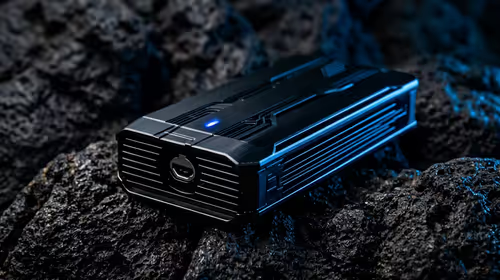
For smaller homes or fixing a single problem area (like a patio or home office), a range extender is a fantastic, budget-friendly solution. It picks up your existing WiFi signal and rebroadcasts it, extending its reach. Modern quality wireless range extenders are simple to set up and can instantly improve coverage.
The Core Upgrade: A Powerful New Router
If your current router is several years old, it's likely the bottleneck in your network. Upgrading to a modern unit with WiFi 6 technology offers faster speeds, better range, and the ability to handle dozens of devices simultaneously without breaking a sweat. For serious gamers and busy households, exploring some powerful new wireless routers is the ultimate fix.
The Specific Fix: Upgrading Your PC's Adapter
Is the WiFi strong everywhere except for your gaming PC tucked under a desk? The PC's own wireless adapter might be the weak link. Swapping it out for one of these high-gain wireless adapters, especially one with an external antenna, can dramatically improve its ability to grab a stable signal.
Putting It All Together for Flawless Coverage ✨
Fixing WiFi dead zones is a process of elimination. Start with placement, then consider your hardware. Whether it's a simple extender or a full network overhaul, a stable connection is no longer a luxury—it's essential. By identifying the cause of your weak signal, you can choose the right tool for the job from our complete wireless networking solutions and get back to lag-free living.
Ready to Banish Buffering Forever?
Stop letting dead zones dictate where you can work and play. A strong, reliable network is the backbone of any modern home. Explore our massive range of wireless networking gear and find the perfect solution to conquer your connection woes.