You’re staring at the download bar, watching it crawl. Your ping just spiked mid-clutch in Valorant. Sound familiar? In South Africa, a stable, fast connection is everything. WiFi 6E offered us a taste of lag-free paradise on its exclusive 6 GHz band. But now, WiFi 7 is on the horizon, promising mind-blowing speeds. The big question for 2026 is simple: when comparing WiFi 7 vs WiFi 6E, is the upgrade actually worth it for us here? 🚀
So, What Was WiFi 6E Again?
Before we look forward, let's quickly recap the current champ. WiFi 6E wasn't just a small step up; it was a game-changer because it introduced the 6 GHz frequency band. Think of the regular 2.4 GHz and 5 GHz bands as the N1 highway during rush hour… congested and slow. WiFi 6E opened up a brand new, empty multi-lane highway just for compatible devices.
This meant less interference from your neighbour's router, your smart fridge, and everything else, resulting in a more stable and faster connection. For anyone serious about their online experience, exploring the world of modern wireless networking has been a revelation.
Enter WiFi 7: The Next Generation of Speed
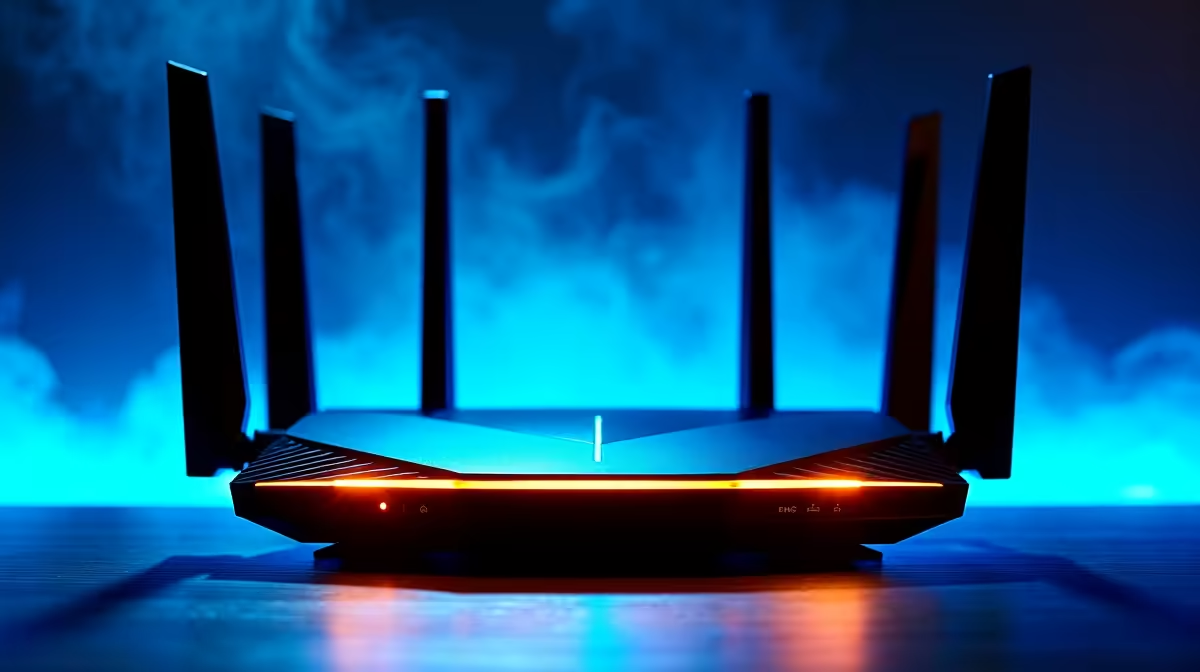
WiFi 7, technically known as 802.11be, takes the foundation of WiFi 6E and turbocharges it. It's not just about one new feature; it's a collection of powerful technologies working together. The difference in the WiFi 7 vs WiFi 6E debate comes down to a few key upgrades:
- Multi-Link Operation (MLO): This is the headline feature. Instead of just choosing the best band (2.4, 5, or 6 GHz), WiFi 7 can use multiple bands at the same time. It’s like sending your data down two highways simultaneously, massively increasing speed and reliability.
- Wider Channels: WiFi 7 doubles the channel width to 320 MHz. A wider channel is like a wider pipe—it lets more data flow through at once, which is perfect for 4K streaming and downloading massive game files. To take full advantage, you'll need one of the latest fibre routers and a top-tier internet plan.
- 4K-QAM: This allows for more data to be packed into each signal, boosting raw speed by about 20% over WiFi 6E's 1024-QAM.
These technologies combine to offer theoretical speeds up to 4.8x faster than WiFi 6E. But "theoretical" is the key word, especially in South Africa.
Router Placement Pro Tip ⚡
Your router's standard isn't everything; its location is critical. Avoid placing it in a cabinet or behind your TV. For the best signal, position it in a central, elevated location in your home, away from thick concrete walls and other electronics like microwaves. This simple trick can dramatically improve your current network's performance.
The Real-World Showdown for South African Gamers 🇿🇦
Okay, let's cut through the marketing hype. How does WiFi 7 vs WiFi 6E stack up for someone gaming in Joburg or streaming in Cape Town?
For pure, unadulterated performance, a wired connection is still king. Setting up a solid wired networking solution with a few network switches for your primary gaming PC and console is the ultimate way to kill latency. But for the rest of your home, wireless is essential.
WiFi 7's biggest advantage for gamers will be its incredibly low latency thanks to MLO. It can intelligently route data packets across the clearest band in real-time, which could mean a more stable ping, even in a busy household. If you're struggling with dead spots far from your router, you might find that current wireless range extenders solve your problem for a fraction of the cost of a full system upgrade.
The Reality Check: Is an Upgrade Worth It by 2026?
Here’s the thing: WiFi 7 is bleeding-edge technology. And in South Africa, that comes with a few realities we need to face.
Device Ecosystem and Cost
You can't just buy a new router. Your laptop, phone, and PC motherboard all need compatible network adapters to speak the WiFi 7 language. In 2024, these devices are rare and expensive. By 2026, they'll be more common, but the "early adopter tax" will still be significant. For now, the market for high-performance wireless routers is dominated by excellent WiFi 6 and 6E options that offer fantastic value.
Your Entire PC Build Matters
When you're building a future-proof PC to take advantage of next-gen speeds, every component matters. You wouldn't pair a top-tier graphics card with a weak power supply, right? A stable, high-quality Corsair power supply is the unsung hero of any high-performance rig. Opting for a full modular PSU also makes for a cleaner build with better airflow, ensuring all your high-tech components run cool and stable.
The Verdict for 2026
So, is the WiFi 7 upgrade worth it in South Africa by 2026?
For most people: No. A robust WiFi 6E setup will still be more than enough to handle the fastest fibre lines available to residential users. It provides that clean 6 GHz band and delivers incredible performance for gaming and streaming right now, at a much more sensible price.
For the bleeding-edge enthusiast: Maybe. If you're building a brand-new, no-compromise PC rig, have multiple users streaming 4K/8K content, and want to be prepared for the next decade of technology (like high-fidelity cloud gaming and AR/VR), then investing in WiFi 7 in 2026 could make sense as the ultimate future-proofing move. ✨
The choice comes down to your needs and budget. WiFi 6E is the smart, powerful choice for today and the near future. WiFi 7 is the powerhouse of tomorrow.
Ready to Banish Lag for Good?
Whether you're making the jump to WiFi 6E today or planning for the WiFi 7 revolution, having the right hardware is key. Explore our massive range of networking components and build the stable, high-speed connection your gaming rig deserves.