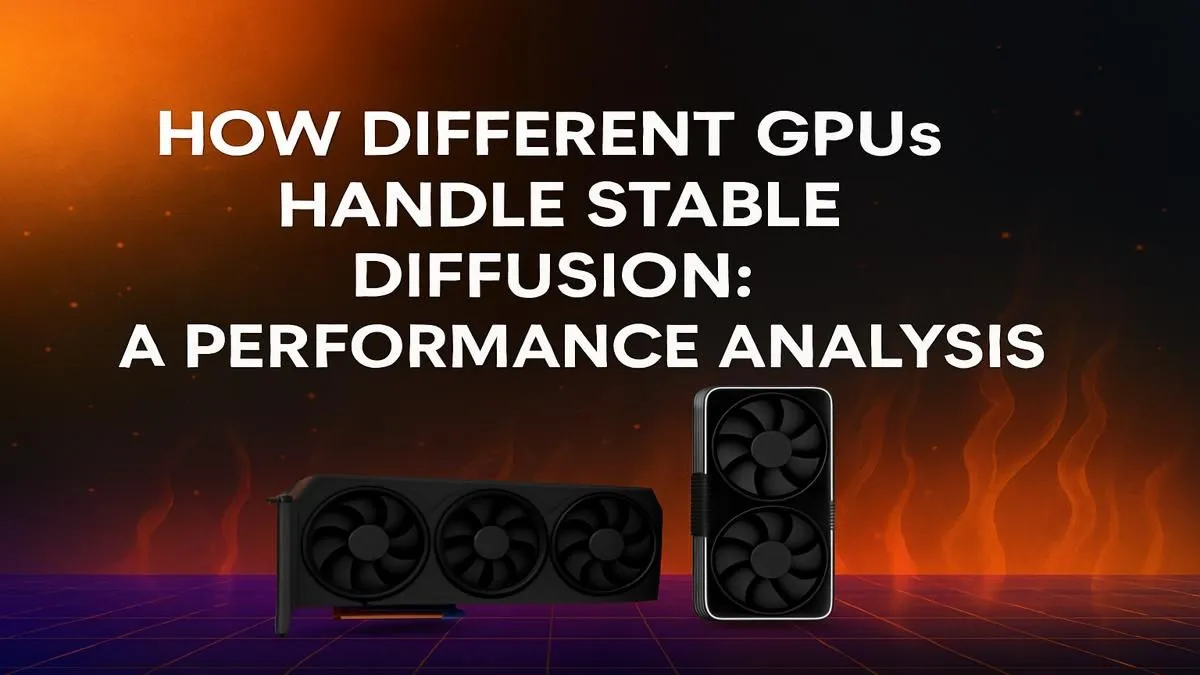
So, you’re diving into the incredible world of AI art with Stable Diffusion. It’s a wild ride, turning simple text prompts into breathtaking visuals right on your own PC. But that magic quickly stalls if your hardware can’t keep up, turning creative sprints into frustrating crawls. The secret to near-instant results isn’t magic… it’s your graphics card. Let's find the best GPU for Stable Diffusion for your setup in South Africa.
Why Your GPU is the Heart of Stable Diffusion
Before we look at specific models, let's quickly break down why your GPU is so critical for AI image generation. Unlike gaming, where many parts of your PC share the load, Stable Diffusion performance is almost entirely dependent on your graphics card.
There are two main ingredients for success:
- VRAM (Video RAM): Think of this as your GPU's dedicated workspace. The more VRAM you have, the larger and more complex the images you can generate without errors. 8GB is a functional minimum, but 12GB or more is where the real freedom begins.
- Processing Power (CUDA/Tensor Cores): This is the raw engine that performs the millions of calculations needed. NVIDIA’s CUDA ecosystem is currently the gold standard for AI tasks, offering widespread support and optimised performance that makes it the clear front-runner for running Stable Diffusion locally.
Finding the Best GPU for Stable Diffusion: Performance Tiers
Choosing a GPU isn't about buying the most expensive option; it's about matching the hardware to your creative ambitions and budget. Let's break it down into tiers. 🚀
The Budget-Friendly Starter: Excellent Value
For those just starting or on a tighter budget, the goal is maximum VRAM for your Rand. The NVIDIA GeForce RTX 3060 12GB remains a champion in this space. While it's not the fastest card, its generous 12GB of VRAM allows you to experiment with higher resolutions and complex models without constant out-of-memory errors. It's the perfect entry point to serious AI creation. You can check out a wide variety of NVIDIA GeForce cards to find a model that fits your price point.
The Sweet Spot for Enthusiasts: The Performance King 👑
This is where most South African creators and tech enthusiasts will find their perfect match. Cards in this tier offer a fantastic blend of speed and VRAM, drastically cutting down generation times. The NVIDIA GeForce RTX 4070 and its variants are prime contenders. With 12GB of fast GDDR6X memory and the latest architecture, you'll be generating high-quality 1024x1024 images in mere seconds. This tier represents the best GPU for Stable Diffusion performance without venturing into top-tier pricing. While there are some great AMD Radeon options for gaming, their AI software support is still maturing, making NVIDIA the safer and faster bet for now.
VRAM-Saving Pro Tip 💡
Running low on VRAM? In the popular AUTOMATIC1111 web UI, add --medvram or --lowvram to your command-line arguments. This trades a little bit of generation speed for significantly lower memory usage, allowing you to create larger images on cards with 8GB of VRAM. It’s a fantastic way to push your hardware further!
The Uncompromising Powerhouse: For Professionals & Power Users
When your workflow demands maximum speed, the ability to train your own models, or generate huge batches of images, you need to step up to the high end. The NVIDIA GeForce RTX 4090, with its colossal 24GB of VRAM, is the undisputed king. It doesn't just run Stable Diffusion; it absolutely flies. For commercial artists or researchers, looking into dedicated professional workstation GPUs could also be a viable path for certified driver support and stability.
Final Thoughts: VRAM is King
If you remember one thing, let it be this: for Stable Diffusion, VRAM is arguably more important than raw speed. An RTX 3060 with 12GB can often complete tasks that a faster RTX 4060 Ti with 8GB simply cannot.
When you're ready to buy, weigh your budget against your VRAM needs.
- Good: 8GB VRAM (will require optimisations)
- Better: 12GB VRAM (the sweet spot for flexibility)
- Best: 16GB+ VRAM (total freedom for high-res work and training)
Finding the perfect GPU performance for Stable Diffusion means you can spend less time waiting and more time creating. Take a look at the latest graphics cards available and find the engine that will power your imagination.
Ready to Unleash Your AI Creativity? 🎨 Choosing the right hardware is the first step to mastering AI art. The best GPU for Stable Diffusion is one that matches your ambition and budget. Stop waiting and start creating. Explore our massive range of graphics cards and find the perfect engine for your imagination today.