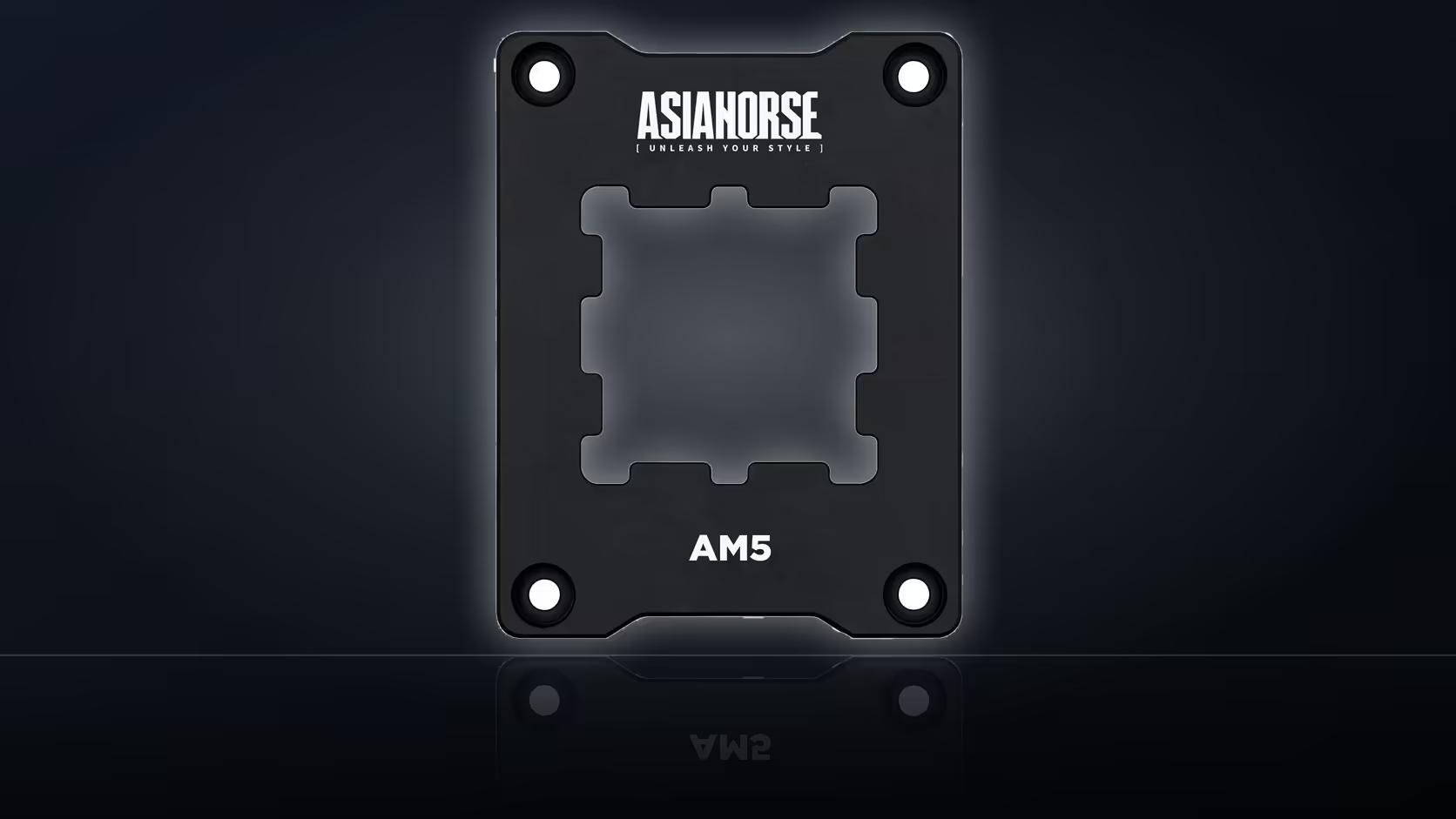
The moment the last screw comes out of a board's stock retention arms, a small decision gets made without much thought: where do those two little brackets go while the new AM5 frame goes in. Toss them in a drawer and they'll turn up eventually, or they won't - and the difference matters more than it seems at the time.
Quick Answer
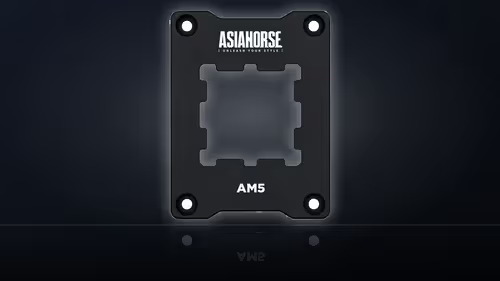
Store the stock AM5 retention arms and their screws together in a labelled bag the moment they come off, before fitting the R299 AsiaHorse frame. Reversing the change later, whether for resale or a different cooler, depends entirely on still having that original hardware, and small board-specific screws are exactly the kind of thing that goes missing in a parts drawer.
🗂️ Why the original hardware is worth keeping
A board sold on with its retention arms still fitted, or at least included in the box, is a straightforward proposition for a buyer. A board sold without them raises a question that either kills the sale or drags the price down, because the buyer now has to source retention hardware for a specific board rather than just fitting the cooler they already own. Keeping the arms preserves that simpler sale even if it never happens.
The same logic applies to a change of mind on the cooling setup itself. If a future cooler turns out to need the stock arms rather than working with this frame, having the originals on hand means reversing the swap is a five-minute job rather than a hunt for a part that isn't stocked as a standalone item.
The screws matter as much as the arms
The arms themselves are only half the story. Without their matching screws, the arms are effectively useless, and small board-specific screws are precisely what disappears fastest in a workshop or a moved-house box of spares. A labelled bag that holds both together, kept with the board's own box or its other accessories, is the difference between a reversible change and a permanent one.
🏷️ A simple system that holds up
Nothing elaborate is needed here. A small zip-lock bag, a strip of masking tape with the board model written on it, and a spot in the board's original box or a dedicated parts container is enough. The goal is just that future-you, or whoever handles the board next, can find the original hardware without guessing which bag holds what.
Anyone doing this refit alongside a CPU coolers upgrade should bag the frame's own hex wrench the same way once the fit is done, since it lives in the same small-parts category and gets used again the next time the cooler comes off.
🔁 When the original arms actually get needed again
Two situations bring the stock arms back into play: switching to a cooler that specifically clips onto them rather than using the board's mounting holes, or reversing the frame change for any other reason, resale included. Neither situation is common day to day, which is exactly why the arms are easy to deprioritise in the moment and exactly why a labelled bag is worth the two minutes it takes.
A cooler refit is also the point where the paste layer gets disturbed regardless of which hardware is going back in, so having something from thermal solutions ready for reassembly belongs on the same checklist as bagging the old parts.
📋 A short workflow for the refit itself
Doing this properly doesn't need to slow the job down much. Before the first screw comes out, lay out a small bag or container and a marker within reach, so the original arms go straight into storage rather than sitting loose on the desk while attention moves on to the frame itself. That single habit prevents most of the small-parts loss that happens during a rushed refit.
Once the stock arms are off, note which two screws came with them if the board uses different lengths anywhere nearby, since mixing screws between different mounting points on a board is an easy mistake to make when several similar-looking fasteners are out at once. Labelling the bag with the board's model, rather than relying on memory, matters more the longer that bag sits unused - a board revisited six months later is a very different memory test than one handled the same week.
Treating the frame's own hardware the same way
The same discipline that protects the stock arms should extend to the frame's own four screws and hex wrench once the job is done. They're just as small, just as easy to lose in a drawer of mixed fasteners, and just as needed the next time this particular board gets opened up for a cooler change. Keeping frame hardware and stock hardware in separate, clearly marked bags avoids a mix-up between the two sets later.
What a tidy refit actually buys you
None of this changes how the frame performs once it's fitted. What it changes is how much friction a future change involves, whether that's a resale, a cooler swap, or simply reverting to the board's original configuration for any reason. A build kept with its removed parts properly stored is a build that stays flexible, where one that scatters small hardware into a general parts bin quietly loses that flexibility the moment those parts can't be found again.
Anyone treating this as part of a broader CPU coolers upgrade should apply the same bagging habit to any cooler-specific brackets that come off during the same session, since those are equally board- and cooler-specific and equally hard to replace individually if lost.
Frequently Asked Questions
Why keep the original arms?
Because returning the board to standard, whether for a sale or a different cooler, depends on having them available.
Where should they be stored?
In a labelled bag kept with the board's own box or accessories, so the two stay associated.
Are the screws worth keeping too?
Particularly so, since the arms are useless without them and small screws are exactly what goes missing.
Would replacements be available?
They are board-specific parts rather than a stocked item, so replacing them is far harder than keeping them.
Does this matter for a sale?
It does. A board sold with its original hardware is a simpler proposition than one missing its retention arms.
When might they be needed again?
When changing to a cooler that uses the stock arms, or when reversing the change for any reason.
Should the frame's own parts be noted too?
Keeping the hex wrench with them makes sense, since both relate to the same area of the board.
Planning a cooler refit of your own?
Check Evetech's CPU cooler selection for AM5-compatible options before your next build touches the socket area.