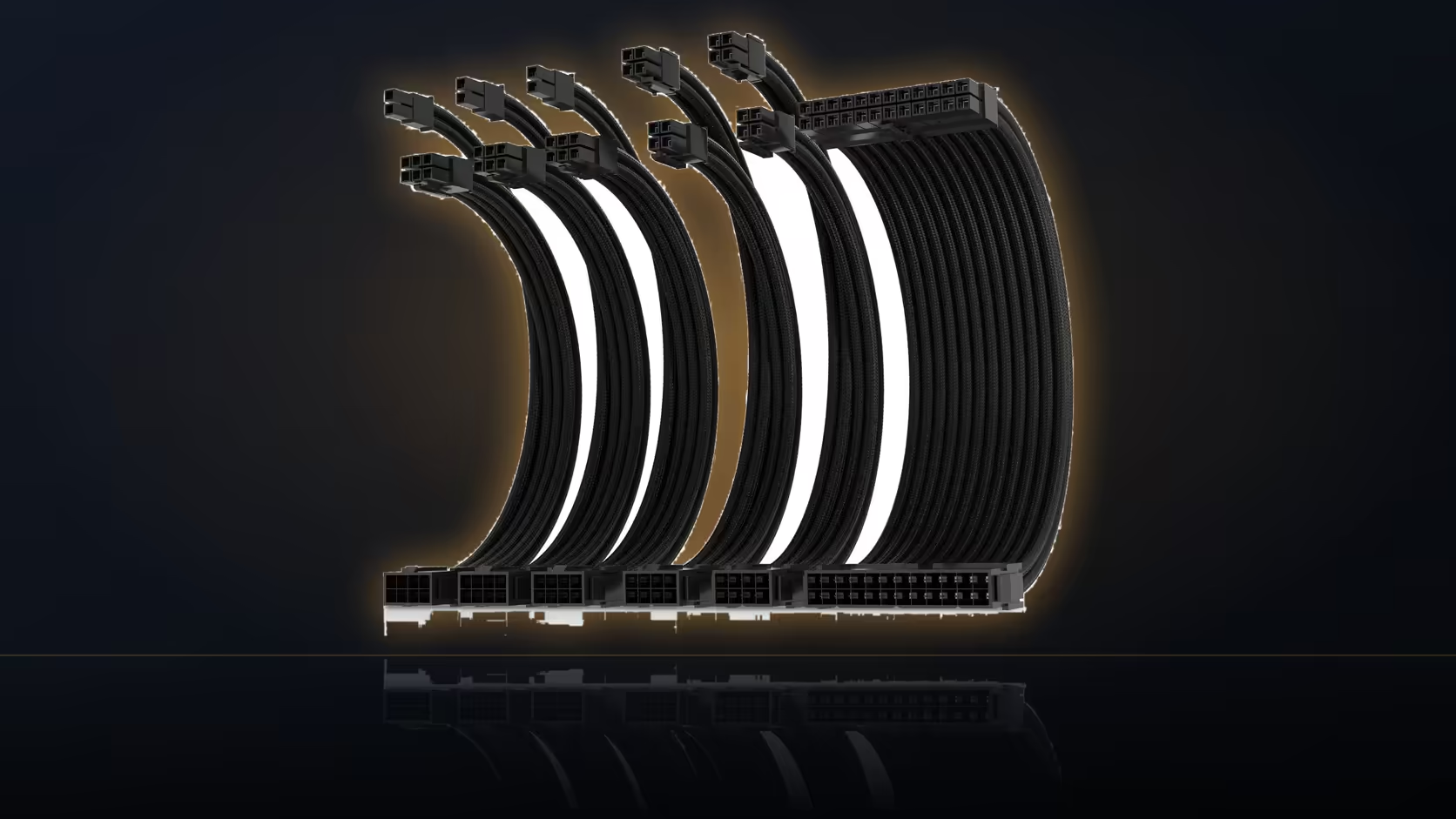
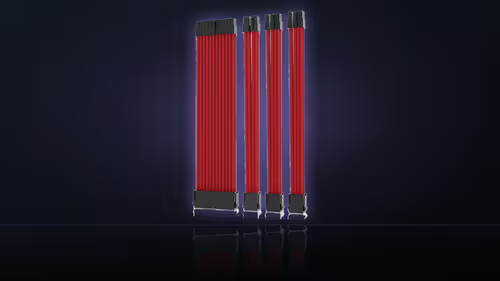
Clipping combs onto three GPU power runs without first deciding how far apart the leads should actually sit is a common shortcut that rarely produces a good result. Comb alignment only reads as deliberate once the underlying spacing is already right.
Quick Answer
Decide how far apart the three card leads will sit before any comb goes on. Comb alignment only reads well once the runs are evenly spaced. Three cables combed neatly but bunched together still look like one thick cable.
📏 What gap actually looks right
There is no single magic distance that separates three GPU leads correctly - what matters is that the gap reads clearly as three individual cables rather than one dense block, and that the gap stays roughly consistent along the visible length. A consistent spacing, even a modest one, matters far more than hitting some specific measured distance, so aim for evenness over precision.
📐 Why matching comb heights matters so much
Aligning the combs at similar heights across all three runs is genuinely one of the single most effective details for making a group of parallel cables look deliberately planned rather than merely functional. Staggered comb positions read as accidental even when the underlying strand spacing is perfectly even between the runs - the eye picks up on the misaligned combs before it registers anything about the spacing itself.
🎨 Using the two-colour comb kit deliberately
The two-colour comb set included with this kit opens up a genuine styling choice across three parallel runs: accent one specific run in a contrasting colour to draw the eye to it, or alternate colours systematically across all three to either visually tie the group together as a matched set or deliberately separate them into distinct elements. Either approach reads as intentional; what does not work well is a random, undecided mix that suggests no plan was ever made.
🔧 Following real sockets over forcing symmetry
Where the actual sockets on the graphics card are unevenly spaced, follow that real spacing rather than forcing the three cables into artificially equal gaps that fight against where the connectors actually sit - cables bent sideways purely to look even at one particular point along their length rarely end up looking better across the whole run. A dry-fit before any comb goes on is genuinely worth the extra few minutes: laying all three leads loosely into their approximate final position, without combs holding anything in place yet, shows clearly how they actually sit relative to each other, and that dry-fit stage is the moment to change the order or adjust the gaps - not after combs have already locked everything in place.
🎯 Why three leads get judged differently than one
Perfect parallel alignment is not strictly necessary either - a slight, gentle convergence toward the card as the three runs approach their sockets is entirely natural and reads fine, where any actual crossing between the cables never does regardless of how neatly each individual run is combed. This whole exercise differs fundamentally from dressing a single card lead: with only one cable, there is nothing to compare it against and inconsistency has nowhere to show itself. With three leads running in parallel, the eye automatically judges them as a coordinated group, and any inconsistency between the three stands out far more sharply than the same imperfection would on a single isolated run. A look through cable solutions shows what else pairs with this kit, and spacing precision beyond a standard comb setup is what individually sleeved premium cables can be priced for.
👀 Stepping back to judge the whole group
Once the three runs are roughly in place, step back to normal viewing distance rather than judging from inches away. Spacing decisions that look off up close often read perfectly fine from where the machine actually sits, and the reverse holds too.
Frequently Asked Questions
What gap looks right between runs?
Enough to read as three cables rather than a block. A consistent gap matters more than the exact distance you settle on.
Should the combs sit at matching heights?
Aligning them across the three runs is what makes the group look planned. Staggered combs read as an accident even when spacing is even.
Does the two-colour comb kit help here?
It lets you accent one run or alternate colours across the three, which can either tie the group together or deliberately separate it.
What if the sockets are unevenly spaced?
Follow the sockets rather than forcing equal gaps. Cables that bend sideways to look even at one point rarely look better overall.
Is it worth dry-fitting first?
Yes. Laying the three leads in place without combs shows how they sit, and that is the moment to change the order or the gaps.
Do the runs have to be perfectly parallel?
Close is enough. Slight convergence towards the card is natural and reads fine, where crossing cables never does.
How does this differ from a single card lead?
With one lead there is nothing to compare it against. With three, the eye judges them as a group and inconsistency stands out.
Dressing three GPU leads to look like a set?
Browse Evetech's power supply range and dry-fit your three runs before a single comb goes on.