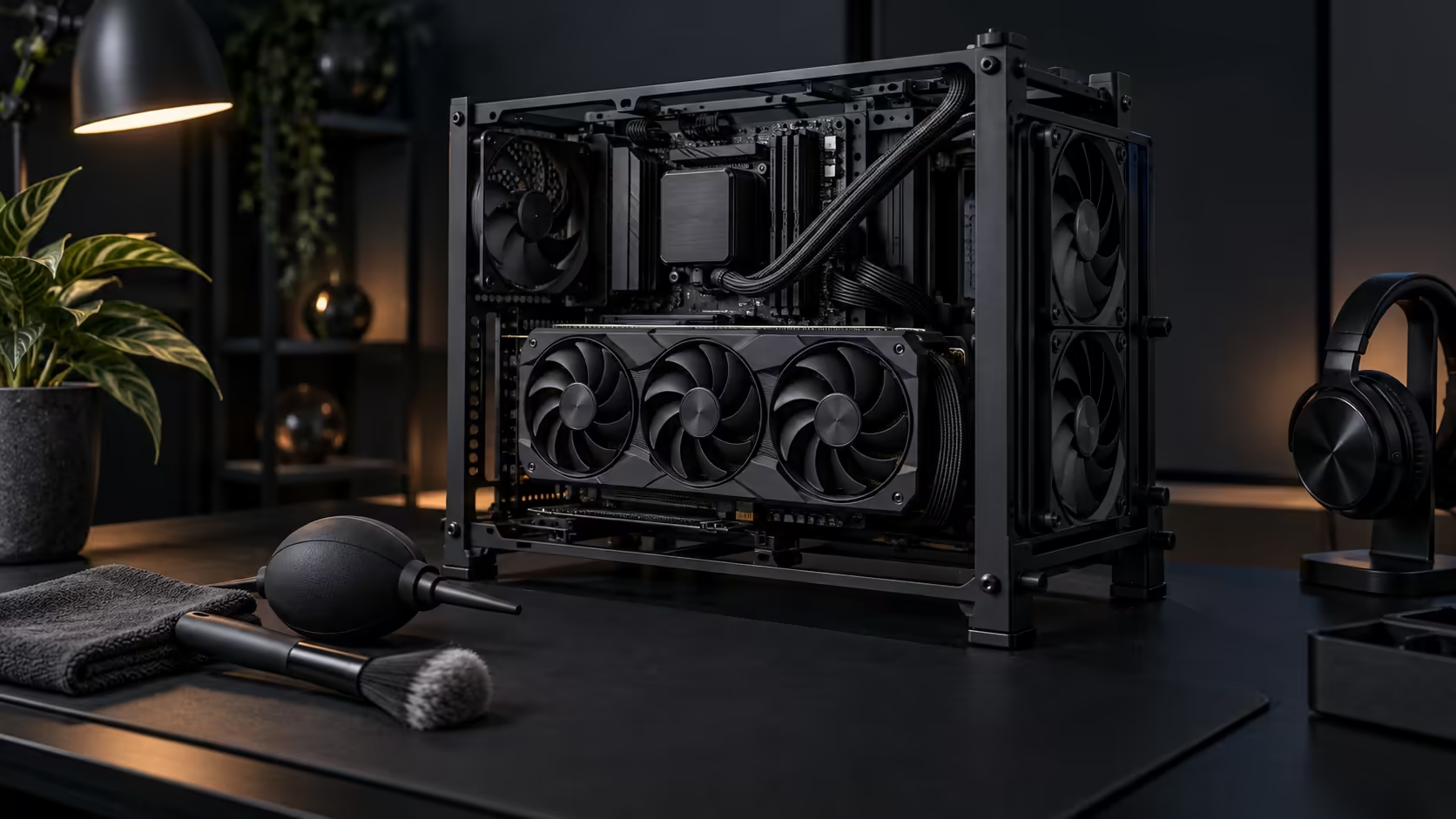
Filtering dust and simply cleaning it off are two completely different strategies, and an open-frame PC only has access to the second one. There is no mesh panel to swap out and rinse, which means the whole job comes down to frequency and technique rather than a filter you can forget about for months.
Quick Answer
Blow the board out with short bursts of compressed air every two to four weeks, holding fan blades still while you spray them so they do not spin up and generate their own static charge. Use a soft brush for anything compressed air alone will not shift, and avoid vacuuming components directly. Inland South African air, particularly through a dry, dusty stretch on the Highveld, settles fine grit into an open frame far faster than the same room affects a filtered case, so the schedule matters more here than the technique itself.
💨 Compressed air, done properly
Hold each fan still with a finger or a cable tie while spraying it, because a fan spun up by the air pressure itself can generate enough static or even damage the bearing over repeated cleanings. Keep the nozzle roughly 100mm from the surface and work in bursts of one to two seconds rather than one long spray, moving the can slightly between bursts so you are not just pushing the same dust deeper into a heatsink's fins.
Angle the nozzle at roughly 45 degrees to blow dust away from the board and out into the room rather than across it into another component, and do this somewhere it is fine for a small dust cloud to settle, not directly above a keyboard or an open drink.
🖌️ Where a brush does what air cannot
Compressed air moves loose dust well but struggles with anything that has bonded to a surface, particularly a thin film that builds up on fan blades over months. A soft, dry brush with bristles no wider than about 5mm, an unused paintbrush or a dedicated electronics brush, lifts that film without the risk a damp cloth carries near live electronics.
Brush in one direction rather than scrubbing, and follow with a quick pass of compressed air to clear what the brush lifted rather than leaving it to resettle on the next surface down.
❌ What not to do
Never use a household vacuum cleaner directly on components. The suction can be strong enough to spin a fan far past its rated speed, and a plastic vacuum nozzle can build up a static charge past 10000V that a grounded compressed air can does not carry the same risk of. If you want vacuum-assisted cleaning, use it only to collect dust after you have already dislodged it with air or a brush, held well away from the board itself.
Avoid cleaning while the machine is powered on. Aside from the obvious safety concern, a fan spinning under its own power while you are also blasting it with compressed air is exactly the combination that risks bearing damage.
📅 Setting a schedule that actually holds
Two to four weeks, roughly 14 to 28 days, is a reasonable default in most South African homes, tightened toward the shorter end during a dry, windy season when dust levels rise, and stretched toward the longer end if the machine sits on a desk in a room that stays reasonably clean. A case accessories kit with a can of air and a soft brush together is worth keeping near the desk rather than in a drawer, since a routine you have to go looking for tools for is a routine that slips.
If dust is a genuine ongoing frustration rather than an occasional chore, it is worth comparing an open mid-tower case against a filtered, closed alternative with proper intake filtration and case fans, since an open frame's display appeal comes with a maintenance cost that not every build wants to carry indefinitely.
Frequently Asked Questions
How often should I clean an open-frame PC?
Every two to four weeks is a reasonable default, tightened during a particularly dusty season and stretched out if the room stays relatively clean.
Can I use a household vacuum cleaner?
Not directly on components. It can spin fans past their rated speed and carries a static risk. Use it only to collect dust already dislodged by air or a brush.
Should fans be spinning while I clean them?
No. Hold each fan still while spraying it with compressed air to avoid overspinning the bearing or generating static.
Does an open frame really collect more dust than a closed case?
Yes, because there is no filter stage at the intake. Dust that a filtered case catches at the door settles directly onto components in an open build.
Ready to build a cleaning habit that actually sticks?
Keep compressed air and a soft brush within reach and set a reminder every few weeks.