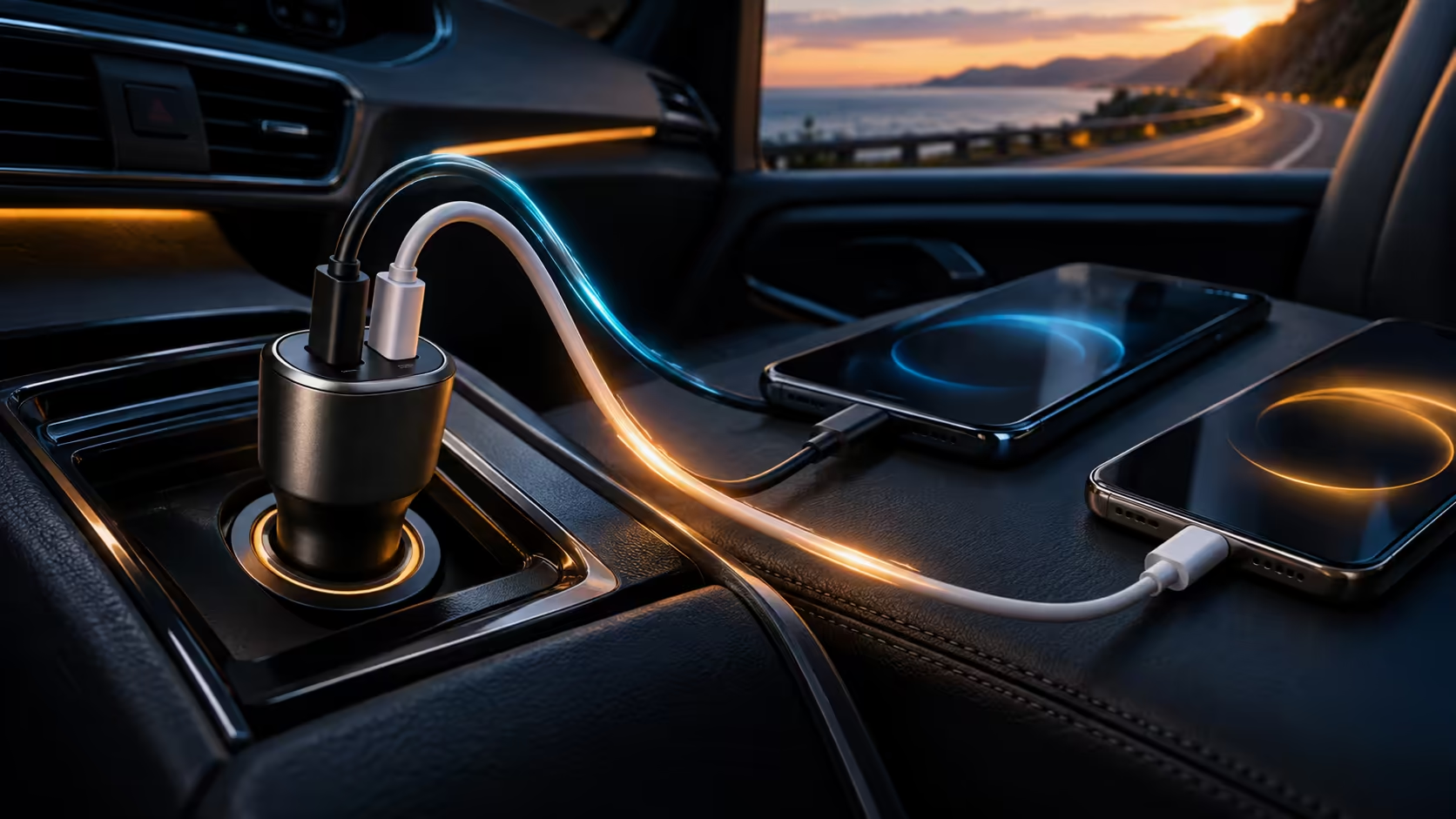
A 30W USB-C car charger and an old 5W USB-A one look like the same category of product from across a shop shelf. In actual use they are barely related, and the gap between them only grows the more demanding the phone plugged in becomes.
Quick Answer
A 5W charger holds one unchanging voltage no matter what gets plugged into it, which suited phones from a decade ago and does little more than a slow trickle for anything current. A 30W USB-C port negotiates USB Power Delivery, letting a compatible phone claim far more current up to that ceiling, and PPS on top of that fine-tunes the voltage as the battery's needs change through the session. Anker's version pairs that 30W port with a second 22.5W USB-A output, at R349.
⚡ Two entirely different ways of supplying power
A basic 5W charger has no negotiation built in at all. It supplies a fixed 5V and leaves it to the connected device to draw only as much current as it dares, typically around 1A, which is where the 5W figure comes from. Every device gets the same fixed output regardless of what it could actually use.
A 30W USB-C port runs a digital handshake before meaningful current flows, exchanging voltage options with the phone and letting it pick the one that suits its own limits. A phone capable of 20V at 1.5A on that same port draws six times the current a 5W plug could ever offer, simply because the negotiation exists to let it ask.
🔋 Why the gap widens under real load
The difference is modest on a phone doing nothing but sitting idle in a pocket, since even a 5W trickle roughly keeps pace with minimal background drain. The gap becomes obvious the moment a phone is actually working hard, running navigation with the screen on, streaming music over cellular data, both at once.
Under that kind of load, a 5W source can lose ground steadily through a drive, the phone ending a trip with less charge than it started with despite being plugged in the whole time. A 30W PD port comfortably outpaces the same load for most phones, turning the identical drive into net charging time instead.
📱 What compatibility actually depends on
Neither charger cares what brand of phone is connected; the difference is entirely about protocol, not brand. A phone without Power Delivery support plugged into a 30W port simply negotiates down to whatever basic charging it does support, drawing no more than a 5W charger would have offered anyway.
The gain from a 30W PD port only materialises for a phone actually built to request more, which covers the overwhelming majority of phones sold in the last several years. A second output on the same charger, 22.5W over USB-A here, extends the same logic to a passenger's device without needing a second charger entirely. A properly rated cable matters just as much here, since a 5W-era lead is not automatically built for the higher current a modern PD port can push, and checking the current best-sellers is a reasonable starting point for what buyers are actually replacing old chargers with.
🕰️ Why 5W chargers were ever the standard
A 5V, 1A output was once genuinely enough, because phones a decade or more ago carried far smaller batteries and did far less work at once. Overnight charging on a bedside table, or a slow top-up during a short drive, was an acceptable use case when nobody expected a phone to be doing continuous navigation, streaming and background data all at the same time.
Battery capacities grew steadily as phones took on more roles, and charging speed had to grow alongside them or overnight charging would have started taking noticeably longer each generation. Power Delivery, and later PPS on top of it, are the industry's answer to that growth, replacing a single fixed low-power standard with a negotiated one that scales with what each new phone actually needs.
🚗 What this means for an old charger still in the car
A 5W charger left in an older car is not dangerous or broken; it is simply built for a class of device that mostly no longer exists on shop shelves. Swapping it for a 30W PD unit is less about fixing something and more about matching the charger to what phones actually are today, which is a meaningfully different device from the one that 5W standard was designed around.
For anyone still running an old charger without issue, the honest test is whether a phone gains charge or loses ground over a typical drive; a phone that ends a commute with less charge than it started is the clearest sign the old charger has fallen behind what the phone now needs.
Frequently Asked Questions
Is a 5W car charger still worth keeping as a spare?
For an emergency top-up on an older device, sure, but it will noticeably underperform against any current phone's real charging needs compared with a proper PD unit.
Does a 30W charger ever damage an older 5W-only device?
No. Power Delivery negotiation means the charger only supplies what the connected device actually requests, so an older device simply asks for less and receives less.
Why does the gap matter more on a road trip than a short errand?
A longer, more demanding session gives the higher-wattage charger more time to actually outpace the phone's drain, where a brief top-up barely tests either charger's ceiling.
Does a 5W charger risk damaging a modern phone somehow?
No. A modern phone plugged into a 5W source simply negotiates down to whatever that source supports and charges slowly rather than being harmed in any way by the mismatch, since Power Delivery is specifically designed to prevent exactly that kind of scenario.
Can I tell the difference just by looking at a charger?
Not reliably. The wattage and protocol need to be stated on the listing itself, since two chargers of similar size and price can differ completely in what they actually support underneath an identical-looking shell.
Are 5W chargers still sold new today?
Occasionally, usually bundled as a low-cost accessory rather than marketed as a primary charging solution, since most current buyers expect at least basic Power Delivery as standard.
Ready to leave a 5W-era charger behind?
Browse the car charger range for a proper Power Delivery upgrade.