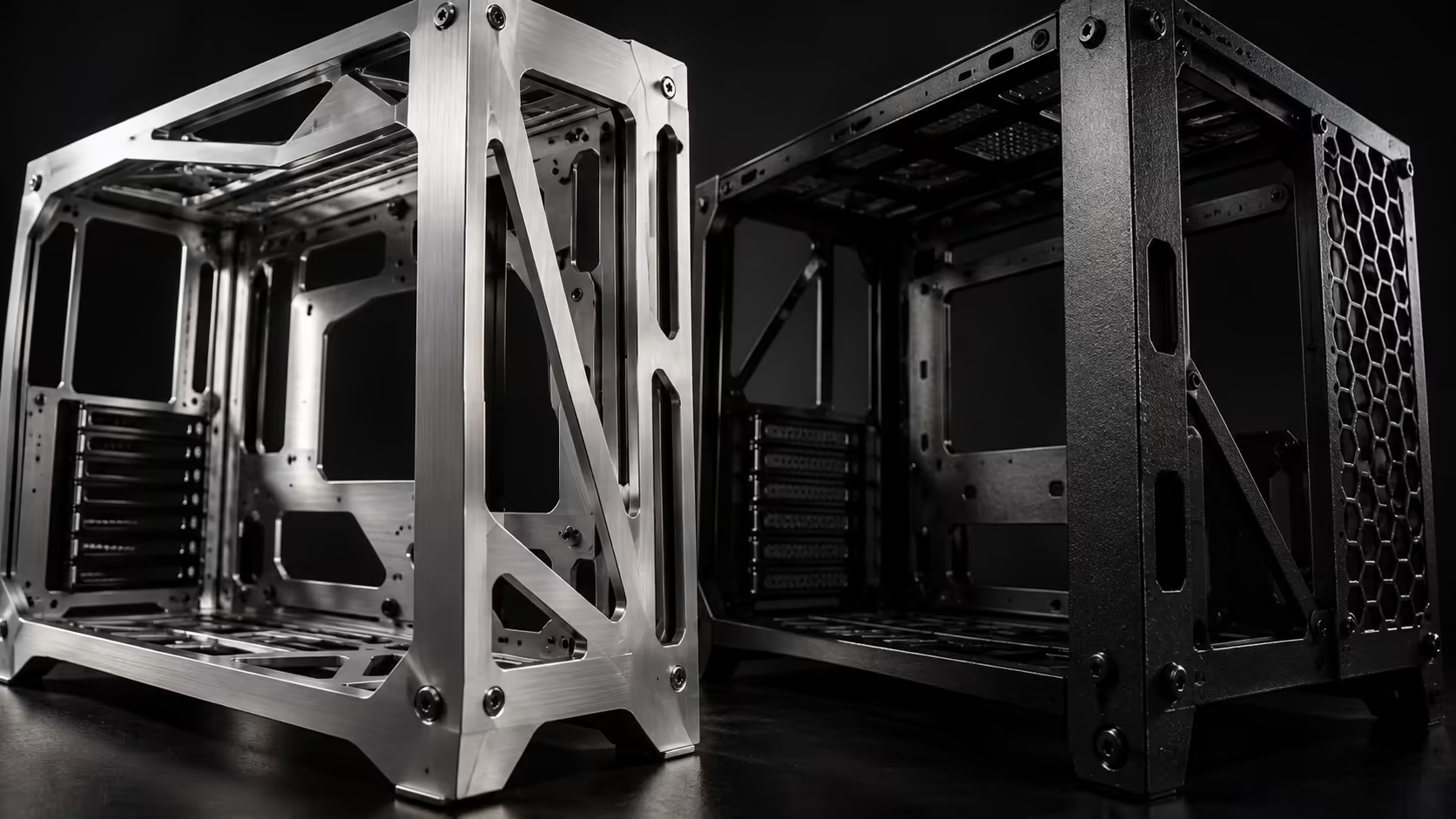
Steel and aluminium do the same job in a PC case, which is to hold parts in a fixed position and keep the frame square under load. They do that job with different weight, different stiffness per millimetre, and different behaviour when something goes wrong on the way to your desk. An aluminium PC case and a steel one are not simply the same design in two metals; the choice of material changes what the designer could get away with everywhere else.
Quick Answer
Aluminium weighs roughly a third of steel for the same volume, which lets a case use a thicker cross-section for the same total weight and stay rigid without side panels bracing it. Steel is cheaper to press into shape and stiffer millimetre for millimetre, which is why most budget cases use thin steel panels and lean on the whole box, screwed together, for rigidity. The ROG GR20 Edition 20 spends its aluminium budget on a 4mm frame at R15,999, precisely because an open structure has no box to lean on.
⚖️ Why weight is the whole argument for an open frame
A closed steel case gets its rigidity from geometry as much as material: four panels screwed into a box brace each other, so even fairly thin steel resists twisting once it is assembled. Remove the side panels, as an open frame does, and that bracing effect disappears. The frame alone now has to resist twisting under the weight of a board, a radiator and a long graphics card, with nothing else helping.
That is the specific problem aluminium solves well. At a third of the weight, a 4mm aluminium section can be genuinely thick without the frame becoming unreasonably heavy to lift, mount, or tilt into an angled stance. The same rigidity in steel would need a section closer to the weight of the whole chassis in aluminium, which defeats the point of an open, display-oriented frame.
Steel is not the wrong material here so much as the wrong one for this specific shape. In a closed full-tower case, where the panels do real structural work, steel's stiffness per millimetre and lower cost make it the sensible default, and most cases at that size use it well.
🛠️ Finish and thread care: the cost you pay in return
Aluminium's downside is not strength, it is surface behaviour. A steel panel with a powder coat shrugs off scuffs during a build because the coating sits on a hard, forgiving base. Bare or anodised aluminium marks more easily under a slipped screwdriver or a dragged cable clip, and a scratch through an anodised finish shows as a bright line that a steel panel's coating would have hidden.
Threads are the other quiet difference. Aluminium is a softer metal, so a screw driven in at an angle or torqued much past the roughly 0.5Nm a case screw needs can strip the thread far more easily than the same mistake in steel. On an open frame, where every screw is visible and there is no hidden mounting plate to fall back on, that means a slightly more careful hand with a screwdriver than a steel tower demands, particularly on the frame itself rather than a steel motherboard tray, which many aluminium chassis still use underneath.
📦 Shipping and handling: where the two metals diverge again
The property that makes aluminium good for an open frame, low weight for a given thickness, also makes it a specific risk in transit. A steel case shipped by courier is dense and resistant to denting; the same knock that would leave a steel panel unmarked can put a visible dent in a thin aluminium section, because the metal simply gives more easily at the same thickness.
That is one of the better reasons to buy a large aluminium chassis locally rather than through a private import. An EATX open frame packed for transit typically weighs somewhere around 10kg to 15kg, and a dent on arrival, checked and reported to a local courier, is a straightforward replacement claim. The same damage on a chassis shipped internationally turns into a dispute with a foreign seller, a return shipment at your cost, and a wait measured in weeks rather than days. It is not a reason to avoid aluminium; it is a reason to buy it from someone close enough to fix a shipping problem quickly.
🏆 What "premium" actually buys you in either metal
Premium in a case, in either material, is rarely about the metal alone. It is rigidity that stays true after months of being moved, screws that do not strip on the fifth reinstall, and a finish that still looks new after normal handling. A thin steel panel can flex audibly when you press it; a properly specified aluminium frame at several millimetres thick does not, and that difference is what you are actually paying for at the top end of either material.
If you are comparing the two directly rather than reading about them, the case best-sellers page carries both steel towers and aluminium open frames at a range of prices, and handling a steel panel and an aluminium one side by side settles the weight and rigidity argument faster than any spec sheet. The broader mid-tower case range is worth the same side-by-side check, since two cases at a similar size can differ in panel thickness by a factor that no photograph shows.
Frequently Asked Questions
Is aluminium always stronger than steel?
No. Steel is stiffer per millimetre of thickness. Aluminium's advantage is being strong enough at a much lower weight, which matters specifically for a structure with no side panels bracing it.
Does an aluminium case scratch more easily than steel?
Generally yes, particularly on an anodised finish, because the underlying metal is softer than steel under a typical powder coat.
Why do most affordable cases use steel?
Steel is cheaper to press into panel shapes and stiff enough once the whole box is assembled and screwed together, which is exactly how most affordable cases are built.
Is an aluminium frame more likely to be damaged in shipping?
A dent is more likely at the same thickness, because the metal deforms more easily than steel of the same section. Buying locally makes that risk a quick replacement rather than a long dispute.
Should I worry about stripping screws on an aluminium chassis?
Take slightly more care with torque than you would on steel, and stop tightening the moment a screw feels snug rather than pushing for that last quarter turn.
Ready to decide which metal actually suits your build?
Weigh weight and rigidity against finish care before you commit to either frame.