Quick Answer
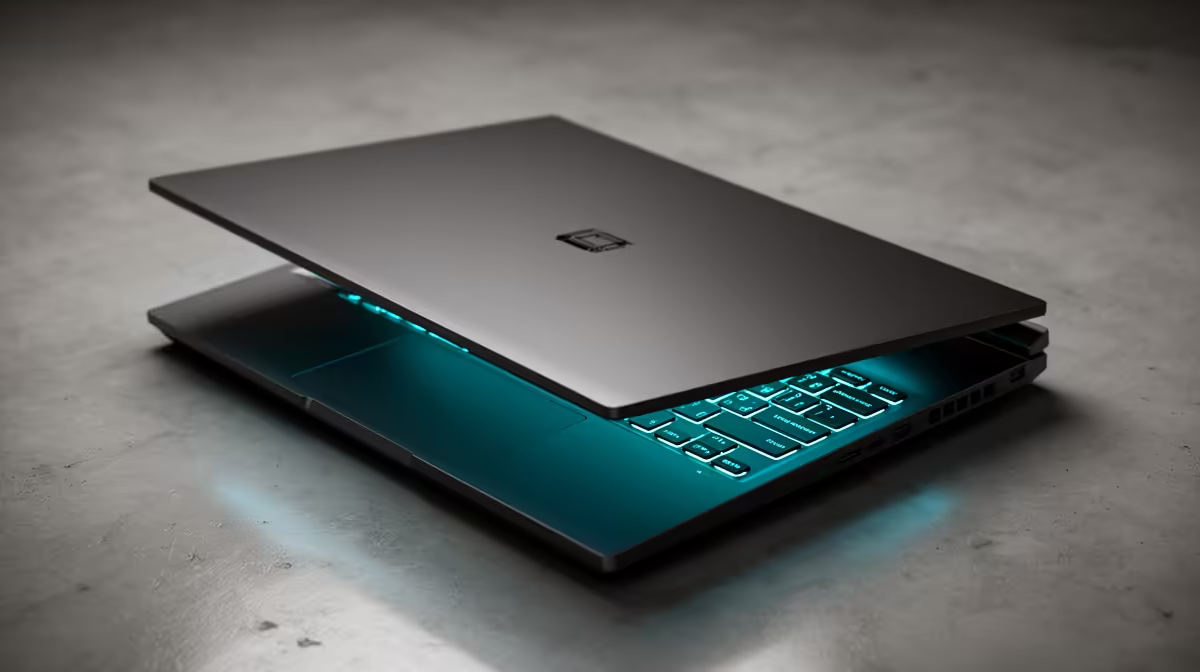
For Data Science at University of the Witwatersrand, buy a laptop with Core i7 or Ryzen 7, 16GB minimum, 32GB preferred, 1TB SSD, and RTX 4050 or RTX 4060 graphics for GPU-assisted work. A realistic SA budget is R18,000-R35,000; cheaper machines can work for notes, but 8GB RAM and tiny SSDs become painful once Python, MATLAB, CAD, SolidWorks-style modelling, simulations, and large spreadsheets run together.
The Workload To Build Around
Data Science students need a machine that survives lectures, assignments, group work, and late-night submissions without feeling slow. The important parts are RAM, SSD capacity, screen comfort, keyboard quality, and battery life. Wits students around Braamfontein need portability plus enough power for Python notebooks means portability matters too, because the laptop will move between residence, labs, libraries, and home.
Shortlist Specs And Models
Start with Lenovo LOQ 15, ASUS TUF A15, MSI Katana, or Acer Nitro-class laptop. Entry student laptops around R8,000 can handle basic work, but the better long-term target is 16GB RAM and a 512GB SSD. For heavier modules, choose 32GB RAM or an RTX 4050/4060-class GPU before paying extra for cosmetic features. A 1TB SSD is useful when datasets, videos, CAD files, or large PDFs pile up.
SA Student Buying Checks
Confirm Windows, warranty length, charger size, USB-C support, HDMI, Wi-Fi 6, webcam quality, and whether the laptop can be serviced locally. NSFAS-style monthly allowances do not cover even a proper entry laptop in one month, so plan the purchase as a once-off academic tool. A machine that lasts three academic years is better value than the cheapest model that needs replacing.
FAQ
Is 8GB RAM enough for Data Science?
It is only a minimum for light notes and browsing. Choose 16GB for a new laptop, and choose 32GB for engineering, data science, film editing, or heavier lab work.
Do students need a gaming laptop?
Only if the course uses GPU-heavy tools or the laptop is also for gaming. Many business-style laptops are better for battery life, weight, and lecture use.
What screen size is best for campus?
A 14-inch laptop is easier to carry, while 15.6-inch or 16-inch screens are better for spreadsheets, timelines, drawings, and split-screen work. Choose based on daily travel and desk space.