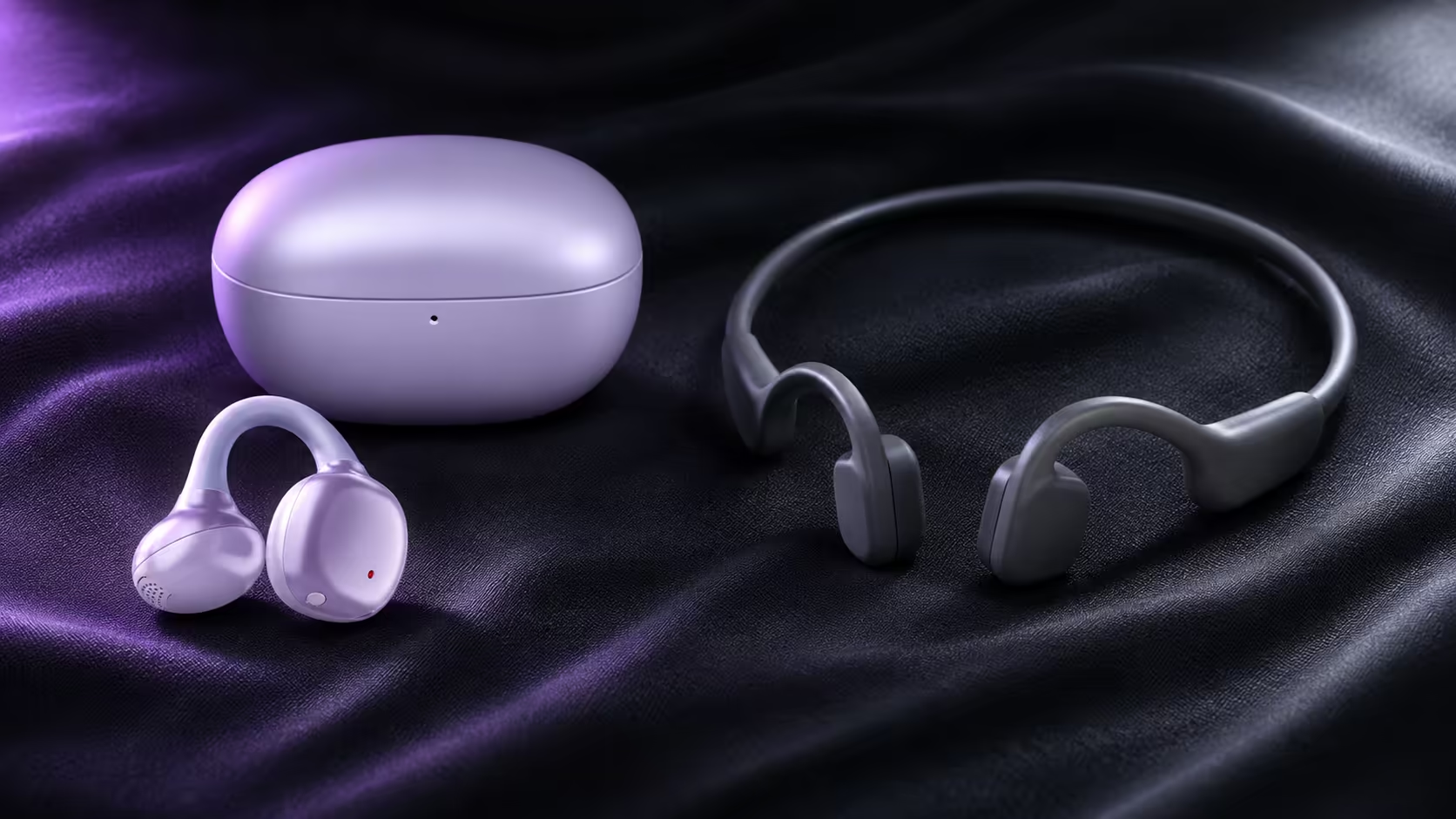
A pair of bone conduction headphones or clip-on earbuds can both leave the ear canal open, but the two designs do it with different hardware. Decide whether the drawback you care about is how much room sound gets in, the feel of the headset or how easy it is for people nearby to hear your music. The design name alone cannot settle all three.
Quick Answer
Bone conduction headsets use a transducer that vibrates at a point against the head. Open-ear clip-ons such as the Promate AirClip-Pro use small speakers near the ear and leave the canal open. Both provide little isolation compared with a good in-ear seal, and the right choice depends on fit and what you need to hear around you.
👂 Understand the difference in the sound path
A bone conduction headset normally rests its contact points against the sides of the head. Those contacts create vibrations, and the position and contact affect what you hear. With different designs you may feel the headset against a particular spot as well as hearing the audio. Check what the model claims about where it should sit and how it adjusts.
The AirClip-Pro clips around the outer ear. Its 12mm driver sends sound towards the ear without an in-ear tip. The sound reaches the ear through the air, so it remains an open-ear speaker design. Both kinds of equipment leave your ear open, and this characteristic alone does not tell you how the bass, speech or higher frequencies will sound to you.
Compare the product description and pictures before shopping Evetech open-ear earbuds. Open-ear can describe the way a product fits even when it carries sound in a different way from another pair carrying the same term.
🗣️ Decide how much of the room you want
If you work where a colleague may speak to you unexpectedly, an open fit can be convenient at a low playback level. In an open-plan office with several people talking, that same property can make a recording harder to follow. A nearby listener may also hear some of the music depending on the model, volume and room.
Try each option in a quiet space first and compare a spoken recording. Ask a person nearby whether they can hear it at the volume you normally choose. Then repeat somewhere with steady background noise. If you have to raise the volume to hear the material clearly, decide whether the open design fits that setting or whether you prefer a more isolated place or pair.
When you mainly listen privately in a noisy place, look at in-ear or over-ear headphones designed to provide more isolation. In a setting where you need to hear and pay attention to the environment, pause and remove your equipment as needed. An open fit leaves room for ambient sound without making it reliable to hear every cue.
🕶️ Check the contact points with your usual gear
For bone conduction, try the headband or frame and see where the contacts meet your head. Some designs can share space with glasses, and others can feel crowded there. Check whether the frame shifts when you turn or lean back. Also listen for whether you find the vibrations noticeable at the level you normally choose.
For clip-ons, see whether the clip rests comfortably around the outer ear while you move your jaw or adjust glasses. If you wear a hat or helmet, check in a stationary place that the earbuds sit clear of it and do not interfere with its fit. A secure fit in one person's ear can be less comfortable for someone else.
The AirClip-Pro is listed for 6 hours of playback per charge and 28 hours with the case. Use the per-charge figure for the listening block you expect. Check how you will carry the case for a top-up rather than assuming the small buds can deliver the whole case rating without a break.
🧪 Try your main listening task before choosing
Pick a voice note and a track you know well. Compare them at a comfortable level, then pause and notice how clearly you can hear someone in the room. A voice recording that is easy to understand matters if you mostly follow lectures or podcasts. If you mostly want music, compare whether you are happy with the bass while wearing the pair normally.
Finally, consider how you move between quiet and noisy settings. On campus, one pair may suit a short listening session between classes while you sit outside. In a noisy taxi you might prefer another fit or decide to pause. Choose based on the job you expect to do most, and use a different listening setting when the people or surroundings need your attention.
If you also take calls, ask someone to listen to a short sample from the microphone. They might hear a different balance of your voice and the room than you hear through the headset. Repeat the call from the desk or quiet place you normally use. This matters if the reason to buy a headset is to answer frequent questions without leaving your seat.
Check how the controls behave when you want to stop playback. On a clip-on, a touch gesture may be easy to operate with one hand, but you may prefer a physical button on another design. Try pressing or tapping the control with your headgear and glasses in place. If you often need to pause at work, being able to find the control without disturbing the fit can be a deciding detail.
Frequently Asked Questions
Is the AirClip-Pro a bone conduction product?
It is an open-ear clip-on with a speaker driver aimed at the ear. Bone conduction designs use a vibrating contact.
Which design blocks more of the street by default?
Both leave the ear canal open. Try them in a stationary place with some representative background sound to see what remains audible.
Will one of them always leak less sound?
Leakage depends on the particular design, fit and volume. Ask another person to listen from the distance that matters to you.
Can I use either design with glasses?
Check how the frame or clips share space with the arms of your glasses. The contact points and fit differ across models.
Choosing a design that leaves the ear open?
Compare the fit, listening experience and charge figures for earbuds and headphones at Evetech.