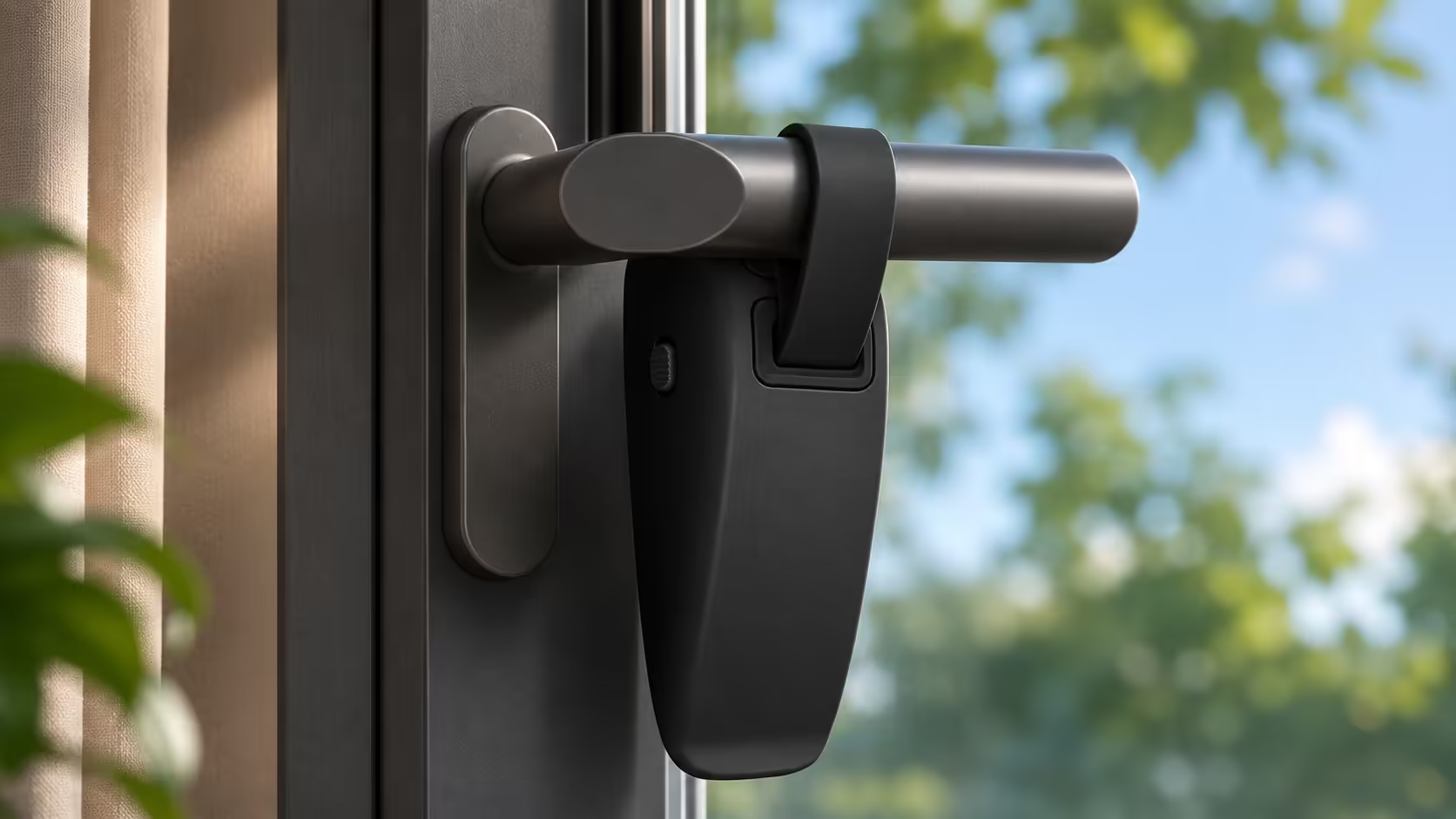
The same alarm can sit under a door or hang from a handle, but the two arrangements respond to different movements. On the Promate DoorShield, the wedge needs pressure from the door and the loop needs a moving handle or surface. Choose the mode after you see how the actual door or window works.
Quick Answer
Use DoorShield wedge mode for a suitable inward-opening door that can press the trigger. Use the silicone loop on a door or window handle when the intended movement can activate the device. Promate rates the alarm at 80 to 120dB, and you should check that the installation leaves the exit easy to use.
🚪 Check the direction and gap for a wedge
Open the door normally and check which way it moves. In the intended wedge position, its lower edge needs to approach the trigger from the right direction. A door that opens away from the wedge or clears it is a poor match. A thick mat or uneven surface can shift the wedge, so check how stable it is on the floor.
Read Promate's fitting instructions and make sure you can remove the alarm quickly. Use a position consistent with property guidance and the need to open the door without obstruction. If the unit would jam the door or interfere with a normal exit, reconsider the setup. Use the built-in lock as intended, and ask property staff if the lock or opening feels unusual.
When comparing Evetech door alarms and gadgets, remember that the floor shape and door construction affect a wedge more than its advertised siren volume. Check the actual gap rather than buying for a general category such as hotel room or res room.
🪟 Use a handle where the loop can follow the movement
In handle mode, the silicone loop hangs from an appropriate moving part. Check where that part moves in ordinary use and whether the loop can hang without slipping off, catching on other fittings or rubbing the floor. A window with a handle that moves is a different placement from a fixed grip, even if both are called handles.
For a window, work on the inside from a stable position. Make sure fitting the alarm does not interfere with using approved window locks or any required exit. If the unit swings and hits the frame when someone walks past, ordinary vibration could trigger it. Choose the correct mounting position first and then try the lower of the two sensitivity settings if it fits the movement you want to detect.
Think through what the alarm will notice. A handle loop doesn't need pressure from the bottom of a door. A wedge is triggered at the floor and does not tell you what is happening with the handle. Choose the mode where the ordinary action you care about actually reaches the sensor.
🔔 Learn the settings before travelling
The DoorShield uses two AAA batteries and has a roughly 10-second arming interval. Practise the switches in a suitable place where a short alarm does not surprise anyone. Keep your ears away from the siren. Find the shut-off control before trying either setup so you can stop the sound immediately if needed.
In a permitted test, start with the intended fitting and check its reaction to normal background movement first. If you switch to the other sensitivity, keep the same location so you can tell what changed. A false alarm tells you something moved enough to trigger the unit. It could be ordinary movement, so check the fitting and surroundings before drawing conclusions about why it sounded.
Should the door or handle in the next hotel be different, repeat the fit check. Keep the unit easy to reach as you unpack rather than setting it on a door or window before you know how that opening works. Repeat the check whenever you change rooms.
🧳 Know how the alert fits your stay
Check how you normally secure the room and where you would go if you wanted help. Keep the hotel's phone or booking contact information available. When setting an alert for movement, decide how you want to investigate or report it without having to open an unfamiliar door immediately.
If you only wanted something for a particular room and neither mode fits, put the device away. Contact the property about the approved lock or another room if needed. That lets you respond to the actual fit concern rather than trying to adapt a device until it interferes with the opening.
Document the placement that did work at home so you can recognise which situations are similar. If you often use the device in a student room, set it only where your housemates know it can sound and they can still use the exit. Move it back to storage when the setup is finished.
If the loop placement interferes with a second handle or a rail, look for another appropriate spot on the intended fitting. Keep the switch reachable without putting your head near the speaker. Before leaving, check that the unit is off and both the handle and door can be used normally. Familiarity with your own door does not mean another fixture with a similar handle will work the same way.
If more than one person is staying in the room, show them how to disarm and remove the alarm. Have them try the ordinary door opening before it is armed so they can see how the equipment sits. If the fitting is confusing or leaves someone unfamiliar with the exit, put the alarm away and ask the property about its normal security arrangements.
Frequently Asked Questions
Can the wedge work if there is a large gap under the door?
It needs the door to meet its trigger. Use the product instructions to check the gap and avoid forcing a poor fit.
Does handle mode work on any window?
It needs a suitable handle arrangement that moves in a way the device can sense. Keep window locks and any required exit usable.
Can sensitivity make a poor wedge position work?
Fit is the first question. Choose sensitivity after the trigger or loop can respond to the intended movement.
Will the alarm tell me what moved the door?
It reports an activation, and the cause can vary. Use the property contact procedure if you need assistance.
Matching an alarm to a room's doors and windows?
Compare wedge and handle mounting options in Evetech's gadget range.