A 360mm AIO cooler is a good answer to a hot CPU, but it is not an answer to a hot room. The cooler carries heat out of the processor and hands it to the air around the radiator, so the room you build in sets the floor for every temperature reading you take. Here is how that plays out in a Johannesburg or Pretoria summer, where the afternoon air in a room without aircon can sit close to 30C, and what you can do about it.
Quick Answer
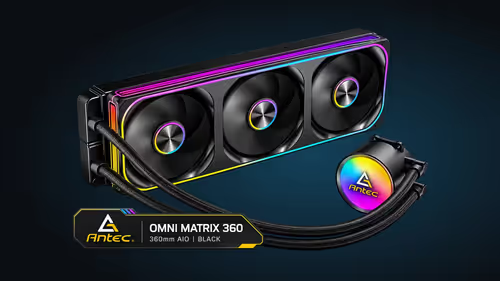
A 360mm AIO can keep a CPU well below its limit in a warm South African room, but it cannot make the room cooler. Heat leaves the loop and goes into the air, so a room near 30C starts every reading warmer than the same cooler in a cool study. The Antec Omni Matrix 360 at R999 gives the heat a 360mm radiator to leave through, and where the warm air goes matters as much as the cooler itself.
🌡️ Why room temperature sets the baseline
A CPU runs above the air around it by an amount that depends on how much heat the chip makes and how well the cooler removes it. The room is the zero point. If the air is 30C and the cooler is doing its job, the processor sits some way above 30C, and the gap is what the cooler controls. In a cool room the same gap ends at a lower number, even though the cooler has not changed.
A high-end desktop processor can draw well over 100 watts under a sustained load, and all of that power ends up as heat. The cooler has to move that heat into the radiator, and the radiator then has to pass it to the air. Each step needs a temperature difference to work, so a warm room leaves less room to move heat before the chip starts to climb.
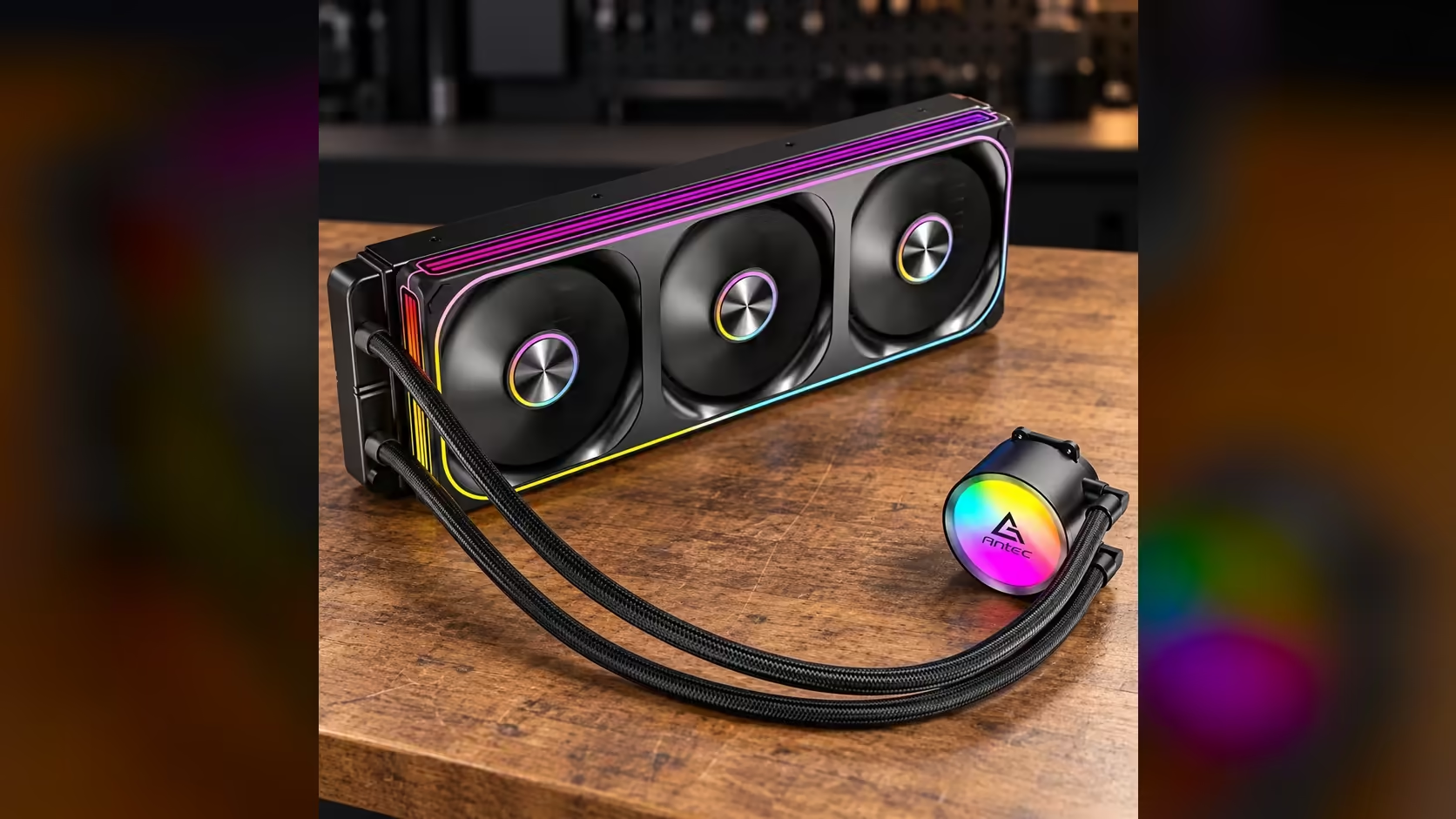
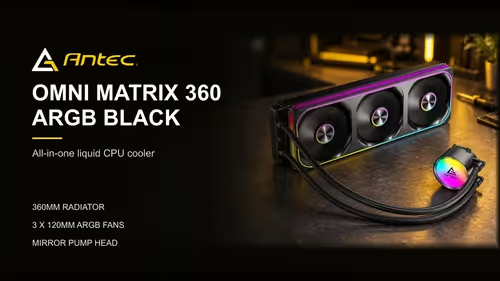
The Antec Omni Matrix 360 gives that process three things to work with. Its pump turns at 2700RPM to keep coolant moving, the fans sweep from 800RPM to 1800RPM, and each one is rated at 42.9CFM. Together the fans push about 129CFM through the radiator when they run at their rated speed. That is a real airflow figure, but it is still air that starts at room temperature.
🏠 A Highveld room with no aircon
Summer in Gauteng brings a hot afternoon that often lingers into the evening, and many older houses and flats have no aircon in the room where the PC sits. A study on the north side of a house with a window facing the afternoon sun can run noticeably warmer than the lounge down the passage. That difference is the one that sets your cooler's real baseline, long before you open a task manager.
Consider what the cooler does in that room. It takes the heat from the CPU and releases it into the room air through the radiator, so the warmth you feel near the case in the late afternoon is partly the cooler's own output. A 360mm radiator spreads that heat over a larger area than a smaller one, which can make the exhaust feel less concentrated at the case. It does not remove the heat from the room, though, and a closed door keeps it trapped.
Practical changes make a visible difference. Shift the desk off any wall that takes the afternoon sun, and keep the radiator side clear so the warm exhaust can rise and leave. Open the door to a cooler passage during the hottest hours, and if the room has a window on the shaded side, open that one to let warm air out. None of these steps cost money, and each one lowers the air the cooler is working from.
Timing matters too. A long render or a demanding game in the late afternoon starts from the highest room temperature of the day. The same session after the sun goes down starts from a lower baseline, and the load temperatures on the cooler reflect that gap.
🧹 Dust, airflow and the radiator in Gauteng
Highveld dust is the other problem a 360mm radiator faces. Its fins have a lot of surface area, and that area catches fine dust on every windy day. A layer of dust on the fins acts like insulation, so the same airflow carries less heat away, and the CPU temperatures creep up over several weeks without any obvious change in the cooler.
Clean the radiator on a schedule rather than when the temperatures look wrong. A soft brush or a can of compressed air, used gently from the inside of the fan side, clears most of the dust without bending the fins. Check the front filter of the case as well, since a clogged filter starves the radiator of air before the dust reaches the fins. Once the dust is gone, the same fans move the same air, and the readings drop back to where they started.
A clean radiator also depends on the case you choose. A mesh front lets the fans draw air through the radiator, while a solid front forces the fans to pull through a closed panel. Our mid tower cases range shows the front designs on offer, and the mesh options are the ones to look at if the room is dusty.
🔥 Setting realistic expectations for a summer build
An AIO can hold a CPU at a steady load temperature in a warm room, and that is the job it does best. Compared with an air cooler in the same room, the radiator gives the heat more surface to leave through, so the processor often runs cooler under a long load. What it cannot do is beat the room, and a builder who expects a summer temperature in the cooler's spec sheet will be disappointed. If you are still choosing between a 360mm loop and a smaller one for a warm room, the liquid CPU cooler range and the wider CPU coolers range show the sizes side by side.
Measure before you judge. Record the idle and load temperatures in the first week of your summer, at the hottest time of the day, and note the room temperature beside them. Once you have that pair of numbers, you know how much of the reading is the room and how much is the cooler. That is more useful than comparing your figures with a benchmark taken in a cool lab.
Keep the fans on a sensible curve too. A curve that ramps up quickly under load keeps the processor well inside its limit during a hot evening. The Antec Omni Matrix 360 has three PWM fans, so a curve gives you control over how much noise you accept for each degree of cooling.
Frequently Asked Questions
Will a 360mm AIO keep my CPU under 70C in a South African summer?
It can hold load temperatures lower than an air cooler in the same room, but the room sets the floor. Record your room temperature with each reading in the first summer so you know the real figure.
Should I move the PC to a cooler room?
If you can, yes. A room that stays a few degrees cooler lowers every reading the cooler reports, and that gain is often bigger than any change in the cooler itself.
Does a bigger radiator help in a hot room?
A larger radiator gives the heat more surface to leave through, so it helps the cooler work. It still sends the heat into the room, so the room's temperature continues to set the baseline.
How often should I clean the radiator in Gauteng?
Clean it on a regular schedule, and check it more often in dusty months. A layer of dust on the fins cuts airflow and raises the temperatures slowly, which is easy to miss until the readings have crept up.
Do I still need case fans with a 360mm AIO?
Yes. The radiator fans move air through the cooler, but the case fans bring fresh air in and send warm air out. Without them the room air around the radiator can get trapped.
Planning a cooler for a warm room?
Browse our CPU liquid coolers and check the radiator size against the case you plan to use before you order.