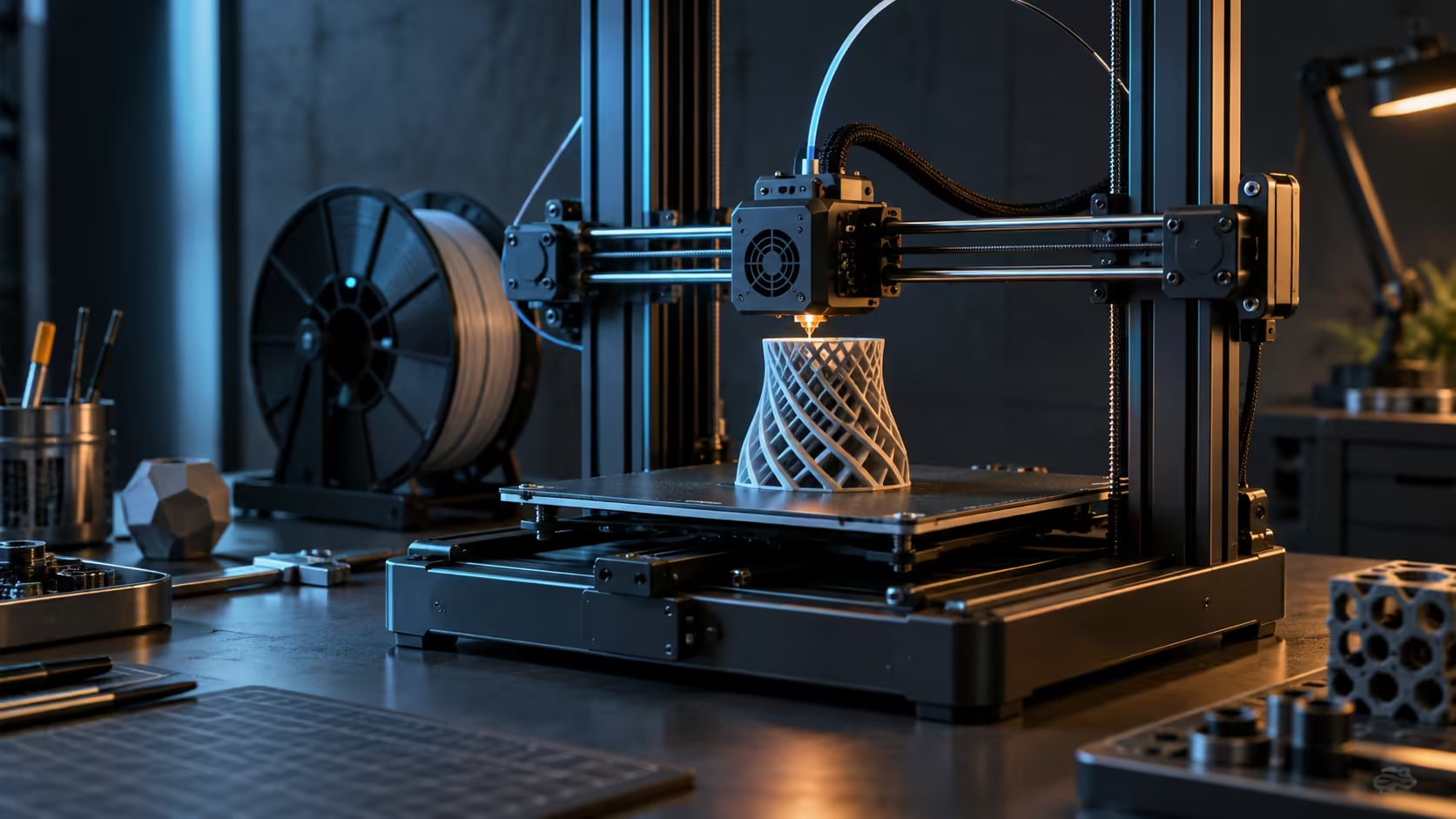
Three specifications decide almost everything about whether a first printer purchase feels right six months later, and none of them is the top speed most listings lead with. Choosing a 3D printer sensibly means weighing build volume, filament support and auto levelling together, since each one governs a different part of the experience and none of them substitutes for the others.
Quick Answer
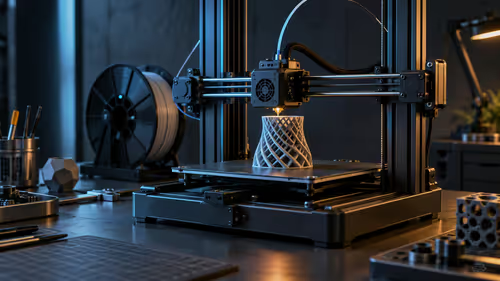
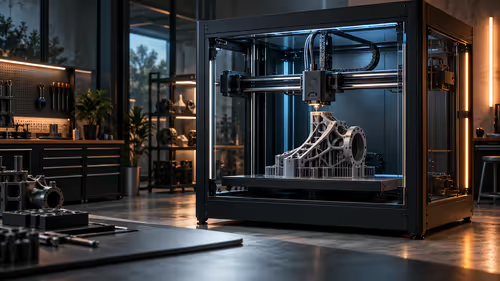
Build volume sets what you can physically make; filament support sets what you can make it from. Levelling then decides how often a given attempt succeeds without needing a second try. Evetech pairs a 220 x 220 x 240mm bed, a 300C nozzle and hands-free levelling on the Ender-3 V3 KE at R5,799, covering all three in one machine rather than trading one off against another.
📦 Build volume decides your actual project list, not just your bed size
A 220 by 220mm footprint comfortably covers phone stands, board game inserts, small brackets and household repair parts, the bulk of what a typical hobbyist or small maker actually prints. Someone building props for a weekend market stall, printing organiser parts for a small home office, or working through a university engineering project rarely needs more than this, since most functional objects are designed around human-scale dimensions that fit well inside it.
Where volume genuinely matters is a specific, recurring project type: large cosplay panels, furniture-scale pieces, or anything routinely taller than 240mm printed upright. If that describes your actual plans rather than an occasional exception, size the purchase around it deliberately; if it is an occasional exception, splitting a model into sections is a routine workaround rather than a real limitation. Bed dimensions vary meaningfully across the 3D printer range, so this is a comparison worth making directly rather than assuming most machines are similar.
🌡️ Filament support is really about the nozzle ceiling and what you can restock
A nozzle capped around 250C locks a printer into PLA and most PETG, shutting the door on ASA and hotter engineering blends before you have even tried them. A 300C ceiling costs nothing in ordinary use, since PLA never runs anywhere near that temperature, but it keeps every common material on the table without forcing a hotend swap the day your interests expand.
Local stock matters just as much as the printer's own ceiling. A hotend capable of printing ASA is not much use if the specific filament sits behind weeks of customs clearance, so check the filament range for the materials you actually want before assuming a high nozzle rating alone solves the problem. South African humidity swings between regions too, and any material stored improperly absorbs moisture regardless of how capable the printer feeding it is, so dry, sealed storage matters as much as the shopping list itself.
📐 Levelling reliability compounds across every single print you attempt
A failed first layer wastes filament and time on that one print, and it feels like a minor annoyance the first time it happens. Multiply a 20 percent failure rate across 100 or more prints over a year, and the difference between a machine that reliably lays down a clean first layer and one that fails one attempt in five becomes a genuinely large amount of wasted material and evenings, not a rounding error.
Auto levelling, probing a grid across the bed and building a height map instead of assuming a flat surface, removes the single biggest source of that failure rate on a budget machine. It still leaves one number, the Z-offset, for a human to set once, but that single test print is a far smaller ongoing cost than repeated first-layer failures on a machine without any form of bed mapping.
🧮 Weighing all three together as a South African buyer specifically
None of these three specifications matters in isolation. A generous build volume with a low nozzle ceiling still cannot print ASA regardless of how big the parts could theoretically be, and excellent filament support paired with poor levelling still fails first layers regardless of what materials are technically available. Judge a shortlist against all three together, and be specifically wary of a very cheap import that quietly cuts one of the three to hit an attractive price, since the true cost shows up later in wasted material, failed jobs, or a hotend that cannot go where a later project needs it to.
For anyone whose projects lean toward highly detailed miniatures or a fully cured surface finish rather than functional printed parts, the resin range is worth weighing as an entirely separate process against filament printing, since it answers a different set of these same three questions in its own way.
Write your own priority order down before comparing listings, rather than letting whichever specification a particular seller happens to lead with set the order for you. A shortlist ranked against your own actual projects, rather than against a marketing page's chosen headline, tends to land on a genuinely better fit than one built by comparing top speed figures across a handful of open browser tabs late at night.
Frequently Asked Questions
Which of the three specifications matters most for a first printer?
Levelling reliability tends to have the biggest day-to-day impact, since a failed first layer wastes an attempt regardless of how good the other two specifications are.
Is a bigger build volume worth paying extra for as a beginner?
Usually not, unless your actual projects are regularly large. A 220 x 220 x 240mm bed already covers the great majority of beginner and hobby projects without needing anything bigger.
Does a 300C nozzle mean I need to print at high temperatures immediately?
No. It simply keeps the option open for later, since PLA and most everyday printing happen well below that ceiling regardless of the nozzle's maximum rating.
How do I know if local filament stock actually covers what I want?
Check the specific materials and colours on a retailer's filament range directly rather than assuming a printer's nozzle rating guarantees easy access to every compatible material.
Can a printer be strong on two of these three and still be a poor choice?
Yes. All three work together, and a weakness in any one of them, size, material range or reliability, limits what the other two can actually deliver in day-to-day practice.
Ready to choose based on what you will actually print, not just the spec sheet?
Weigh build volume, filament support and levelling together, and check local stock before assuming a high nozzle ceiling solves everything.