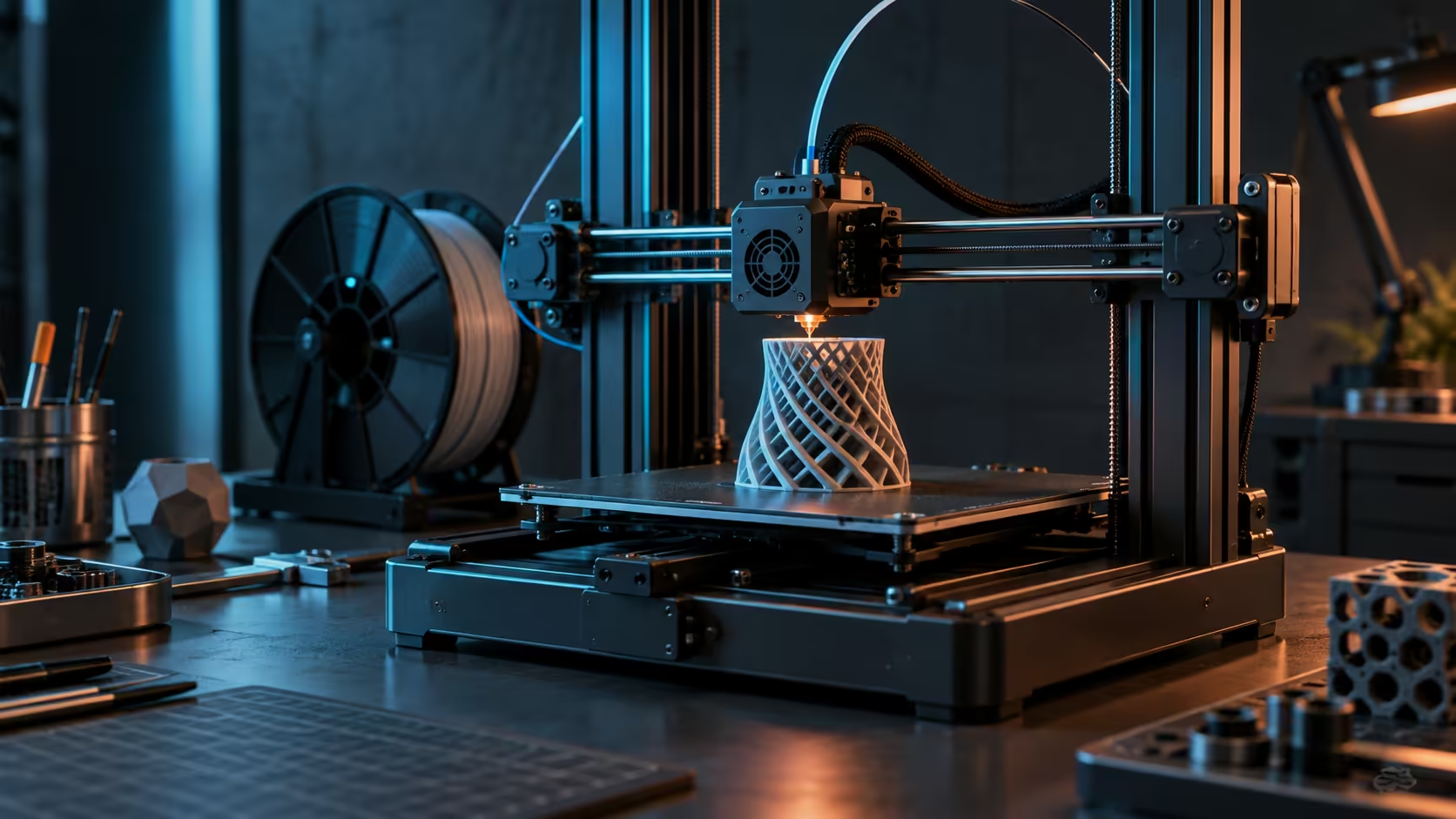
A nozzle specification list reads like a wall of numbers until you know what each one is actually protecting you from. Nozzle specification boils down to four things worth understanding on their own terms: bore diameter, the metal it is made from, its maximum temperature, and how much power its heater carries.
Quick Answer
Four numbers describe a nozzle: bore diameter, metal, maximum temperature and heater power. Heater wattage decides how quickly the nozzle recovers temperature at high flow, which matters just as much as the maximum figure everyone quotes first. The Ender-3 V3 KE quotes a 300C ceiling at R5,799, with wattage sitting as its own separate line item rather than folded into that headline number.
🕳️ Bore diameter sets the resolution-versus-speed trade
The standard bore on most consumer printers is 0.4mm, and it is a genuine middle ground rather than an arbitrary default. A smaller bore, 0.2mm for example, lays down finer detail and thinner walls but moves less plastic per pass, capping achievable speed for a given layer height. A larger bore, 0.6mm or 0.8mm, moves considerably more plastic per second, which suits large, simple, strong parts at the cost of fine surface detail and small feature accuracy.
Changing bore size is one of the few upgrades that genuinely shifts what a printer is good at rather than just how fast it runs, and it is worth choosing deliberately based on whether a project needs speed and strength or detail and precision. Not every listing in the 3D printer range makes it obvious whether the nozzle is user-swappable at all, so that is worth confirming before assuming the flexibility is there.
🔩 What the nozzle is made from decides how long it lasts
A standard brass nozzle machines cleanly and conducts heat well, which is why it remains the default for ordinary filaments like PLA, PETG and ABS. Brass wears quickly against abrasive materials, though, anything with glass fibre, carbon fibre or a metal-filled filament, since the abrasive particles slowly erode the softer brass at the tip.
A hardened steel nozzle trades a little thermal conductivity for far greater resistance to that wear, often outlasting brass by 200 hours or more on carbon-fibre filament, and it is the correct choice specifically when an abrasive filament is on the menu. Buying a hardened nozzle as a spare before it is strictly needed is cheap insurance for anyone who expects to try a reinforced filament down the line, since brass wear only becomes obvious once dimensional accuracy has already started slipping.
🌡️ Maximum temperature: a ceiling, and only a ceiling
A nozzle's rated maximum tells you the highest temperature its heater and thermistor combination can reach, and nothing more. It does not mean every print runs anywhere near that number, and materials such as PLA, PETG and ABS all print well below a 300C ceiling with plenty of margin left over.
What that margin actually buys is headroom for materials you have not tried yet, ASA and hotter engineering blends specifically, without needing a different hotend later. Read the maximum as "what this hotend can reach if a future project needs it" rather than "what this hotend runs at by default."
🔥 Heater wattage: the number that decides recovery speed
A hotend's heater has a rated power output, commonly expressed in watts, and that number decides how quickly it can recover temperature after a burst of high-flow extrusion pulls heat away from the melt zone faster than usual. A higher wattage heater holds a steadier temperature under sustained high-speed printing, where a lower wattage heater can lag behind and briefly under-extrude until it catches back up.
This matters more as print speed and layer height increase, since both push more plastic through the nozzle per second and demand more from the heater to keep pace. There is a rough field test for it too: watch how fast the displayed temperature recovers after loading cold filament or starting a large flat infill area. A hotend that snaps back to its target within a couple of seconds is running with comfortable headroom, where one that visibly dips and crawls back is closer to its actual ceiling. A basic tool kit is worth having on hand for any nozzle or heater cartridge swap that reading points you toward.
Whatever the heater's rated output, the filament feeding it needs to hold a steady diameter too, since an unevenly wound spool makes the heater chase a moving target regardless of what speed or temperature you actually dialled in.
A thermistor, the small sensor reading the hotend's actual temperature, works alongside the heater rather than instead of it, and it is worth knowing the two are separate parts entirely. A heater can be powerful enough to reach a given temperature quickly, but if the thermistor reading is slow or inaccurate, the firmware still ends up under- or overshooting the target while it waits for a stale reading to catch up. This is a less commonly discussed failure point than either the heater or the nozzle bore, but it explains temperature instability that neither of those two specifications alone would predict.
Frequently Asked Questions
Does a bigger bore diameter always mean a better nozzle?
No, it is a trade-off. Larger bores print faster with less detail, smaller bores print finer detail more slowly, and the right choice depends on the specific project.
When do I actually need a hardened steel nozzle?
Specifically when printing abrasive filaments containing glass fibre, carbon fibre, or metal particles. Standard filaments work fine on brass and print with slightly better heat transfer.
Why does a nozzle's maximum temperature matter if I print PLA at 200C?
It sets how much headroom exists for materials you might try later. A low-ceiling nozzle cannot be pushed higher without replacing it entirely.
How do I find a nozzle's heater wattage if it is not on the summary page?
Check the full, detailed specification table rather than the marketing summary, since wattage is often listed separately from the headline temperature figure.
Does heater wattage affect print quality on slower prints?
Less noticeably, since slower prints demand less flow and give the heater more time to keep pace. It matters most at high speed and with taller layer heights.
Is a slow-reacting thermistor a common problem?
It is not the first thing most people check, but temperature that overshoots or wobbles despite a capable heater is worth attributing to the sensor and its reading speed rather than assuming the heater itself is underpowered.
Ready to read a nozzle spec sheet properly?
Check bore, metal, maximum temperature and heater wattage as four separate questions, not one combined number.