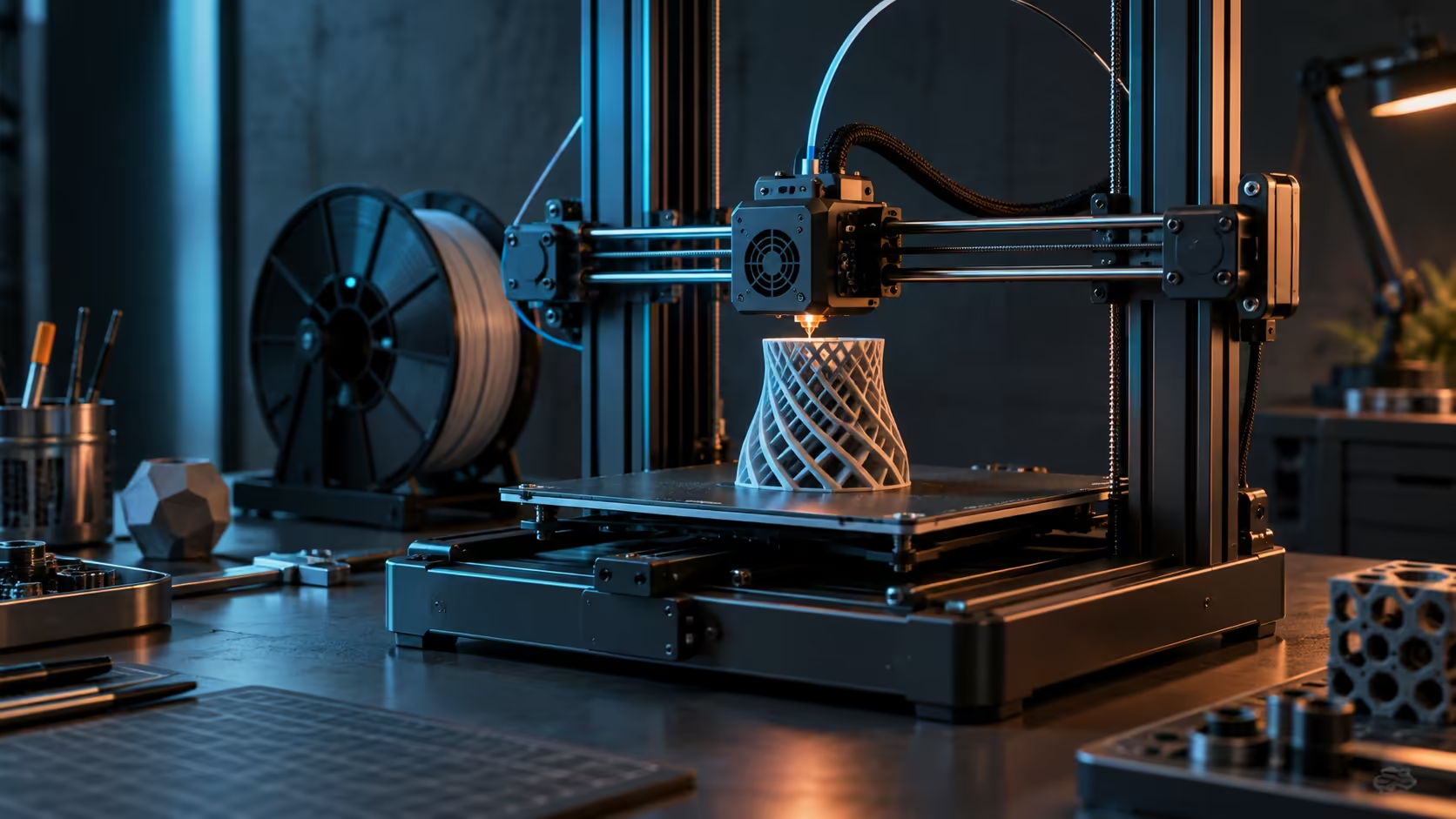
A build surface that grips hard while hot and lets go on its own once cool sounds like it should need some kind of trick. PEI, the material behind most modern flexible build plates, does exactly that through nothing more complicated than its own surface chemistry and a thin sheet of spring steel underneath.
Quick Answer
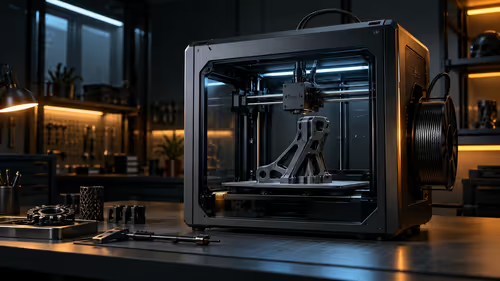
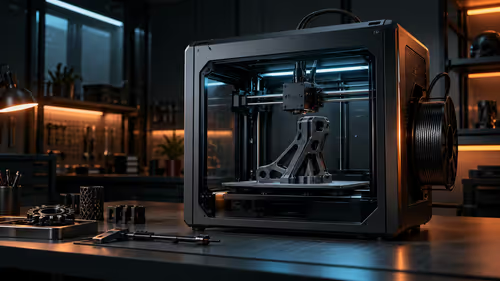
A PEI sheet is polyetherimide bonded to spring steel. Hot plastic grips it hard during printing, and a small flex of the sheet once the part has cooled releases it without a scraper or any other tool. Evetech fits one to the Ender-3 V3 KE at R5,799, where the same surface also doubles as the plate the auto-levelling probe reads.
🧪 What is actually on the bed
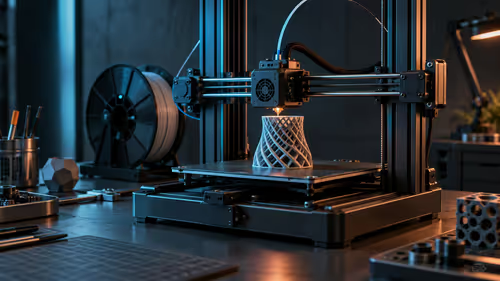
Polyetherimide is a high-performance plastic with a genuine ability to bond to molten filament at typical printing temperatures, and manufacturers bond a thin sheet of it onto spring steel to give the whole assembly the flexibility needed for the release trick to work. The surface carries a fine texture, which is also what transfers onto the bottom of every print, giving finished parts a slightly matte, grippy underside rather than a glossy one. This has become the default surface across most of the 3D printer range, though it is still worth confirming on any specific listing.
🧲 The grip-then-release cycle, explained
At printing temperature, PEI's surface bonds genuinely well to hot plastic, strong enough that a correctly squashed first layer will not lift on its own mid-print. That bond is temperature-dependent, though, and it weakens noticeably as the plate and part cool back down to room temperature, since the plastic itself contracts slightly and pulls away from the microscopic grip it had while hot.
Flexing the spring steel sheet once it has cooled finishes what the temperature drop already started, popping the part free with no scraper, no prying, and no risk of gouging the surface the way a metal tool can on a rigid bed. Removing a part while the plate is still warm skips most of that natural release and tends to need real force, so waiting even 5 to 10 minutes for the plate to cool below 40C makes the whole process almost effortless by comparison.
🗺️ One surface, two jobs
Because the PEI sheet sits directly on the bed, it is also the exact surface an auto-levelling probe reads when building its height map, which means the sheet's own condition affects levelling accuracy, not just adhesion. A smear of skin oil sitting right where a probe point lands gets read as part of the bed's height, so the map comes out subtly wrong at that one spot, and the result looks exactly like a levelling fault when it is really a cleaning problem in disguise.
Wipe the plate down with isopropyl alcohol before probing, not just before printing, and keep the surrounding desk reasonably tidy so nothing gets knocked onto the plate between the two steps; a desk mat helps contain the mess of routine cleaning and filament trimming nearby. Pair a well-kept plate with dry, consistent filament, since even a perfectly clean PEI surface cannot make up for a spool whose diameter drifts on its way into the hotend.
Frequently Asked Questions
Is a glue stick necessary on a PEI surface?
Rarely, for PLA and PETG. ABS and ASA are the exceptions worth watching, since either can occasionally need a thin bed adhesive to stop a stubborn corner from lifting, but it is not something to apply as a matter of routine.
Why did my part not pop free easily?
It was likely removed too soon, while the plate was still warm. Letting it cool fully lets the plastic contract away from the surface on its own first.
Does the texture on PEI wear out over time?
Yes, eventually, usually starting as a visible shine in the most-used area of the plate. A worn patch loses grip and may need a light sand or eventual replacement.
Can dust on the plate really affect levelling accuracy?
Yes. Anything sitting on the plate right where a probe point lands, dust or a smear of oil, gets baked into the height map as if it were the bed's own shape.
Ready to stop scraping parts off the bed?
Let the plate cool fully before removing anything, and keep it clean before every levelling probe.