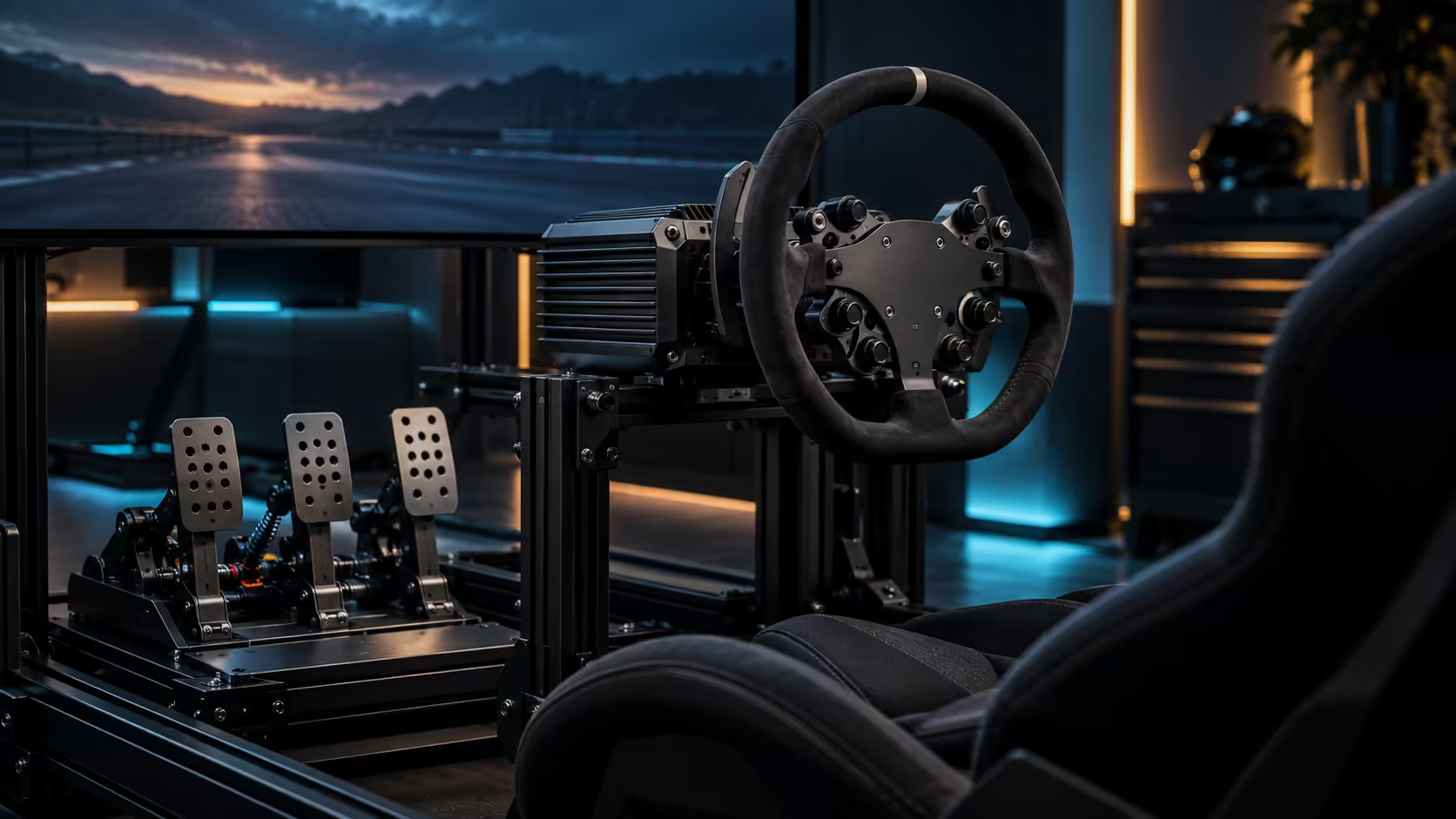
A wheel that feels faintly stepped as it turns, like tiny detents you can almost count, is not a worn part or a loose bolt in most cases. It is the motor itself, and the fix is a design choice rather than a repair. Notchy steering feel in a direct drive wheel usually traces back to magnetic cogging, and a zero-cogging base like the Alpha EVO in the R14,999 bundle is built specifically to remove it.
Quick Answer
Notchy or stepped steering feel at slow, gentle inputs is most often magnetic cogging, a faint stepping caused by a motor's permanent magnets passing its stator teeth as it rotates. Zero-cogging design in the Alpha EVO base, part of the R14,999 Green Flag bundle, removes the source of that stepping rather than masking it, so 9Nm of genuine output can be felt without added motor texture layered underneath it.
🔍 Ruling out the other causes first
Before assuming cogging is the culprit, check the obvious mechanical causes. A loose mounting bolt lets the whole base flex slightly during rotation, which can feel similar to notchiness but is actually the frame moving, not the motor. Tighten every mounting bolt and retest before going further, since this fix costs nothing and takes 2 minutes.
A dry or dusty desk clamp or quick-release connector can also introduce a faint catch as the wheel turns, particularly if the setup has been in a dusty room for a while. Clean and reseat the rim's quick-release connection and check the clamp is fully tightened. If notchiness persists after both checks, particularly at very slow, deliberate turns near centre, the cause is very likely the motor itself rather than the mount.
⚙️ What magnetic cogging actually is
Inside any permanent magnet motor, a full ring of magnets on the rotor, spaced out across the whole 360 degrees of a turn, passes close to teeth on the stator as the shaft turns, and the magnetic attraction between them varies slightly depending on exact alignment. That variation creates a faint, repeating resistance, stronger at some rotational positions than others, which is what you feel as a stepping sensation, especially obvious at slow speeds where nothing else is masking it.
On a belt or gear-driven wheel, this effect is usually hidden by the friction and backlash already present in the reduction stage, which is one of the odd upsides of a mechanically less precise design. Direct drive removes that masking layer entirely, which means any cogging present in the motor is far more noticeable rather than less, unless the motor itself is specifically engineered against it.
🧲 How zero-cogging design solves it
Manufacturers reduce cogging through motor design choices such as skewing the magnets slightly along the rotor's length or carefully shaping the winding pattern, both of which spread the magnetic interaction more evenly through a full rotation instead of concentrating it at specific points. The result is a motor that produces the same torque output without the stepping, because the cause of the stepping was designed out at the magnet and winding level rather than filtered out afterward in software.
This matters most within about 5 degrees of centre, exactly the range where you are making small, precise corrections and would notice the least amount of unwanted texture. At full lock and high steering speed, cogging is far less noticeable regardless of motor design, since the forces involved are already large enough to bury a small stepping effect.
Compare drive technology directly on the racing simulation shelf or the dedicated sim racing page, and once a base is chosen, the simulation accessories range covers the mounting and connector hardware that rules out the other causes above before you even start troubleshooting the motor.
Frequently Asked Questions
Is notchy steering always a cogging problem?
No. Check mounting bolts and the rim's quick-release connection first, since a loose mount or a dirty connector can feel similar. If the issue persists at slow, deliberate turns after those checks, cogging is the likely cause.
Does zero-cogging design reduce the wheel's torque output?
No. It changes how evenly torque is delivered through a rotation, not how much torque the motor can produce. A zero-cogging base like the Alpha EVO can still reach its full 9Nm rated output.
Why is cogging more noticeable on direct drive than gear-driven wheels?
A gear-driven wheel's reduction stage, typically adding 2 to 8ms of its own delay, has friction and backlash that tends to mask small motor irregularities. Direct drive has no such masking layer, so any cogging present is more obvious.
Can software settings fix a cogging problem?
Not fully. Cogging is a mechanical and magnetic property of the motor itself. Software can smooth some of its effects, but a motor genuinely designed against cogging removes the cause rather than filtering the symptom.
Ready to feel clean detail instead of motor texture?
Check the mount and connections first, then look at the Racing Simulation shelf for a zero-cogging direct drive base.