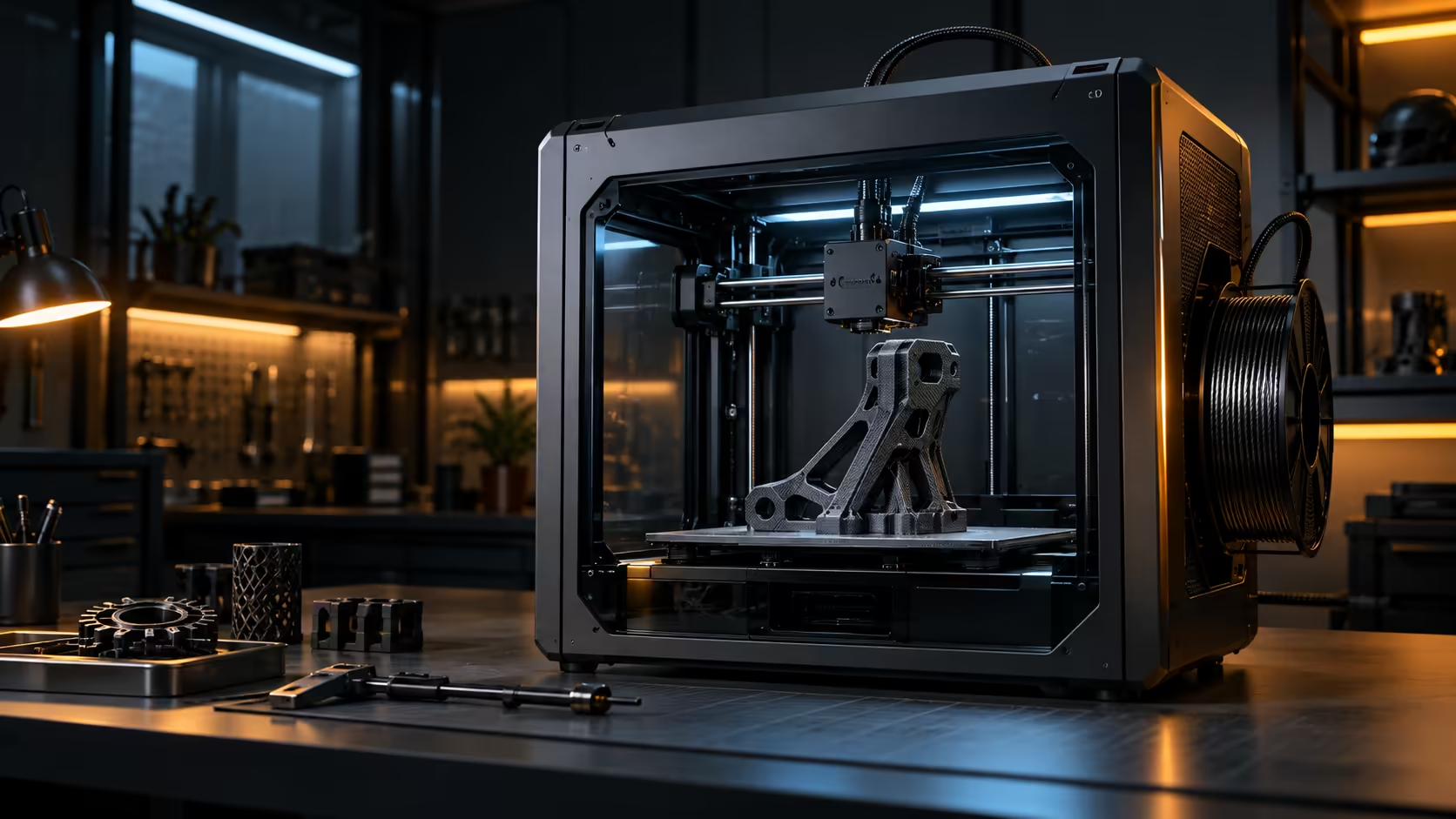
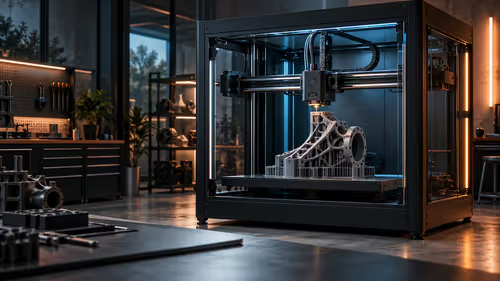
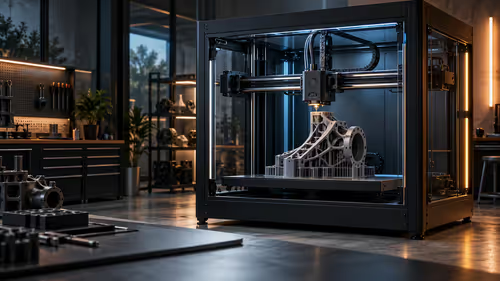
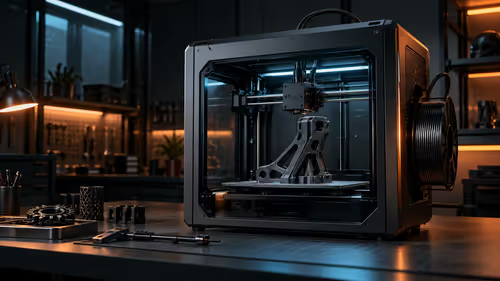
Rigidity is the property carbon-fibre filament actually adds, and it is not the same thing as strength, which changes what this material is genuinely good for compared to what people often assume it does. What a carbon fibre-capable 3D printer can make starts with getting that distinction right.
Quick Answer
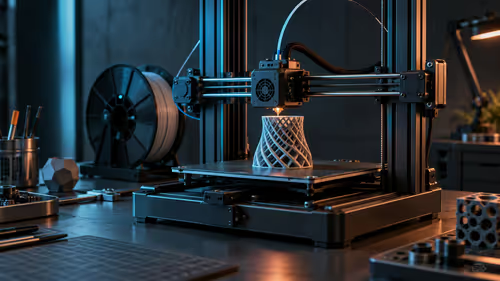
Stiff, light parts that need to hold their shape under load rather than flex: drone frames, camera mounts, jigs and tool holders are the categories where chopped fibre earns its keep. It adds rigidity rather than raw impact strength, which suits brackets and structural parts far more than it suits hinges or anything that needs to bend without cracking. A capable machine like the Creality K1C runs R12,599.
🚁 Drone frames: rigidity where flex costs you performance
A drone frame that flexes under vibration or a hard landing throws off motor alignment and handling, so stiffness matters more here than outright toughness. Carbon-fibre reinforced filament at a typical 1.2mm wall thickness resists that flex considerably better than plain PLA or PETG at the same thickness, which is why it has become a popular choice for hobbyist frame printing specifically.
📷 Camera mounts and jigs: precision that stays put
A camera mount or a workshop jig needs to hold a position accurate to within 0.1 to 0.2mm over time, without sagging or shifting under the weight it carries. The added stiffness from chopped fibre keeps these parts dimensionally stable in a way a standard filament part of the same thickness would not, which matters directly for anything requiring repeatable accuracy.
⚠️ Where carbon fibre is the wrong choice
Hinges, snap-fits and anything that needs to flex repeatedly without cracking are poor candidates for fibre-reinforced filament, since the added stiffness comes at the cost of the material's ability to bend without failing. Choose a standard, more flexible filament for these applications instead, and reserve carbon-fibre blends specifically for parts that need to stay rigid under load.
Match the material to the mechanical job the part actually does, not just to whichever filament sounds more advanced. A wander through model kits is a decent way to picture how a rigid, jointed design actually holds together before committing a whole spool to your own version, confirm a machine's actual carbon-fibre capability in the 3D printer range rather than assuming every listed printer handles it, and check filament options to compare carbon-fibre blends against standard alternatives for your specific project.
Frequently Asked Questions
Does carbon-fibre filament make parts stronger overall?
It makes parts stiffer specifically, which is not the same as impact strength; a rigid part can still crack under a sharp impact that a more flexible material would absorb.
Is carbon-fibre filament a good choice for a living hinge?
No, the added stiffness works against a hinge's need to flex repeatedly without cracking; a standard, more flexible filament suits that application better.
What makes a part a good candidate for carbon-fibre reinforcement?
Anything that needs to hold a fixed shape under load, resist sagging, or stay dimensionally stable over time, rather than needing to bend or absorb impact.
Can carbon-fibre filament be painted or finished like standard filaments?
Generally yes with appropriate preparation, though the added texture from the fibre itself can require a bit more sanding for a smooth painted finish.
Designing a part that needs to hold its shape under load?
Match carbon-fibre filament to rigid, structural jobs, not flexible ones.