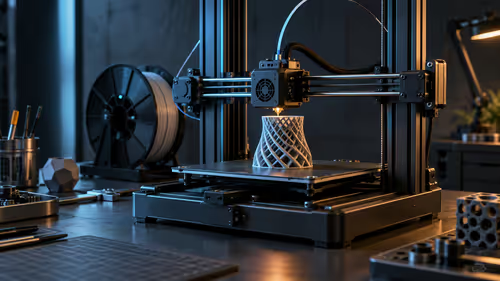
A maker weighing extruder types is really asking a business question dressed up as a hardware one. Direct drive costs a little more to build into a printer than a Bowden system does, and for anyone selling finished parts rather than printing purely for themselves, that small difference tends to pay itself back faster than it looks on paper.
Quick Answer
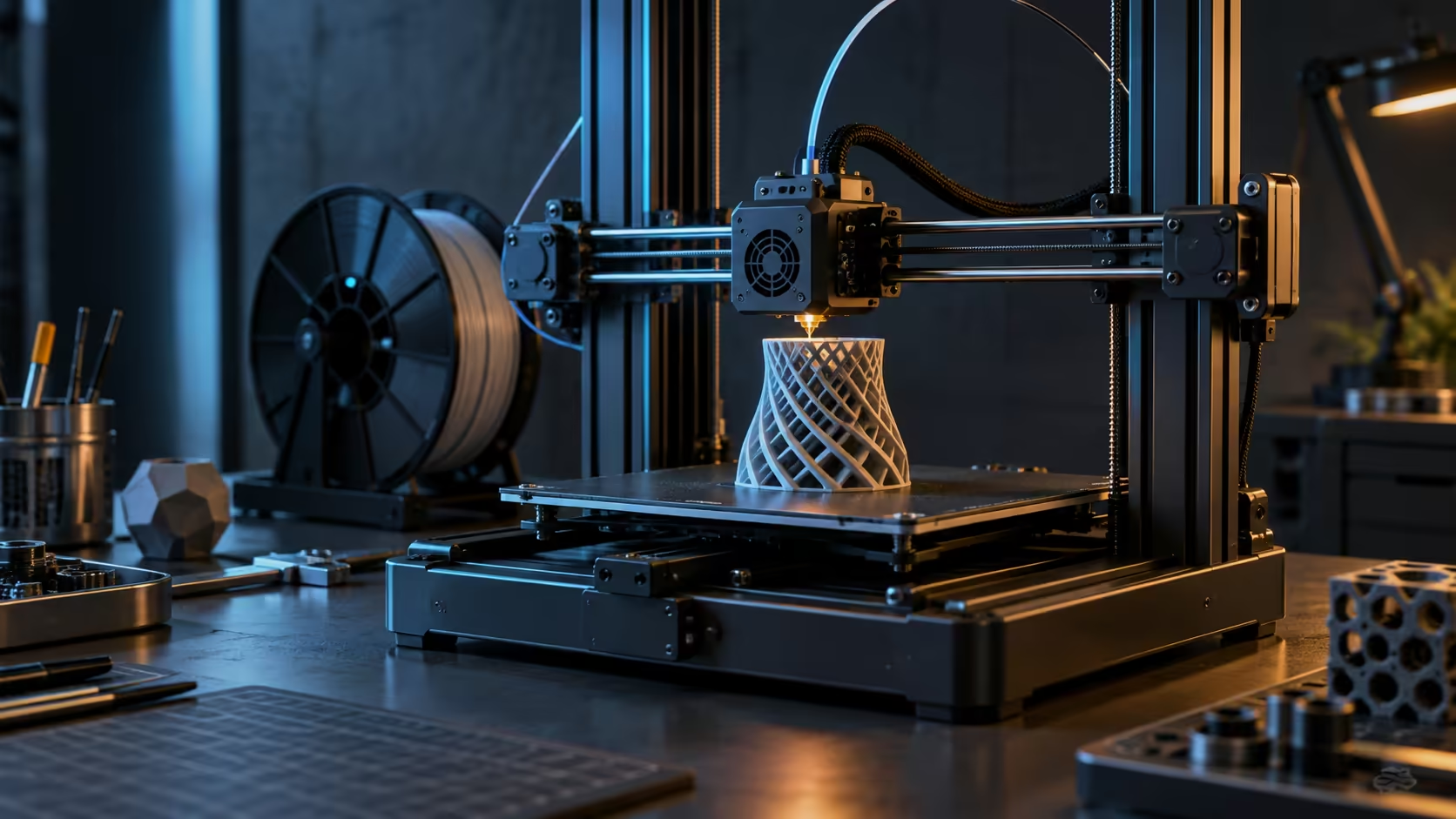
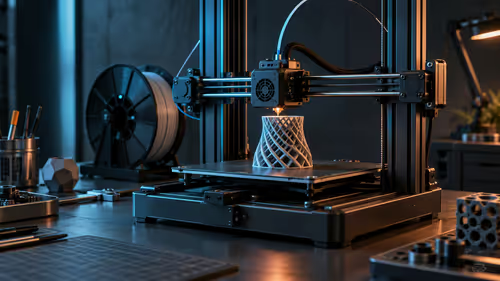
For a maker selling parts, direct drive pays back through material range and fewer failed jobs. Both matter more here than for a casual hobbyist, because a replacement part or a specific filament often has to cross an ocean first before it reaches a South African workshop. The Sprite direct drive head sits on the Ender-3 V3 KE at R5,799 as a built-in feature rather than an upgrade fitted later.
💰 What the cost difference actually buys
A direct drive extruder adds a small amount of mass and mechanical complexity to the toolhead compared with a Bowden system's lighter, simpler setup, and that difference shows up as a modest price gap between otherwise similar machines. What it buys in return is a feed path measured in centimetres rather than several hundred millimetres, which translates directly into steadier extrusion on ordinary materials and genuine access to flexible filament that a Bowden setup struggles with regardless of tuning. This price gap is visible directly across the 3D printer range once you know which line item to compare.
For someone printing purely as a hobby, that gap can be a marginal, take-it-or-leave-it decision. For someone taking orders, it is closer to buying a wider service menu outright, since every material a printer cannot handle reliably is an order category turned away before it ever reaches a customer.
📦 The orders a narrower material range would have to decline
TPU phone cases printed in under 2 hours, flexible gasket seals, or anything a customer specifically wants in a rubbery finish are the clearest example of orders a Bowden-only setup makes genuinely difficult rather than merely fiddly. A direct drive machine handles these as a normal part of the material list rather than a special, high-effort exception, which matters commercially because it is the difference between quoting a job confidently and warning a customer upfront that the result might not come out clean.
Even outside flexible material specifically, the steadier extrusion a short feed path provides reduces the rate of subtly under-extruded or inconsistent prints across ordinary rigid filaments too, which matters more once "good enough for me" becomes "good enough to hand to a paying customer."
🌊 Why the ocean-crossing problem changes the maths here
A failed print anywhere costs filament and time, but the cost of a genuinely stuck job, one where the fix needs an imported part or a specific filament not stocked locally, is meaningfully higher for a South African maker than for someone able to walk into a local shop the same afternoon. A wait of 2 to 3 weeks for a part to clear customs turns a minor equipment issue into a missed delivery date for a paying customer.
Direct drive's reliability advantage matters more against that backdrop, not because the extruder itself is less likely to ever need a spare part, but because avoiding preventable failure modes in the first place carries more weight when the alternative to prevention is a long international wait rather than a quick local fix.
🧮 A simple way to decide if it applies to you
If your order list already includes, or is likely to include, flexible material requests, or if a failed job genuinely costs you a customer relationship rather than just an evening, the extra cost of direct drive is close to a rounding error against what it protects. If your printing stays purely personal and low-stakes, the decision is far more marginal, and either extruder type reasonably suits that use.
Pair whichever machine you choose with consistent filament and a basic tool kit for routine maintenance, since even the better extruder layout still depends on good filament and a properly tensioned machine to deliver on its own advantages.
There is a middle path worth mentioning too, for a maker not yet sure whether flexible orders will actually materialise. Starting with a direct drive machine but simply not marketing flexible filament services until the first request comes in costs nothing extra beyond the initial purchase decision, and it avoids the awkward position of having built a customer base around rigid materials only, then discovering the extruder layout cannot reasonably extend into the request that follows. The reverse, starting on Bowden and later wanting to add flexible material to the menu, usually means replacing the extruder or the whole machine rather than a simple settings change.
Frequently Asked Questions
Does direct drive matter if I never plan to print flexible filament?
Less critically, though the steadier extrusion it provides still benefits ordinary rigid materials, which matters more for anyone selling finished parts than for occasional personal printing.
How much more does a direct drive machine typically cost?
The gap varies by machine, but it is generally a modest premium rather than a dramatic one, and it is worth weighing against what a single turned-away order would have been worth.
Is Bowden ever the better choice for a maker?
If your order list is exclusively rigid materials and speed matters more than material range, a well-tuned Bowden system can still serve a maker well. The decision depends on what you actually sell.
Does buying direct drive protect me from every kind of print failure?
No. It specifically addresses feeding consistency and flexible material access, not every possible cause of a failed print, so good levelling and maintenance still matter separately.
What is the biggest risk of choosing the wrong extruder type as a maker?
Turning away or under-delivering on orders that needed the material range or reliability the other extruder type would have provided, which costs more than the price difference between the two typically amounts to.
Can I upgrade a Bowden printer to direct drive later instead of buying twice?
Sometimes, depending on the specific frame and whether an aftermarket kit exists for that model, but it is a real mechanical project rather than a quick swap, so it is worth weighing against simply choosing direct drive from the outset.
Ready to weigh the extruder decision like a business cost rather than a spec preference?
Count how often flexible material or reliability failures would actually cost you an order before deciding either way.