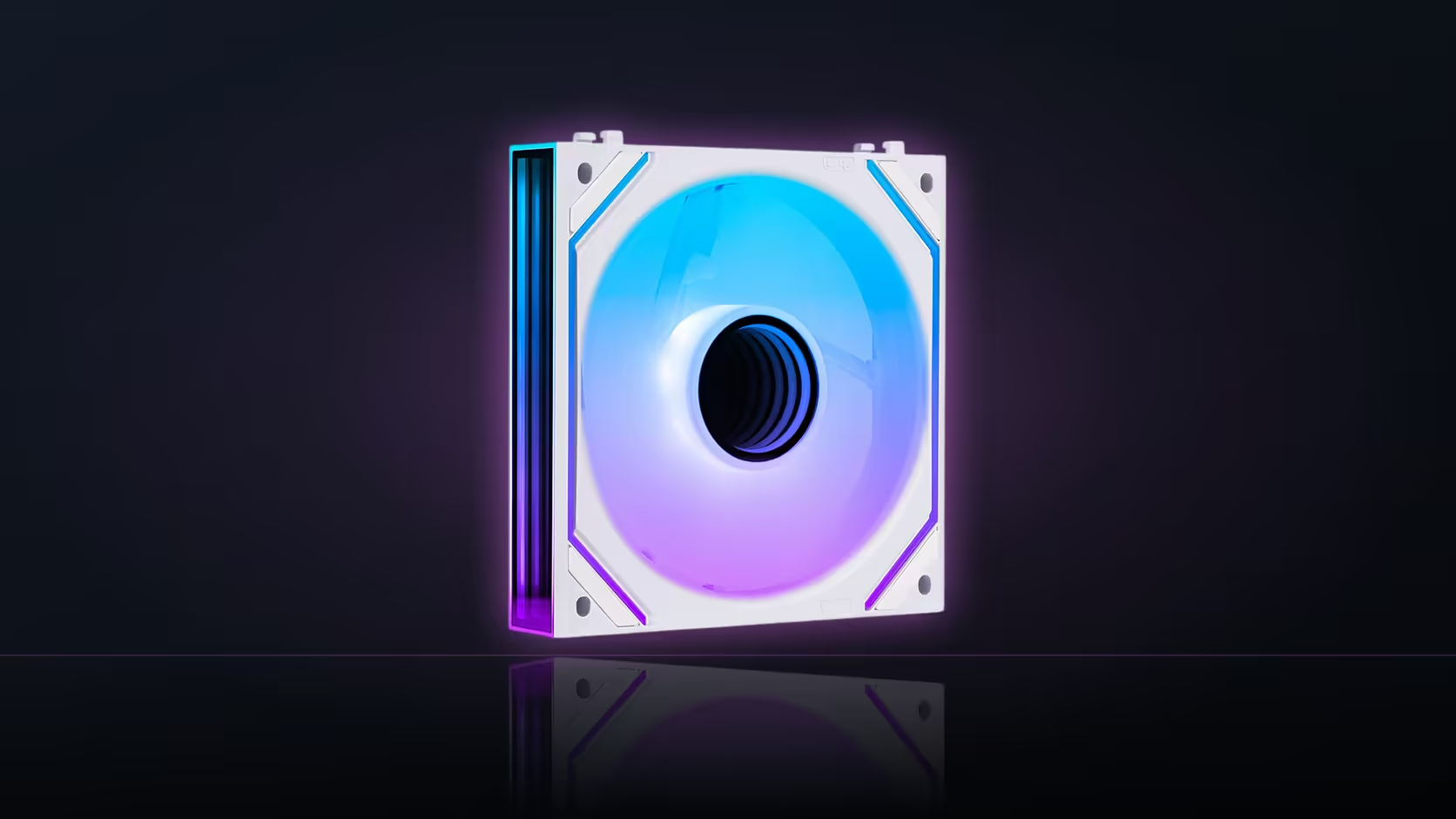
Put AsiaHorse's most expensive 120mm fan next to its cheapest and the gap looks small on paper: a few centimetres of blade, a similar bearing family, and a headline lighting effect on both. The real difference sits in one number most shoppers skim past, and understanding what that number actually buys is the difference between an informed upgrade and paying extra for a figure you will never notice.
Quick Answer
AsiaHorse's Dawn Pro lists 71 CFM of airflow at R269 for a single fan, while the Amici 5GT lists 61.5 CFM at R199 for a single. That works out to roughly ten CFM of extra airflow for about seventy Rand more per fan, both VAT-inclusive prices that move. Whether the trade is worth it depends heavily on whether the fan position in question is doing real thermal work or is mostly there to be looked at.
📊 The airflow gap in real terms
Ten CFM does not sound dramatic written as a bare number, but it represents roughly a 15% increase in rated airflow between the two models. On a fan doing genuine cooling duty, intake pulling fresh air across a radiator or exhaust clearing hot air from the top of a case, that kind of margin can show up in temperatures under sustained load. On a fan mounted purely for its lighting, the same margin does nothing measurable, because the air it moves is not doing thermal work in the first place.
Where the gap actually matters
Think in terms of position rather than model name. A front intake feeding a CPU cooler or a set of GPU fans benefits from every CFM you can get, because that airflow is the input the rest of the system's cooling depends on. A rear-mounted fan pulling case-badge-visible duty, or a fan sitting behind a solid front panel where airflow is already restricted well below either rating, is a position where the ten-CFM gap between these two fans is unlikely to be the limiting factor.
💵 The price gap widens at scale
Compared one to one, the difference between a Dawn Pro single and an Amici 5GT single is about seventy Rand. Multiply that across a three-fan row and the gap grows more sharply than it first appears: a Dawn Pro three-pack runs R699 against R449 for an Amici 5GT three-pack, a difference of R250 rather than the roughly R210 you would get by simply tripling the single-fan gap. Buying by the pack changes the arithmetic, so it is worth pricing the whole row rather than extrapolating from one fan.
Deciding where the extra spend goes
For a three-fan intake row doing meaningful cooling work, the airflow premium on Dawn Pro is easier to justify because every fan in that row is contributing to the same job. For a decorative row visible through a side window but contributing little to actual case airflow, that extra R250 might be better spent on a case accessory, additional storage, or simply kept back.
✨ Lighting: similar effect, different presentation
Both models carry an infinity-mirror ARGB lighting design, which is where the two ranges visually converge despite the price gap. Amici 5GT's listing names a specific 24-LED ring behind the effect; Dawn Pro's listing describes the visual outcome without publishing an LED count. That is a difference in how each listing documents itself rather than necessarily a difference in the lighting hardware, and it is worth knowing before assuming one range is inherently brighter or denser than the other based on the name alone.
⚙️ Speed range and control
Amici 5GT states a speed range up to 1800 RPM in its own listing, giving a concrete figure for how the fan ramps under PWM control. Dawn Pro's queried fields give airflow and noise figures rather than a stated speed ceiling, so a direct RPM-for-RPM comparison between the two ranges is not something the available listings support. If ramp behaviour under load matters to your build, that is a detail worth checking on the specific SKU rather than assuming parity across the AsiaHorse range.
🧮 Working through the maths for a whole build
Say you need three fans for a front intake row that is doing real cooling duty on a build running a mid-range GPU and a decent CPU cooler. A Dawn Pro three-pack at R699 buys the higher airflow figure; an Amici 5GT three-pack at R449 buys R250 back into the rest of the build, whether that goes toward a better case, extra storage, or simply staying under budget. Neither choice is wrong. The question is whether the position genuinely benefits from the airflow difference or whether the fan is there mostly to be seen.
For a top-mounted exhaust row on a case that already runs cool, or for fans that spend their working life mostly hidden behind a mesh panel, the cheaper option is harder to argue against. The airflow gap between these two fans is real, but it is a marginal gain rather than a transformative one, and marginal gains matter most exactly where a build is already close to its thermal limits. Whichever way the decision goes, a check through case accessories covers the cable management and mounting pieces either fan set will need.
Frequently Asked Questions
What is the actual airflow difference between the two fans?
Dawn Pro lists 71 CFM against 61.5 CFM for the Amici 5GT, a gap of roughly ten CFM per fan between the two models.
How much more does Dawn Pro cost per single fan?
About seventy Rand more: R269 for a Dawn Pro single against R199 for an Amici 5GT single.
Does the price gap stay proportional at the three-pack level?
No, it widens. A Dawn Pro three-pack is R699 against R449 for Amici 5GT, a R250 gap rather than a simple tripling of the single-fan difference.
Does the airflow gap matter on every fan position?
Mostly on positions doing genuine cooling work, such as intake or exhaust. A decorative position gains far less from the extra CFM.
Do the two ranges differ on lighting?
Both use infinity-mirror ARGB effects. Amici 5GT names a 24-LED ring specifically; Dawn Pro describes the effect without stating an LED count.
Is the speed range the same across both models?
Amici 5GT is listed up to 1800 RPM. Dawn Pro's available fields state airflow and noise rather than a speed ceiling, so a direct RPM comparison is not published.
Which fan suits a first build on a limited budget?
The cheaper Amici 5GT frees up budget elsewhere, and the airflow gap is unlikely to be the limiting factor in a typical case's cooling.
Weighing airflow against budget across AsiaHorse's fan range?
Compare Evetech's case fan lineup to see current pricing for both models side by side.