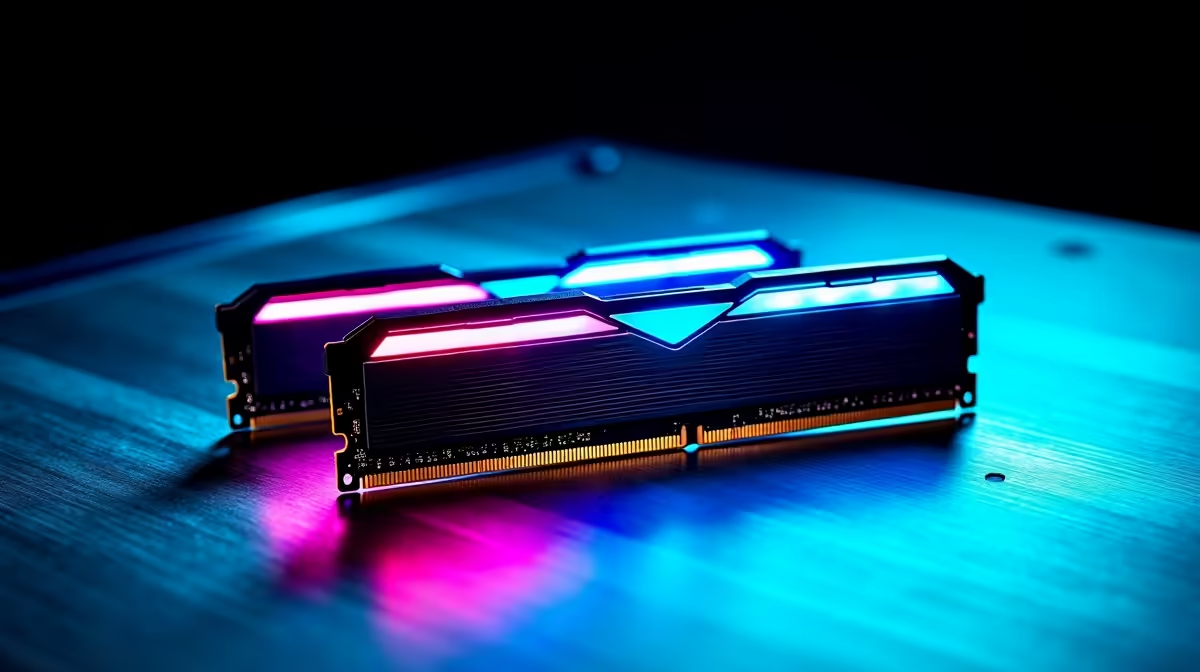
The jump from DDR6 to DDR5 is one of the bigger memory transitions in recent years, and it is not a simple swap. DDR6 roughly doubles the bandwidth ceiling DDR5 offers, starting near 8,800 MT/s and scaling toward 17,600 MT/s, but it demands an entirely new platform: a new CPU, a new motherboard, and a new socket. DDR5 is the shipping standard with full ecosystem support today, while DDR6 targets mainstream buyers from around 2027.
Quick Answer
DDR6 starts near 8,800 MT/s and scales toward roughly 17,600 MT/s, about double DDR5's bandwidth ceiling, but it requires a new CPU, motherboard, and socket. DDR5 is fully supported and shipping right now; DDR6 is aimed at mainstream consumers from around 2027. For anyone building today, DDR5 is the only sensible choice, and it will stay capable for years.
The Headline Difference: Bandwidth
The defining gap between the two standards is raw bandwidth. DDR5 launched at speeds that have since climbed well into the high thousands of MT/s through later kits. DDR6 resets the baseline far higher, beginning around 8,800 MT/s and scaling up toward 17,600 MT/s as the standard matures. That is roughly a doubling of the bandwidth ceiling.
More bandwidth means more data moving between memory and the processor each second. For workloads that are memory-hungry, large datasets, heavy multitasking, and increasingly AI-related tasks, that headroom translates into real throughput gains. For everyday gaming and general use, the benefit is more modest, because most of those tasks are not starved for memory bandwidth at DDR5 speeds in the first place.
Why The Numbers Are Not The Whole Story
Bandwidth is only one dimension of memory performance. Latency, the delay before data actually arrives, also matters, and new memory generations historically launch with relatively high latency that improves over the generation's life. So while DDR6 will eventually offer enormous bandwidth, early kits may not feel proportionally faster in latency-sensitive tasks until the standard matures. DDR5 has already been through that maturing curve, which is part of why it is such a safe buy today.
The Platform Wall: A New Everything
The most important practical fact about DDR6 is that you cannot drop it into a current system. DDR6 requires a new CPU, a new motherboard, and a new socket to match. The memory modules are physically and electrically different, so there is no upgrade path from a DDR5 board to DDR6 memory.
This matters enormously for buying decisions. Moving to DDR6 will mean a full platform change, not a memory swap. Anyone hoping to buy DDR6 sticks and slot them into today's machine should set that idea aside; it is a next-build consideration, not an upgrade for an existing one.
Backward Compatibility Does Not Exist Here
Each DDR generation uses a different physical keying and electrical design specifically so you cannot mix them. DDR6 will not fit a DDR5 slot, and DDR5 will not fit a DDR6 slot. This is by design and is consistent with every previous memory transition. It is the reason a platform's memory type is a long-term commitment made when you choose the CPU and motherboard.
Timeline And Ecosystem Maturity
DDR5 is the established, shipping standard right now. The full ecosystem, CPUs, motherboards, and a wide range of memory kits at competitive prices, is mature and widely available. Supply is healthy and pricing has settled, which makes it the practical, low-risk choice for any build today.
DDR6 is aimed at mainstream consumers from around 2027. As with any new standard, early availability tends to be limited and pricing high before the ecosystem broadens and costs come down. In South Africa, where new-platform hardware typically arrives and normalises in price months after a global launch, the realistic window for sensible DDR6 buying sits further out still. That lag is worth factoring into any plan to skip a generation and wait.
What This Means For Upgraders Versus New Builders
If you already run DDR5, there is no reason to feel left behind. DDR5 will remain fully supported and perfectly capable across the lifespan of a system built today. If you are building new right now, DDR5 is unequivocally the right pick. If you are specifically planning a build for 2027 or later and want to ride the new generation from the start, that is the moment DDR6 enters the conversation, and even then, waiting for the ecosystem to mature usually pays off.
Performance In Real Use
It is easy to be dazzled by a doubled bandwidth figure, but context matters. Gaming performance is often more sensitive to the GPU and CPU than to memory bandwidth, so the move from DDR5 to DDR6 will not transform frame rates the way a GPU upgrade does. The clearest beneficiaries are bandwidth-heavy professional and AI workloads, where feeding the processor more data per second has a direct payoff.
For the typical SA gamer or general user, the takeaway is reassuring: DDR5 is not a stopgap you will regret. It is a mature, fast, well-supported standard that will serve a build well for years. You can browse current DDR5 memory kits to see the speeds and capacities available now, and the memory best sellers list shows which kits offer the strongest value for a current build.
Frequently Asked Questions
How much faster is DDR6 than DDR5?
DDR6 roughly doubles DDR5's bandwidth ceiling, starting near 8,800 MT/s and scaling toward 17,600 MT/s. That said, real-world gains depend heavily on the workload, with bandwidth-hungry tasks benefiting most and everyday gaming seeing more modest improvements.
Can I put DDR6 memory in my current DDR5 motherboard?
No. DDR6 requires a new CPU, motherboard, and socket. The modules are physically and electrically different from DDR5, so there is no upgrade path, only a full platform change when the time comes.
When will DDR6 be available for mainstream buyers?
DDR6 is targeted at mainstream consumers from around 2027. Early availability will likely be limited and pricing high before the ecosystem broadens, and in South Africa the sensible buying window typically sits later still due to the usual local pricing lag.
Should I wait for DDR6 instead of buying DDR5 now?
For a build today, no. DDR5 is mature, fully supported, and will stay capable for years. Waiting means running older hardware for a long time before DDR6 arrives at reasonable local prices, with limited benefit for gaming and general use.
Does DDR6's higher bandwidth improve gaming a lot?
Not dramatically. Gaming performance leans more on the GPU and CPU than on memory bandwidth, so the jump to DDR6 will not transform frame rates the way a graphics card upgrade does. The biggest gains land in bandwidth-heavy professional and AI workloads.
DDR5 is the smart memory choice for any build you are putting together now, fast, mature, and supported for years to come. Browse Evetech's DDR5 kits and memory best sellers, pick the speed and capacity your platform needs, and build with confidence today.