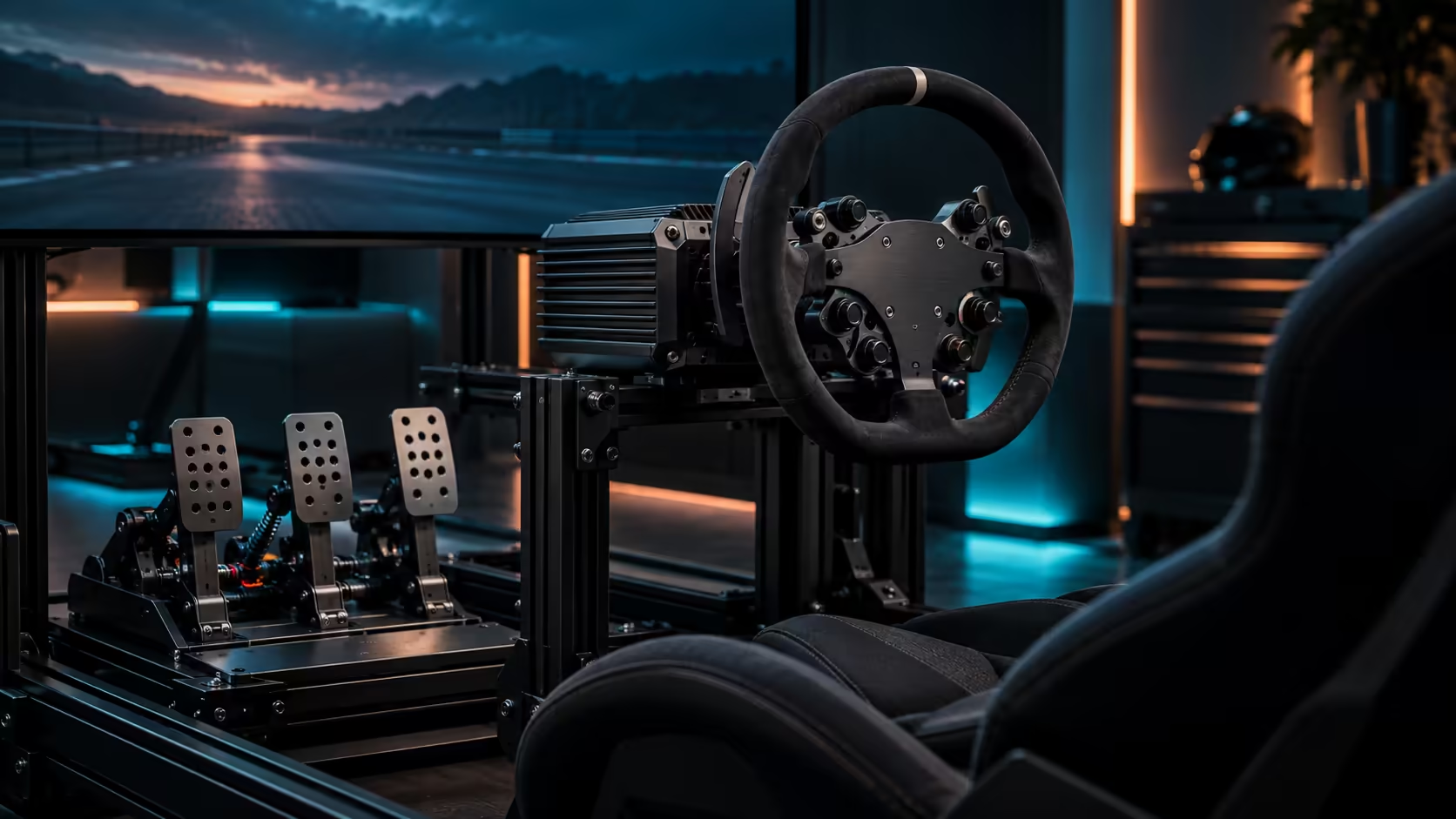
A direct drive wheel looks deceptively simple from the outside, a motor, a shaft, a rim, and that simplicity is precisely the technology story. Every part of the signal chain from a physics engine calculating what a tyre is doing to the resistance you feel in your hands has fewer steps than any other kind of wheel on the market, and understanding those steps explains why direct drive sim racing wheels feel the way they do.
Quick Answer
A direct drive wheel connects a motor straight to the steering shaft, receives torque instructions calculated by the game's physics engine dozens of times per second, and converts that instruction directly into rotational force at the rim with no mechanical stage in between. In the R14,999 Green Flag bundle, that direct path is exactly how the Alpha EVO base reaches its full 9Nm, with zero-cogging motor design keeping the output clean at every point along the way.
🔗 The signal chain, from physics engine to your hands
A racing game's physics engine calculates tyre grip, suspension load, and countless other forces at update rates of 500Hz or more, and a portion of that calculation is specifically formatted as force feedback data, a set of instructions describing how much resistance the wheel should apply and in which direction at that instant. That data travels to the wheel base's own control software, which translates it into an electrical signal for the motor.
The motor then converts that electrical signal directly into torque at the shaft. On a direct drive base, the shaft the motor turns is the same shaft the rim is bolted to, which means there is no additional mechanical stage translating, delaying, or softening that torque before it reaches your hands. That is the entire chain: calculation, translation, torque, hands, with nothing mechanical inserted between the last two steps.
Sitting alongside that chain is the USB link carrying data between the PC and the base, typically polled at 1000Hz on a well-built setup, fast enough that it is rarely the limiting factor compared with the motor's own response speed. A cheap, poorly implemented USB connection can occasionally introduce its own small stutter, which is worth ruling out if a base ever feels inconsistent despite otherwise correct settings.
⚙️ Why the motor itself is where the real engineering lives
Because the chain has so few stages, the quality of a direct drive wheel comes down almost entirely to the motor's own construction, which is why manufacturers spend real engineering effort on details like magnet arrangement and winding pattern that would matter far less in a gear-driven design where mechanical stages already introduce their own imprecision to work around.
Zero-cogging design is one clear example: with no reduction stage to mask a motor's own magnetic irregularities, a direct drive base has to solve that problem at the motor level itself, typically by skewing rotor magnets or shaping windings to spread magnetic interaction evenly through a full rotation rather than concentrating it at fixed points. The Alpha EVO's 9Nm output benefits directly from this, since the torque it delivers arrives smoothly rather than with stepping layered underneath it.
📊 Torque, response speed and what each one contributes separately
Torque is the ceiling on how much force the base can apply, and it matters most for heavier cars and sustained cornering load where a base needs real strength to represent what is happening. Response speed is a separate quality entirely: how quickly, often within 1 to 2ms, the base can build up and release that force as conditions change. A base can have generous torque and still feel dull if its response is slow, and a fast-responding base with modest torque can still feel sharp and communicative within its more limited strength.
Direct drive tends to excel at both simultaneously precisely because of the short signal chain: nothing mechanical is absorbing energy or introducing delay between the motor building force and that force reaching the rim, which is different from torque figure alone and worth understanding as its own quality when comparing bases against each other on a spec-by-spec basis.
🛠️ Where the chain can still break down after the motor
Even a genuinely well-engineered motor delivers a thoroughly disappointing result if anything downstream of it is compromised in any way. A flexing desk absorbs and delays force before it can fully reach your hands, effectively reintroducing the kind of softening a mechanical reduction stage would cause, just at the mounting point rather than inside the base itself. A loose rim connection or a poorly maintained quick-release hub adds its own small imprecision back into a chain that was otherwise clean all the way from the physics engine itself.
Getting the full benefit of direct drive technology means treating the mount as part of the signal chain rather than a separate concern, since a technically excellent motor bolted to something that flexes delivers a fraction of what it is actually capable of. Compare torque and response characteristics against price on the dedicated sim racing shelf or across the broader racing simulation range, and check simulation gear for the mounting hardware that keeps the rest of that chain intact.
Frequently Asked Questions
What makes direct drive different from other wheel technologies at a technical level?
The absence of any mechanical reduction stage between the motor and the shaft the rim is bolted to, which removes the backlash, friction and delay that stage would otherwise introduce into every single input.
Is torque the only spec worth comparing between direct drive bases?
No, not by itself. Response speed, meaning how quickly the base builds and releases force, matters separately and affects how sharp and communicative a base feels regardless of its peak torque figure on paper.
Can a good motor still feel disappointing in practice?
Yes, if the mounting flexes or the rim connection is loose, both of which quietly reintroduce delay and softening into what would otherwise be a clean signal chain running from the game all the way to your hands.
Why does zero-cogging design matter more on direct drive specifically?
Without a mechanical reduction stage to mask motor irregularities, any cogging present in a direct drive motor is more noticeable, which is why manufacturers address it directly at the motor design level.
Ready to see the whole chain from data to your hands?
Compare torque and response figures on the Racing Simulators shelf and mount whatever you choose properly.