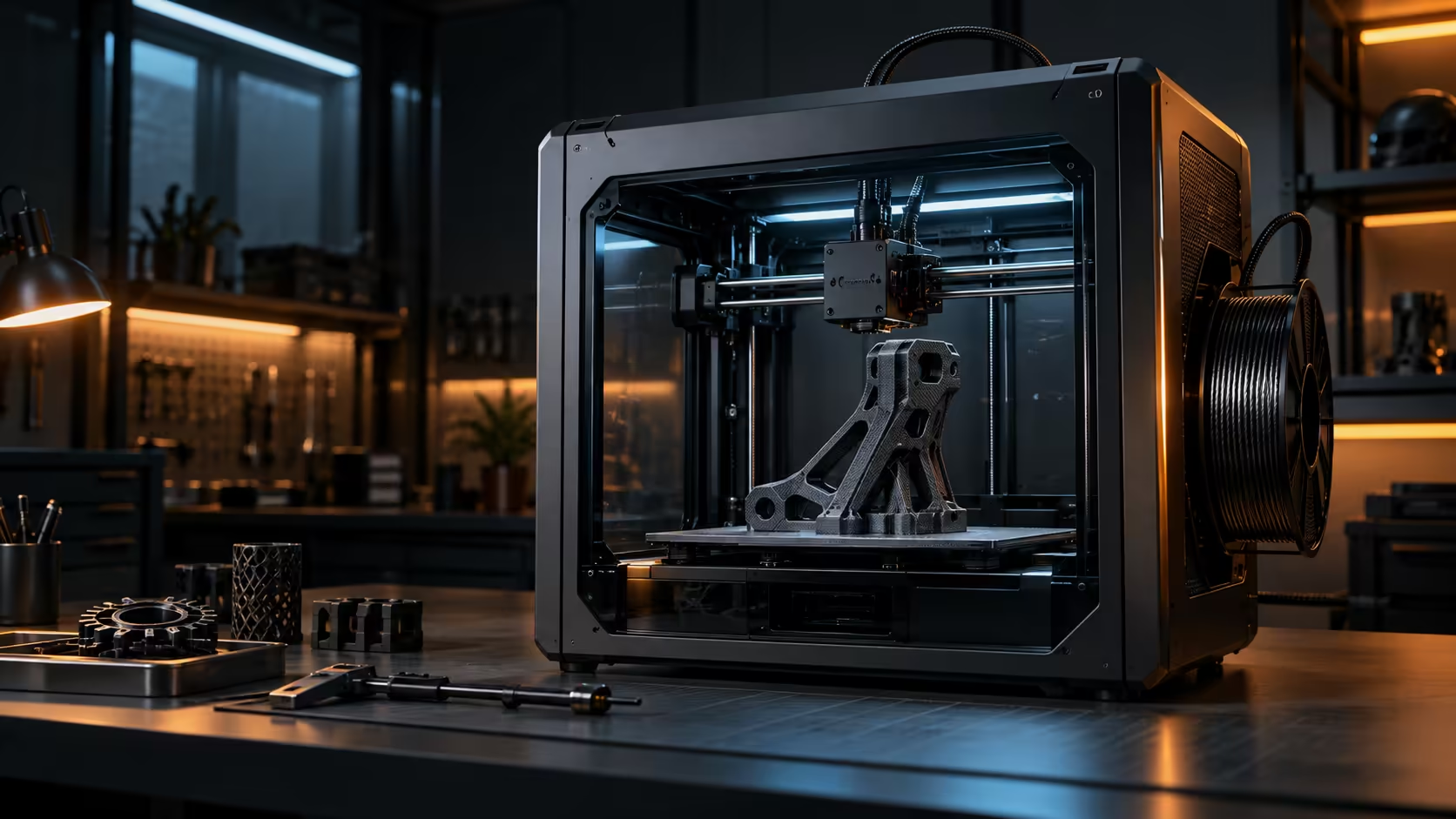
High-temperature printing gets treated as a single, simple feature on a spec sheet, when it is genuinely three separate systems working together toward one shared goal, and understanding each one separately makes the whole overall picture considerably clearer than any single number on its own ever could. Enclosure, nozzle and filtration are the three parts of that picture.
Quick Answer
The chamber slows how fast a print cools, the hotend rating decides which materials can flow through the nozzle at all, and the filter deals with what hot plastic gives off while printing. The Creality K1C pairs a closed frame and a built-in air filter with a 300C tri-metal nozzle, at R12,599, addressing all three parts of the system together rather than leaving any one of them to the room around it.
🌡️ The chamber's real job: slowing cooling, not heating the part
An enclosure does not primarily add extra heat of its own, it simply traps the heat a bed already running at 90C to 110C for ABS is producing anyway, so the print cools noticeably more slowly and evenly than it otherwise would out in open air. That slower, steadier cooling is genuinely what stops materials like ABS and ASA curling or cracking as they shrink down, since uneven cooling specifically, not simply being cold overall, is what actually causes warping in the first place.
Exactly how warm a specific chamber actually runs varies considerably by machine and by whatever is printing inside it at that particular time, so treat the whole enclosure as a stabiliser for the print rather than as a precisely controlled oven.
🔥 The hotend rating: what materials are even possible
Nozzle temperature capability sets a hard ceiling on the material list regardless of how good the enclosure is. A genuine 300C-rated hotend, like the tri-metal nozzle fitted on the K1C, opens up nylon, polycarbonate blends and carbon-fibre reinforced filament that a lower-rated nozzle simply cannot melt properly at all, no matter how well the surrounding chamber manages ambient temperature around it.
🌬️ Filtration: handling what the heat releases
Higher printing temperatures tend to release noticeably more of whatever a specific material gives off, and a filter's actual job is containing that release properly rather than letting it spread freely through the whole room the printer happens to sit in. This matters most specifically for the same materials that need both the chamber and the hot nozzle in the first place, since all three systems are addressing genuinely different consequences of that same underlying decision to print at higher temperatures overall.
Check each of these three separately when comparing machines rather than assuming a single "high-temperature" label covers all of them equally. Browse filament suited to your printer's actual nozzle rating, and a case fan or two circulating air through the room can take some of the load off the machine's own chamber cooling during a long, hot job.
🧪 A practical filter maintenance schedule
A built-in air filter is genuinely a consumable part, not a permanent fixture, and treating it as one is by far the most common reason filtration quietly stops working properly long before anyone actually notices the difference. Check the filter after every 20 to 30 hours of ABS or similar printing, since visible discolouration or a faint chemical smell escaping despite the filter running are both signs it needs replacing rather than continuing to run past its useful life.
Keep a spare filter on hand right from the start if high-temperature printing is a genuinely regular part of your work, the same way a spare nozzle belongs in that same initial order, since running out mid-project entirely defeats the purpose of having filtration at all for the one print that actually needed it most.
🌡️ What "high-temperature capable" should specify, but often does not
A genuinely useful listing states the nozzle's maximum temperature as an exact, specific number, clearly describes the enclosure as either fully panelled or only partial, and names the actual filter type rather than simply claiming the vague word "filtered" without any further supporting detail at all. This level of specificity costs a manufacturer genuinely nothing extra to write down and tells a buyer considerably more useful information than three separate vague marketing adjectives strung together on a page. Check the 3D printer range for listings that specify all three plainly and clearly together, since vague language in any single one of them usually means that particular part of the whole system was treated as an afterthought rather than a genuine, considered design priority from the start.
Frequently Asked Questions
Does a printer need all three of these features to print high-temperature materials?
Ideally yes; a hot nozzle without a chamber struggles with warping on larger parts, and neither addresses fumes without proper filtration.
Is a hotter chamber always better for print quality?
Not universally; the right chamber temperature depends on the specific material, and excessive heat can cause its own problems like softening the part before it fully sets.
Can filtration be added to a printer that lacks it?
Some standalone air purifiers and fume extraction setups can be added to a room, though a built-in filter integrated with the enclosure tends to work more consistently.
Does nozzle temperature rating matter if I only print PLA?
Less so, since PLA prints comfortably at lower temperatures well within most standard nozzles' range.
How often should a built-in air filter actually be replaced?
Check it carefully every 20 to 30 hours of ABS or similar printing, and replace it promptly at the very first sign of visible discolouration or a chemical smell escaping despite the filter still actively running.
Is it worth keeping a spare filter on hand?
Yes, especially if high-temperature printing is genuinely regular rather than occasional, since running out of a spare mid-project entirely defeats the whole purpose of filtration for the one print that needed it most of all.
What should a genuinely detailed listing state about each of the three systems?
A specific, exact nozzle temperature figure, whether the enclosure is genuinely fully panelled or only partial, and the actual filter type named plainly, rather than vague marketing terms like "high-temperature capable" or simply the single word "filtered" alone.
Trying to understand what "high-temperature capable" actually means?
Check the chamber, the nozzle and the filtration as three separate questions, not one.