You’re lining up your final approach into Cape Town International, the glorious Table Mountain filling your windscreen. But your eyes are darting everywhere... airspeed dropping, altitude fluctuating, flaps not set, and ATC is buzzing in your ear. Overwhelmed? We’ve all been there. Mastering flight sim situational awareness isn’t about having super-human reflexes; it’s about learning to process the flood of data your cockpit throws at you, turning chaos into calm, controlled command. ✈️
What Exactly is Flight Sim Situational Awareness?
Think of it as your mental picture of the flight. It’s the ability to perceive what’s happening with your aircraft and its surroundings, understand what it means for the future, and then project that forward to make smart decisions. It’s the difference between reacting to a stall warning and preventing the stall in the first place. Improving your flight sim situational awareness is the single biggest step you can take to move from a casual player to a confident virtual aviator.
Taming the Glass Cockpit: Your Core Data Scan
Modern flight sims beautifully replicate complex avionics, but it's easy to get lost in the sea of numbers and displays. The key is to develop a scan pattern, focusing on the essentials first.
The "Six-Pack" Fundamentals
Even on a Garmin G1000 screen, the principles of the classic six-pack instruments apply:
- Airspeed Indicator: Are you too fast? Too slow for your current configuration?
- Attitude Indicator: Is the aircraft level? Are you in a bank or a climb? This is your primary "am I in control" instrument.
- Altimeter: How high are you above sea level? Crucial for terrain clearance and approach paths.
- Vertical Speed Indicator: How fast are you climbing or descending? Essential for a smooth, stable approach.
- Heading Indicator: Where are you pointing? Are you on course for your next waypoint?
- Turn Coordinator: Shows the rate and quality of your turn.
Getting these complex simulations to run without a single stutter, especially with high-detail scenery, requires some serious horsepower. A PC built specifically for the task ensures your instruments update in real-time, which is vital for accurate flying. Check out our range of powerful Microsoft Flight Simulator gaming PCs designed to handle the load.
Optimising Your Digital Airspace 🖥️
Your ability to absorb information is directly linked to how it's presented. A cluttered view or a tiny screen forces your brain to work harder, increasing fatigue and reducing your situational awareness. The right display setup can make a world of difference.
A large, immersive screen helps you keep your eyes outside the cockpit while using your peripheral vision to monitor instruments. This is where curved monitors truly shine, wrapping the view around you for a more natural feel. Alternatively, a multi-monitor setup allows you to dedicate screens to specific functions, like having your main flight view on one and maps or instruments on another. You can explore a wide variety of PC monitors to find the perfect configuration for your desk.
Pro Pilot View Tip ✨
Use a second monitor or a tablet with an app like SimConnect to offload your GPS, flight plan, or engine instruments. This declutters your main screen, allowing you to focus on the crucial task of flying the aircraft. It’s a simple way to dramatically improve your flight sim situational awareness without breaking the bank.
Beyond the Screen: Hardware That Heightens Awareness
Relying on a mouse and keyboard to fly is like trying to perform surgery with oven mitts. Tactile, physical controls build muscle memory, freeing up your mental capacity. When you can adjust your throttle or trim without looking down, you're maintaining that critical mental picture of your flight.
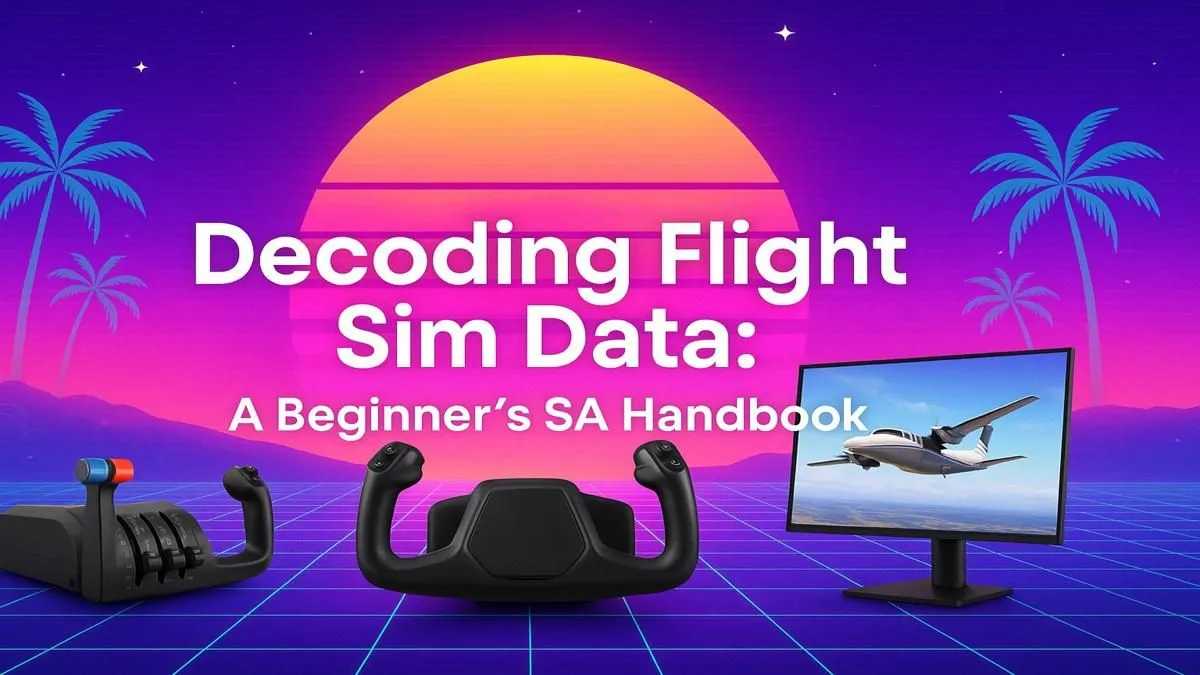
A quality yoke and throttle quadrant, like the fantastic options from Thrustmaster, provide the precision and feedback you need. You'll find your inputs become smoother and more intuitive. And don't underestimate comfort! A long-haul flight from Johannesburg to London is... well, long. An ergonomic seat prevents fatigue, which is a major enemy of concentration and awareness. Investing in one of our supportive gaming chairs in South Africa ensures you stay focused from takeoff to touchdown.
Ready to Build Your Ultimate Cockpit?
Mastering situational awareness is a journey of skill and practise, but the right hardware provides a massive advantage. From powerful PCs to immersive displays and precise controls, we have everything you need. Explore our dedicated Microsoft Flight Simulator PCs and start building the setup that will take your virtual flying to new heights.