Quick Answer
In AR glasses, privacy and battery rarely compete directly, but for most buyers privacy concerns matter more than battery because a built-in camera changes how and where you can use the glasses. Many display-only AR glasses like the Xreal and Viture lines have no camera, sidestepping privacy worries entirely, and draw power from the host device. Choose camera-free display glasses if privacy is your priority; the host phone's 6 to 10 hours of battery usually does that job.
Why privacy is the bigger consideration
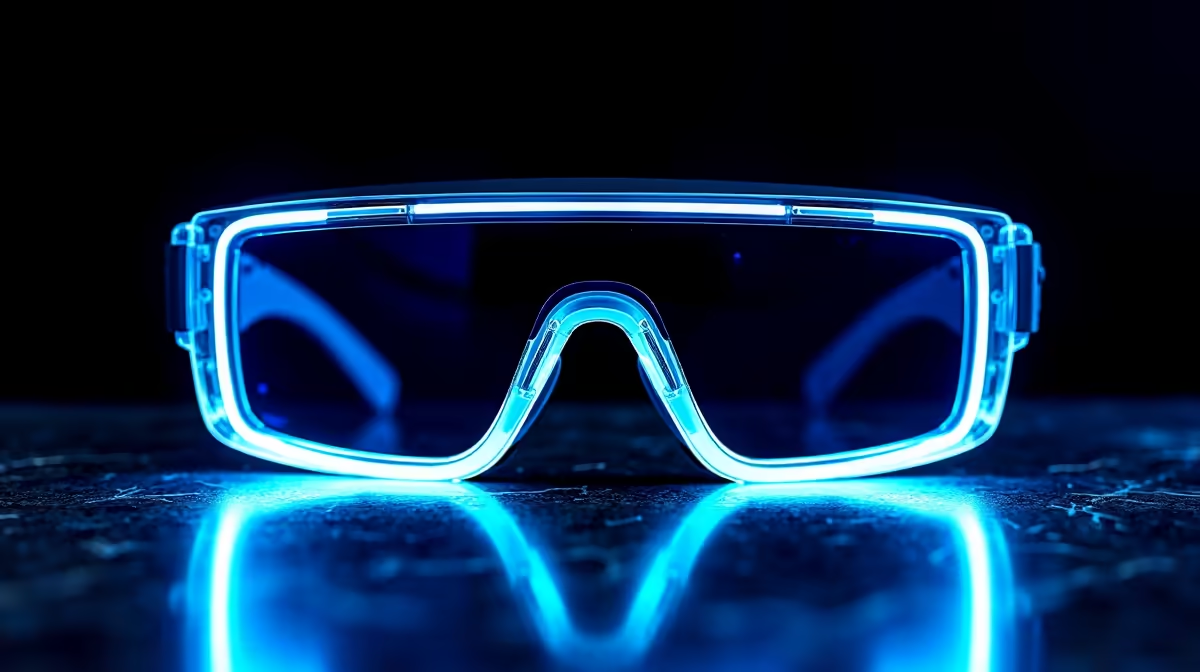
Battery and privacy are not really a trade-off in the same component, so the question is which to weight when choosing AR glasses. Privacy matters more for most buyers because a glasses-mounted camera raises real concerns: recording others without consent, being asked to remove the glasses in private spaces, and the social discomfort of a face-worn camera. Display-only AR glasses that have no camera avoid all of this, which is why many popular models, used as portable monitors for a phone or handheld, omit a camera entirely.
Battery is less of a concern because many AR glasses are tethered and draw power from the connected device rather than an internal cell. So the runtime that matters is your phone's or handheld's, not the glasses'. For privacy-conscious buyers, choosing a camera-free, display-only design solves the privacy question while the host handles power.
Choose for your priority
If privacy is your concern, pick display-only AR glasses with no camera, which also tend to be lighter and simpler. Confirm there is no recording hardware and check how the glasses are powered, usually tethered from the host. If you specifically want camera features for AR overlays, accept the privacy considerations and use them mindfully in shared spaces. For most SA buyers using AR glasses as a private portable screen, camera-free is the straightforward, privacy-friendly choice.
FAQ
Do AR glasses have cameras that affect privacy?
Some do, but many display-only AR glasses have no camera at all, sidestepping privacy concerns entirely. If privacy matters to you, choose a camera-free model used as a portable screen, which avoids recording worries in shared spaces.
Is battery a concern with AR glasses?
Often not directly, since many tethered glasses draw power from the connected phone or handheld rather than an internal battery. The relevant runtime is the host device's. Privacy considerations usually outweigh battery for most buyers.
Which AR glasses are best for privacy?
Display-only models without any camera or recording hardware. They function as a private portable monitor for a phone, handheld, or console, raise no recording concerns, and tend to be lighter since they omit camera components.
If privacy is your priority, confirm the AR glasses have no camera before buying; display-only models avoid recording concerns entirely and draw power from your host device, so battery is rarely the deciding factor.