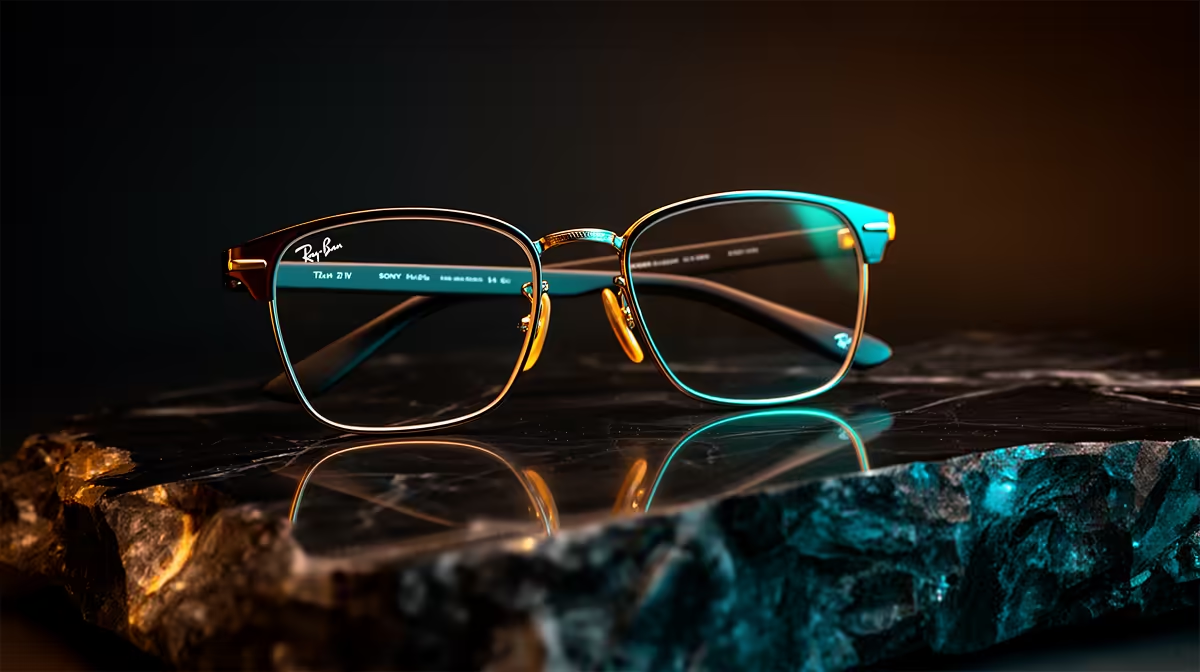
Every pair of Ray-Ban Meta smart glasses carries the same camera, the same open-ear speakers and the same Meta AI inside the arms. So the choice between a Wayfarer, a Skyler and a Headliner is not a tech decision at all. It is a fit decision, the same one you would make for ordinary sunglasses, and getting it right is the difference between glasses you forget you are wearing and ones you keep pushing back up your nose.
Quick Answer
The frame styles share identical electronics, so pick on face shape and width, not features. Wayfarer is the rounded, do-everything shape and comes in standard and large; Skyler is a smaller, more oval cat-eye cut for narrower faces; Headliner is the more rectangular option and offers a low-bridge version if glasses tend to slide down your nose. Aim for a frame width a couple of millimetres narrower than your face for a secure fit.
The three core styles, and who each suits
Wayfarer
The Wayfarer is the shape most people picture when they hear Ray-Ban. It is rounded and chunky, leans neutral across face shapes, and crucially comes in two sizes, standard and large. The standard model measures a 50mm eye size; the large steps up to 53mm and is the one to reach for if a standard frame perches too high or pinches at the temples. That size range makes Wayfarer the safest pick for wider or larger faces and for anyone unsure where they fall.
Skyler
Skyler is the smaller, more rounded, slightly cat-eye cut. Built for narrower and smaller faces, it sits at a 52mm eye size and tends to flatter people who find Wayfarers swamp their features. The cat-eye lift at the outer edge adds a defined line that works well on flatter or softer face shapes. If a standard Wayfarer looks oversized on you in the mirror, Skyler is usually the better-proportioned answer.
Headliner
Headliner sits between the two with a more rectangular, angular line. At a 50mm eye size it is compact, but the rectangular lens shape reads as bolder than the Wayfarer's rounded form. Its standout feature is a low-bridge option, built for faces where glasses slide down, sit too low, or press into the cheeks. If you have spent years nudging sunglasses back up, the low-bridge Headliner is worth a serious look.
How to actually size them
Sizing here is gender-neutral and driven by measurements, not by which style looks coolest online. The single most useful number is the hinge-to-hinge width, the distance across the front of the frame. A good rule is to choose a frame width roughly two to three millimetres narrower than the width of your face measured temple to temple. That gives a snug hold without the arms splaying out or the frame digging in. Too wide and the glasses slide and wobble when you move; too narrow and they pinch and leave marks. Because the camera sits in the corner of the frame, a frame that sits straight and stable also keeps your photos and video level rather than tilted.
Face shape as a starting point
Face shape is a guide, not a rule, but it narrows the field fast. Rounder or fuller faces tend to suit the more angular Headliner, which adds definition. Longer or narrower faces often look balanced in the rounded Wayfarer or the softer Skyler. Smaller faces lean Skyler or a standard rather than large Wayfarer. The honest advice is to treat these as where to start trying, then let the width measurement and how the frame feels on the bridge make the final call.
Colour and finish options
Each frame style spans several colourways -- matte and shiny finishes, solid and transparent acetate, and seasonal limited editions that Meta refreshes periodically. The colourway does not change fit, but it does affect how the glasses read in social and professional contexts. A shiny black Wayfarer reads as a classic sunglass shape; a matte transparent frame is harder to place as tech at a glance. Prescription-optimised wearers also have access to the Blayzer Optics and Scriber Optics lines introduced in 2026, which expand the colour choices available for those who need vision correction built in.
Bridge fit: a detail that matters more than face shape
Beyond the overall frame width, bridge sizing has a measurable effect on comfort and on how stable the camera sits during video capture. The Skyler carries a narrower bridge -- around 20mm -- which tends to suit faces where glasses slip and rock from side to side on a standard bridge. The standard Wayfarer and Headliner use a wider bridge in the 22 to 23mm range, which feels more comfortable on broader nose bridges and prevents the pinching that a narrow bridge causes there. The Headliner's dedicated low-bridge variant adjusts this even further for faces where high-bridge glasses sink or press, a build difference from the standard model rather than just a fit tip.
Gen 2 and what changed
The current Ray-Ban Meta line is Gen 2, which refined the camera from 12MP to a higher-quality sensor compared to the original launch models, improved the open-ear audio drivers, and extended battery life slightly. All three styles -- Wayfarer, Skyler and Headliner -- are available in Gen 2 versions. If you encounter older stock or second-hand listings, confirm the generation before you buy, since the camera quality difference is visible in daylight photos and video.
Why the style choice is low-stakes on features
Because the AI, the cameras, the audio and the battery are common across the line, you are not trading away capability by picking the frame that fits best. That is freeing, since you can choose purely on comfort and look and know the smart-glasses experience is identical. You will find the current AR and smart eyewear options in the AR glasses range at Evetech, and scanning the popular accessories at Evetech surfaces cases, pouches and care kits worth considering alongside any new pair.
Frequently Asked Questions
Do the different styles have different cameras or battery life?
No. The camera, speakers, microphones, AI features and battery are the same across Wayfarer, Skyler and Headliner. The frames differ only in shape, size and how they sit on your face.
What is the low-bridge option for?
Low-bridge fits, offered on Headliner, are for faces where glasses slip down, sit too low, or press on the cheeks. The bridge is shaped to sit higher and hold more securely on a lower nose bridge.
How do I pick a frame width?
Measure across your face temple to temple, then choose a frame whose width is about two to three millimetres less than that. Slightly narrower keeps the glasses snug without pinching.
Wayfarer standard or large?
Go large if a standard frame sits too high, pinches at the temples, or looks undersized. Go standard for average and smaller faces. The large exists specifically for wider and bigger faces.
Can I get prescription lenses fitted?
Ray-Ban Meta frames are designed to take prescription lenses, so the same style and fit guidance applies whether you wear them as sunglasses or as everyday prescription eyewear.
Once you know your shape and width, the rest is just picking a finish you like. Explore the AR glasses range at Evetech and find the Ray-Ban Meta frame that sits right and feels invisible all day.