Onboard audio branding tends to read like a foreign language, full of acronyms that sound impressive without explaining what they actually do for the sound coming out of your headphones. SupremeFX and QUAD DAC audio are two distinct pieces of that language, and unpacking each one tells you what to actually check before buying any board out of the AMD motherboard range for its headphone output.
Quick Answer
SupremeFX is ASUS's own name for a design approach to onboard audio, covering component choice and circuit isolation from electrical noise elsewhere on the board, rather than a single chip you can point to. A QUAD DAC uses four separate digital-to-analogue converter channels instead of one, lowering noise and improving channel separation compared with a single-channel design. Both names describe an approach applied across a board, priced at R54,999 here, rather than one fixed part guaranteed identical on every product that carries the label.
🎧 What "SupremeFX" is actually describing
SupremeFX is a marketing name ASUS applies across a design philosophy rather than one fixed component list. In practice it typically refers to a combination of choices: isolating the audio circuit from electrically noisy areas of the board with a physical separation line, using shielded audio components to reduce interference, and pairing them with a codec chip selected for that generation of boards.
Because it describes an approach rather than a single guaranteed part, the specific codec and supporting components under the SupremeFX name can differ between board generations and even between tiers within the same generation, spanning anywhere from a basic 16-bit implementation on entry boards to 32-bit/384kHz capable codecs on flagship models. The name tells you ASUS applied its audio design process; it does not by itself tell you which exact chip is inside.
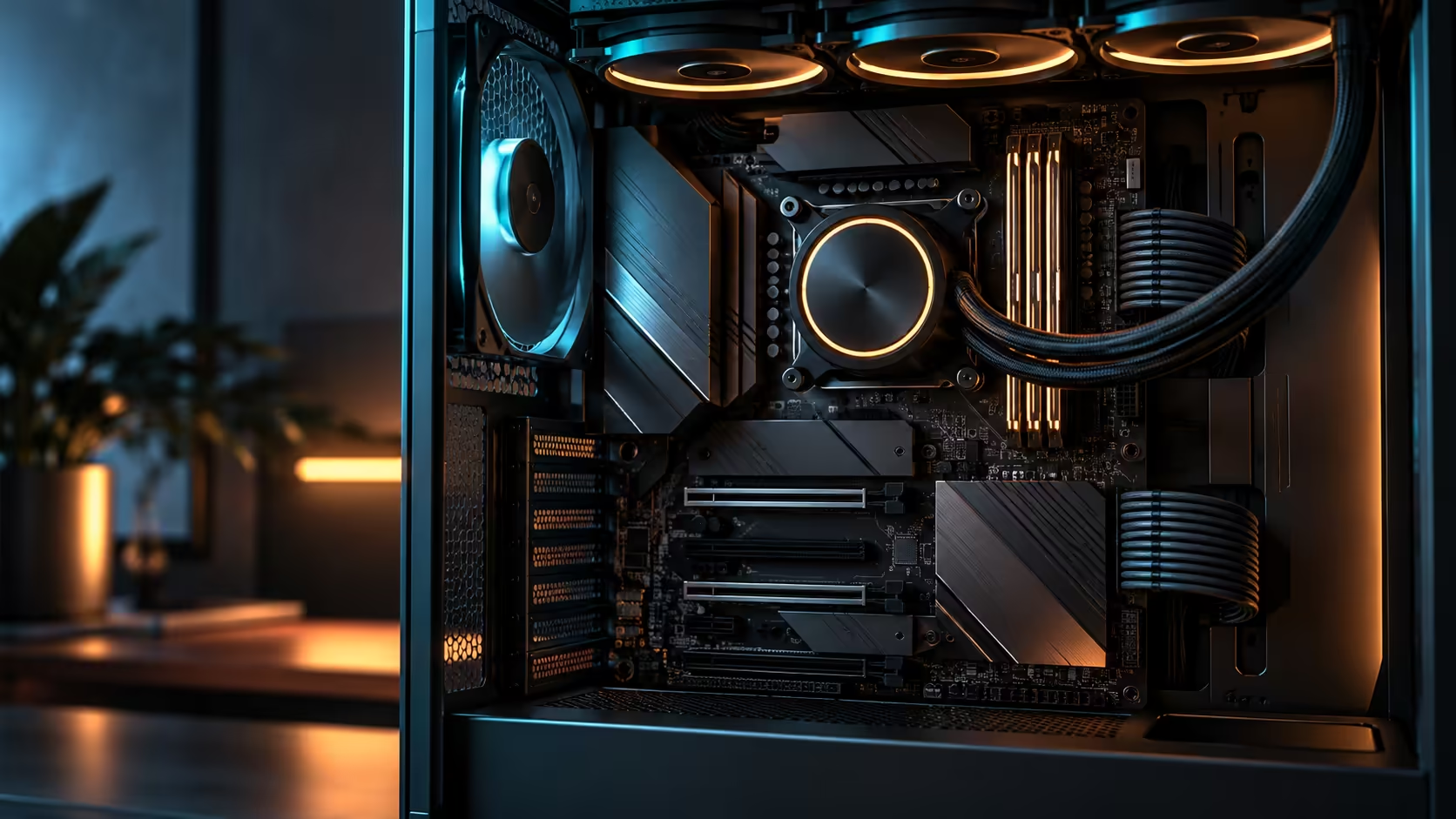
The physical separation line, a visible seam etched into the circuit board itself, is one part of this you can actually see if you look closely at a board photo, and it exists specifically to keep digital switching noise from other components bleeding into the analogue audio signal path.
🔊 What a QUAD DAC actually buys you over a standard implementation
A digital-to-analogue converter, or DAC, turns the digital audio data your computer processes into the analogue signal your headphones or speakers actually reproduce. A standard onboard implementation uses one DAC channel doing this conversion for both stereo channels. A QUAD DAC design uses four separate channels, typically split so each stereo channel gets its own dedicated conversion path.
The practical benefit is reduced crosstalk between channels and generally lower measured noise, which shows up most clearly with higher-impedance headphones that are more sensitive to a clean signal than a typical budget headset would be. For casual listening through an average headset, the difference is real but subtle; for someone using a demanding pair of open-back headphones, it is more likely to be audible.
A typical gaming headset sits at 32 ohms of impedance or lower, comfortably inside the 20Hz to 20kHz range most onboard implementations handle cleanly. A demanding open-back headphone in the 150-300 ohm range is where a weaker single-channel DAC starts to show its limits, and where a QUAD DAC design has genuinely more headroom to work with.
🔍 Why the exact chip matters more than the marketing name
Two boards can both carry a "SupremeFX" or "QUAD DAC" label while using different underlying components, because these are design categories rather than fixed part numbers guaranteed across every product. The exact codec chip and DAC component, listed by name and model number, is what actually determines performance rather than the umbrella marketing term above it.
Two common codec families worth recognising by name are Realtek's ALC series, the most widely used onboard audio codec across the industry, and ESS's Sabre DAC lineup, which appears more often on boards marketed specifically around audio quality. Neither name alone tells you the full story, since the same codec paired with weaker supporting components will underperform an older codec paired with a carefully designed circuit around it.
A useful number to know when comparing codecs is signal-to-noise ratio, commonly quoted in decibels: a budget onboard implementation often sits around 90-100dB, a good mid-range one closer to 110-115dB, and a genuinely high-end DAC implementation, onboard or dedicated, can reach 120dB or beyond. Higher is better, and it is a more directly comparable number across brands than any marketing label.
🎙️ Software EQ and drivers matter almost as much as the hardware
A capable DAC and a well-isolated circuit are only half of what determines how onboard audio actually sounds day to day. The bundled software controlling equalisation, virtual 7.1 surround processing and microphone noise suppression can make a genuinely good hardware implementation sound mediocre if left on aggressive default presets, or make a modest implementation sound noticeably better with sensible settings applied.
Spend a few minutes in the audio control panel that ships with the board before judging the hardware itself, disabling any "enhancement" processing that adds artificial bass boost or virtual surround simulation, and listening again to a source recorded at 48kHz with a flat, unprocessed signal. Many disappointing first impressions of onboard audio trace back to an aggressive default preset rather than the actual DAC or codec underneath it.
🎚️ When onboard audio is enough, and when it is not
For most gaming headsets and everyday listening, a well-implemented onboard audio solution, whatever its exact branding, is genuinely sufficient and often goes unnoticed as a limitation, and spending extra purely chasing an audio marketing name rarely buys an audible improvement for that use case. Where onboard audio starts to show its ceiling is with demanding, high-impedance headphones or serious desktop speakers, where a dedicated gaming headset built with its own amplification, or a proper set of desktop speakers with a separate amp stage, will outperform any onboard solution regardless of how it is branded.
Frequently Asked Questions
Is SupremeFX a specific audio chip?
No, it describes ASUS's broader design approach to onboard audio, including circuit isolation and component choice, rather than one fixed chip guaranteed on every board carrying the name.
What does a QUAD DAC actually improve?
Reduced crosstalk and lower measured noise compared with a single-channel DAC design, most noticeable with higher-impedance headphones sensitive to signal cleanliness.
How do I find out exactly what audio components a specific board has?
Check that board's own specification page, which typically lists the exact codec and DAC chip by name rather than relying on the marketing label alone.
Is onboard audio good enough for a typical gaming headset?
Generally yes. Most gaming headsets do not demand more than a well-implemented onboard solution provides.
When should I consider a dedicated sound card or DAC instead of onboard audio?
When using demanding, high-impedance headphones or serious desktop speakers that benefit from dedicated amplification beyond what any onboard solution offers.
Ready to know exactly what audio hardware you are actually buying?
Check the exact chip listed on a board's own specification page rather than relying on the marketing name alone.