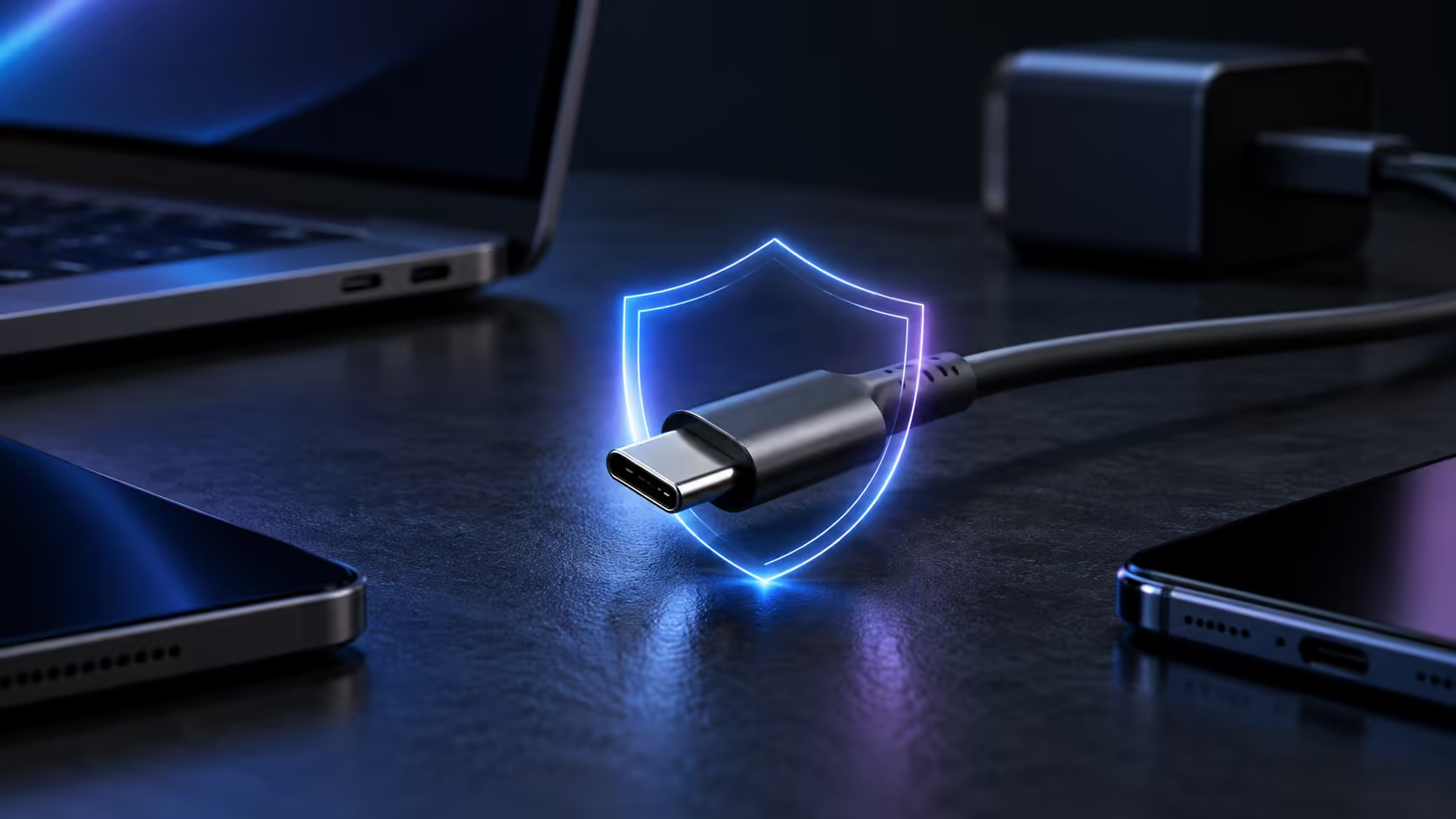
USB-IF certification on a USB-C cable is the one mark that separates a genuinely tested product from a printed promise, and understanding exactly what the testing actually covers explains why an uncertified cable can look identical on the outside while behaving very differently under real load.
Quick Answer
Certification means the cable has actually passed USB-IF testing and its e-marker reports the truth about what it can carry. That is the whole safety story once you get above 60W, since an uncertified cable can advertise 140W on the box and hand over 60W in practice. The Anker 544 at R399 sits firmly on the tested side of that line.
🏛️ What the testing process actually checks
USB-IF certification runs a USB-C cable through a defined set of electrical and functional tests, confirming that its e-marker chip reports the same current rating the cable is physically built to carry, that its wiring meets safety tolerances under sustained load, and that it correctly implements the USB Power Delivery negotiation process. Passing this is what allows a manufacturer to use the USB-IF logo, and it costs the manufacturer real money and time, which is exactly why cutting corners on certification is one of the easiest ways to cut cost on an uncertified cable instead.
📈 A brief history of why certification exists at all
USB-C's power delivery capability grew quickly from a modest 60W ceiling to well over 100W within a few years, and the market filled with cables claiming to support the new higher figures long before independent testing caught up with the pace of that growth. Certification was formalised specifically to close that gap, giving buyers a single mark to check rather than needing to research each manufacturer's individual reputation before every purchase.
⚠️ What actually goes wrong without it
An uncertified cable's e-marker chip, if it has one at all, has not been independently verified to report honestly. This is the specific failure mode behind cables that print "140W" on the packaging while only carrying enough internal wiring for 60W: the chip lies about its own capability, and a charger that trusts that report can send more current than the cable's actual conductors were built to handle safely. Certification exists specifically to close this gap by verifying the declared rating against the physical build.
🔋 Why this matters just as much for a power bank
A power bank charging a laptop over a USB-C connection relies on exactly the same underlying negotiation process as a wall charger does, and an uncertified cable between the two carries the identical risk of a mismatched declared rating. This is easy to overlook because power banks feel like a lower-stakes device than a wall socket, but the cable's job and its potential failure mode are unchanged regardless of what sits on the other end of it, whether that is a fixed wall outlet or a portable battery pack carried around all day.
🌍 Certification bodies operate independently of the brand
USB-IF is an industry consortium rather than an arm of any single USB-C cable maker, which is exactly the point: the same body certifies cables from competing brands against one shared standard, rather than each manufacturer grading its own homework. This independence is what gives the certification mark its actual weight, since a brand cannot simply declare its own product compliant and print the logo without going through that external process first.
🧾 What the certification mark cannot tell you
A USB-IF mark confirms a USB-C cable's electrical claims are honest, but it says nothing at all about how the specific unit sitting in your hand will hold up after a full year of daily handling, since durability testing such as a bend rating is an entirely separate, optional measure that a manufacturer chooses to publish or simply leave off the box. Treat certification as proof the numbers are real, and treat any additional durability figure, where one is published, as a second and entirely independent claim worth checking on its own rather than assuming one automatically implies the other.
🛒 Spotting certification before you buy
Look for the USB-IF certification mark specifically on the packaging or product description, rather than trusting a wattage figure printed on its own. The Anker 544 carries this certification alongside its stated 140W+ rating, so both the declared figure and the testing behind it are present rather than one without the other. Check your own charger's rating and browse the comprehensive cable range for a certified match rather than assuming any cable claiming a high wattage is safe to trust with it.
Frequently Asked Questions
Can an uncertified cable still work perfectly fine?
Many do, especially at lower power levels where the margin for error is larger. The risk grows specifically at higher wattages, where a mismatched declared rating has more room to cause a problem.
Does certification cost the buyer more money?
Generally a little, since the manufacturer's own testing costs get reflected in price, though the difference is usually small relative to what a mismatched high-wattage cable risks.
Is USB-IF certification the same across every cable length?
Certification applies to the specific cable design and rating being tested, so a shorter and longer version of the same product line are typically each certified separately by the manufacturer.
Does an uncertified cable ever damage the device it charges?
It can, in cases where the cable's e-marker misreports a higher capability than it can physically sustain, allowing more current through than the cable or connected device were designed to handle.
Is there a way to check certification status after a cable has already been bought?
Check the packaging or the manufacturer's own documentation for the USB-IF logo and a certification reference number, since these are usually retained even after the original purchase.
Does certification cover the connector's physical durability as well as its electronics?
The core certification focuses on electrical and functional behaviour rather than long-term mechanical wear, so a bend rating or a durability claim, where published, is a separate figure worth checking alongside it.
Is certification required by law to sell a USB-C cable in South Africa?
Certification is generally voluntary rather than a strict legal requirement, which is exactly why it functions as a meaningful signal: a manufacturer choosing to pursue it anyway is doing more than the bare legal minimum ever actually requires of them.
Ready to trust your next USB-C cable purchase?
Look for the USB-IF mark specifically, not just a wattage figure printed alone.