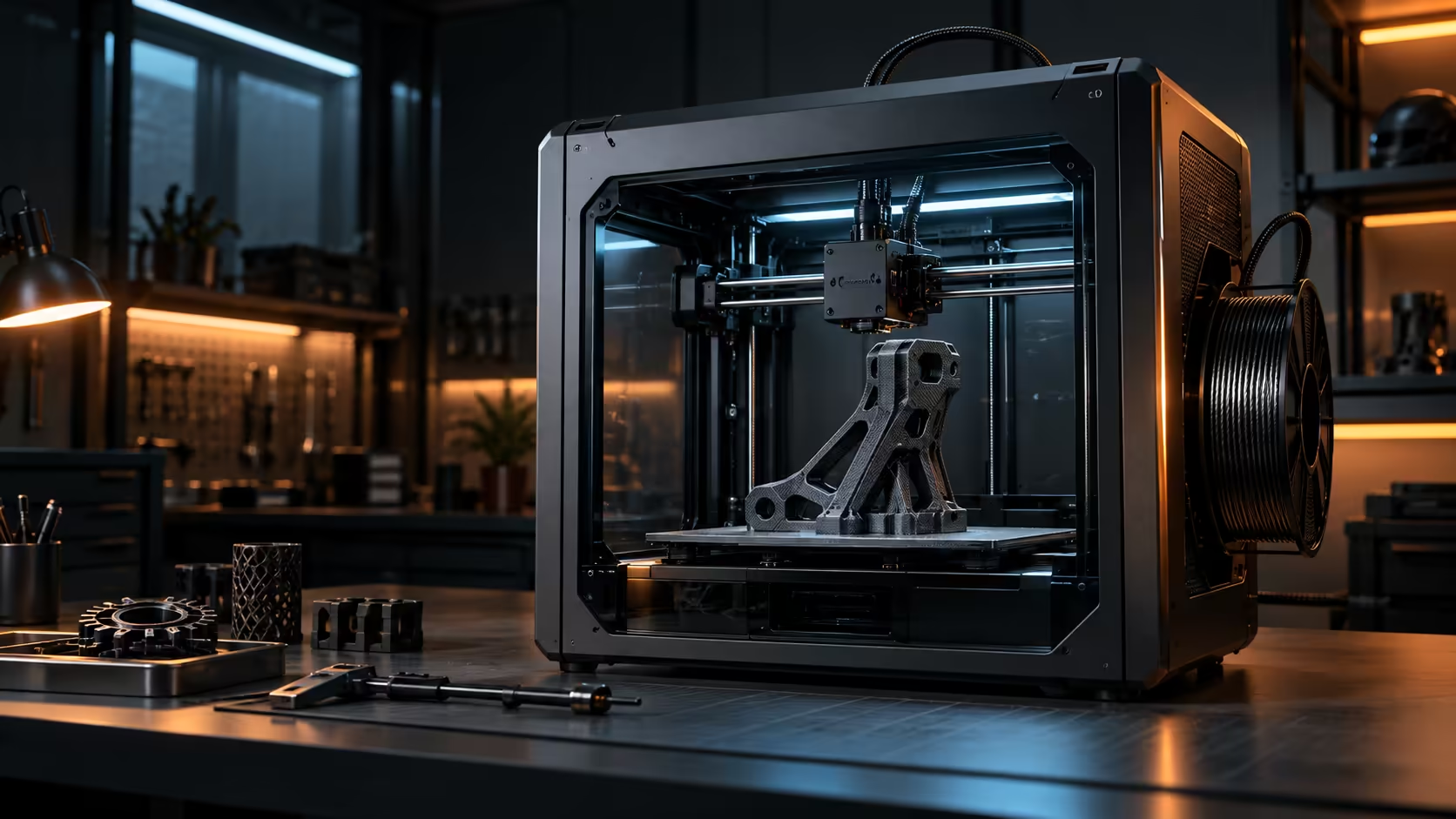
Three separate features compete for the same rand on an enclosed 3D printer, and most buying guides simply list them without ever properly saying which one should actually win once a budget genuinely gets tight. This ZAR value guide picks an order.
Quick Answer
Insist on the flow path first, the enclosure second and raw speed third. A hardened 300C nozzle sets the entire material list a printer can ever handle across its whole working life, while speed only ever sets how long you personally have to wait around for a given result to finish. The Creality K1C bundles all three, CoreXY speed, an enclosure and carbon-fibre capability, for R12,599, which is why it is worth costing as one combined purchase rather than comparing its parts separately against cheaper alternatives.
🥇 First: the flow path, because it cannot be upgraded later
A nozzle's temperature ceiling, whether it stops at 250C or reaches past 300C, and its wear resistance decide, permanently, what materials a printer can ever handle well. A machine bought without this capability cannot gain it later without effectively replacing the hotend entirely, whereas speed and even enclosure can sometimes be improved with a firmware update or an aftermarket accessory. Rank this specific factor first for exactly that reason: it is the one single decision you are genuinely stuck with for good.
🥈 Second: the enclosure, for the materials it actually unlocks
An enclosure is not merely about noise or general tidiness, it is genuinely what makes ABS, ASA and similar materials printing at 230C to 260C reliably printable without warping or curling badly at all. Skipping this entirely and buying an open-frame machine at a lower price quietly removes a real chunk of the material list the hardened nozzle was originally supposed to unlock in the first place, since heat retention and material capability work together rather than separately.
🥉 Third: speed, once the first two are already covered
Speed genuinely matters for turnaround time, but only once a printer can actually reach the required temperatures and properly hold the environment a specific project genuinely needs. Buying primarily for speed while compromising on nozzle capability or enclosure is optimising for the wrong variable, since a fast printer that cannot print your intended material is not actually fast at the job you need it for.
Cost these three together as one purchase decision rather than three separate line items to compare against cheaper machines missing one or two of them, and factor in that a locally bought machine gets its nozzle, enclosure and motion system covered under one warranty resolved here rather than three separate parts shipped back overseas individually. Browse filament matched to your intended material list, and check open box options if budget is the main constraint on getting all three in one machine.
🧾 A worked example of the value calculation
A machine priced R2,000 lower that drops carbon-fibre capability entirely saves money only for as long as you never actually need that specific material, and the moment a single project calls for it, that saving is erased completely by the cost of a second machine or an outsourced print run instead. Price the R2,000 gap against what a single outsourced carbon-fibre job would cost, and the cheaper machine often stops looking cheap the moment that comparison is actually made.
The exact same logic applies to the enclosure specifically: a R1,500 saving on an open-frame machine disappears completely the first time an ABS part warps badly enough to need reprinting from scratch, since the wasted filament and the lost time both carry a genuinely real cost that no spec sheet ever shows upfront.
🔍 Reading value into a listing rather than just a price tag
Check the 3D printer range for machines bundling all three features as standard before ever comparing sticker prices in isolation, since a bundled machine sitting at a higher headline price frequently works out considerably cheaper in the end than assembling the same three capabilities piecemeal through a string of later upgrades and add-ons purchased separately over time.
Frequently Asked Questions
Should speed ever be the top priority when budgeting for a printer?
Only if the nozzle capability and enclosure already meet your material needs; otherwise a fast printer that cannot handle your project is the wrong purchase regardless of price.
Is an enclosure really worth paying extra for?
Yes, if your projects include ABS, ASA or similar materials, since the enclosure is what makes those materials printable without excessive warping.
Can nozzle capability be upgraded after buying a printer?
Sometimes partially possible, by swapping the nozzle itself, but the surrounding hotend and feed system as a whole may still limit what upgrades are genuinely practical to attempt afterwards.
Does bundling all three features in one machine actually save money?
Often yes compared to buying separate upgrades piecemeal later, since a machine designed around all three from the start avoids compatibility issues between add-ons.
How should I compare a cheaper machine missing one of the three features?
Price the specific gap against what solving it later would genuinely cost, an outsourced print, a whole second machine, or a reprint from a warped part, rather than judging the initial saving in complete isolation from those real, likely follow-on costs.
Does a higher sticker price always mean better long-term value?
Not automatically true in every single case, but a machine genuinely bundling flow path, enclosure and speed together as standard often clearly beats a cheaper one that needs several later upgrades just to match that same overall capability properly in the end.
Is it worth paying more upfront to avoid a second future purchase?
Usually yes if your projects are at all genuinely likely to need the missing capability eventually, since buying twice over almost always costs meaningfully more in total than simply buying the right machine correctly the first time round, once delivery and setup time are also honestly counted in properly.
What is the biggest hidden cost of choosing an open-frame machine to save money?
Reprints from warped ABS or ASA parts, since the wasted filament and lost time from just a single failed print often exceeds the entire full amount originally saved by skipping the enclosure in the first place on paper.
Working out where your printer budget should actually go?
Rank flow path, enclosure and speed in that order before comparing prices.