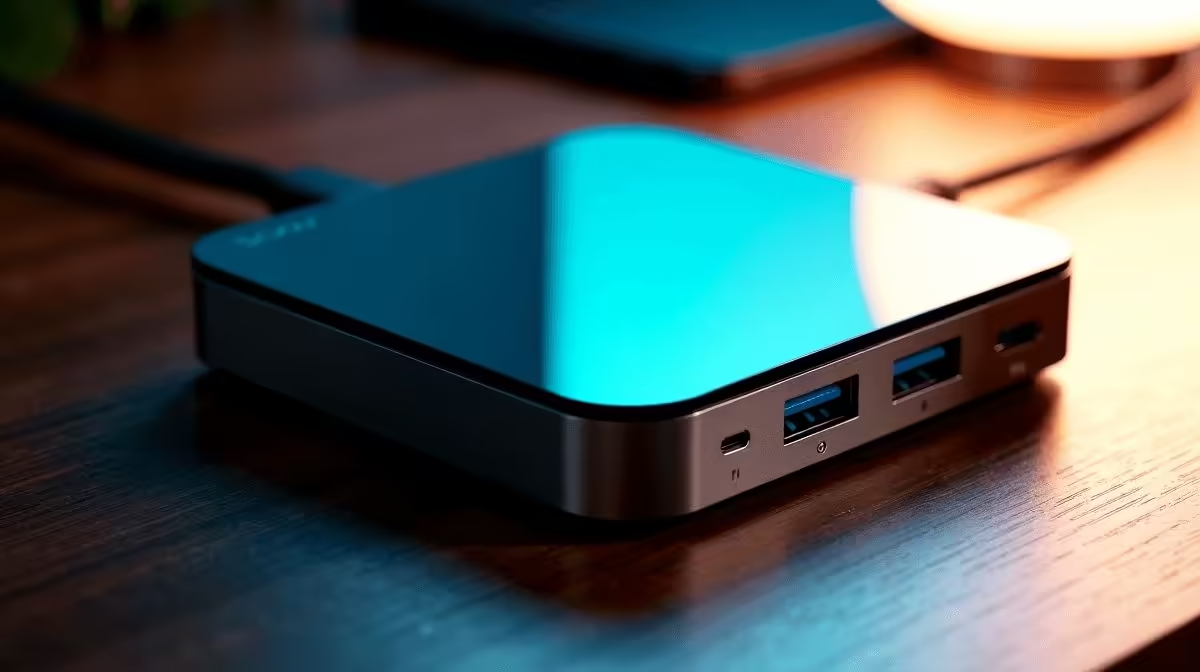
A premium USB-C hub with a tempered glass top sits in an unusual position in the market: it is priced like a serious peripheral and styled like a desk accessory. The question worth asking before spending R1,800 or more on one is whether the glass contributes anything beyond the aesthetic, or whether you are paying a premium purely for looks.
Quick Answer
It depends on what sits beneath the glass. If the hub uses a capable chipset with proper shielding, delivers 4K at 60Hz on the video output, and uses aluminium for the base and sides, the glass top adds minimal thermal or performance penalty and is a reasonable purchase for an aesthetically conscious desk setup. If the glass is the main differentiator on an otherwise mid-range chipset, the premium is not justified on performance grounds.
🔍 Glass Top vs Aluminium Cooling: the Real Tradeoff
Aluminium is the standard material choice for premium hub housings because it conducts heat away from the bridge chip far more efficiently than glass or plastic. A hub running sustained 4K output, USB-A peripherals, and 100W power delivery simultaneously produces enough heat to throttle in a poorly ventilated shell.
Tempered glass is an insulator, not a conductor. A glass-topped hub must rely on the aluminium base and sides for all thermal dissipation. Manufacturers who do this well place heat-generating chips in direct contact with the metal base. Those who cut corners use glass as a cosmetic upgrade on a plastic thermal structure, which performs no better than an entry-level hub under sustained load.
When evaluating a glass-topped hub, look for an aluminium underside and edges. A glass lid on an aluminium chassis is a real design choice; a glass lid on a plastic body is mostly aesthetic.
⚡ Chipset and Shielding Matter More Than the Shell
The external material contributes to the thermal story, but the chipset inside determines performance. A premium hub should be built around a controller that handles simultaneous high-bandwidth tasks without contention. That means copying files from an external SSD at full speed while a 4K display runs at 60Hz and Ethernet is active, with no throttling on any channel.
Electromagnetic shielding is the other quality indicator premium pricing should guarantee. Signal lines carrying DisplayPort or HDMI output sit close to the power delivery circuitry. Without shielding, interference manifests as occasional flickers or colour shifts on the external monitor. A properly constructed hub uses shielded internal cabling and a filtered power circuit.
The video output spec should be stated explicitly. A genuine 4K hub lists DisplayPort 1.4 or HDMI 2.0, not just "4K support." It should sustain 60Hz through a full workday without connection resets. Power delivery should reach 100W under combined device load, not only when the hub is idle.
🛒 The Worth-It Verdict
Buy a glass-topped hub if you need a performance-tier hub anyway and you spend hours each day at the desk where it lives. There is no functional reason to avoid glass if the underlying aluminium construction is sound.
Skip the glass premium if performance value is the only priority. An aluminium-bodied hub at the same price point will often have more thermal headroom, and the spec difference between glass-topped and aluminium-topped options at the same price is frequently zero.
Tempered glass adds roughly R200 to R400 to the bill of materials. If that makes the hub something you are genuinely glad to have on your desk each day, it is a legitimate call. If you simply need reliable output and the glass is incidental, equally capable aluminium alternatives exist in the same price band.
Frequently Asked Questions
Does a glass top scratch easily on a hub that gets handled daily?
Tempered glass is more scratch-resistant than plastic but still more vulnerable than brushed aluminium. If the hub sits on a desk permanently rather than being packed into a bag, surface durability is not a concern in practice.
Does the glass affect wireless signal from Bluetooth or Wi-Fi?
Tempered glass does not meaningfully attenuate 2.4GHz or 5GHz signals, so a glass-topped hub has no practical effect on nearby wireless peripherals.
What chipset should I look for in a premium hub?
Look for hubs listing specific controller chips from recognised USB and display controller manufacturers. Hubs that omit chipset information entirely are often concealing a budget-grade controller behind a premium shell.
Can I clean tempered glass on a hub without damaging it?
A microfibre cloth with a small amount of screen-cleaning solution is safe. Avoid abrasive cloths or anything with acetone, which can damage anti-reflective coatings sometimes applied to the glass surface.
Is 4K 60Hz possible through both video outputs on a premium hub?
Only on hubs with dual independent display controllers or a Thunderbolt host connection. Most premium-aesthetic hubs without Thunderbolt support 4K 60Hz on one output and a lower resolution or frame rate on the second.
See the premium hub range at Evetech. Shop USB-C hubs and docking stations with full spec detail on outputs, power delivery, and construction materials to find the right fit for your desk.