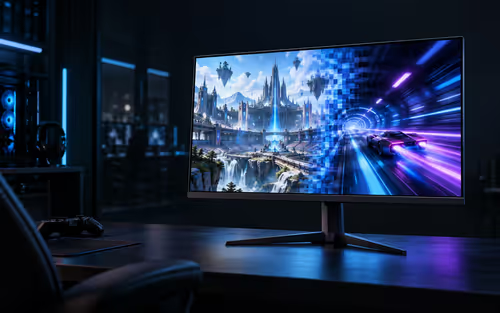
You’re locked in a 1v3 clutch on Nuke. The enemy flashes, and your screen whites out. You need to crank the brightness… now. Do you fumble for a tiny, hidden button, or do you swipe a sleek touch-sensitive panel? This is the core of the touch OSD vs physical buttons debate. It’s a small detail that can have a massive impact on your gaming experience. Let's break down which monitor control is best for your South African setup.
The Classic Feel: Why Physical Monitor Buttons Endure
There's a reason physical buttons and mini-joysticks are still a staple on many of the best PC monitors. It comes down to one simple thing: tactile feedback. 🧠
Muscle Memory and No-Look Adjustments
When you press a physical button, you feel a distinct click. This feedback is crucial. Over time, you build muscle memory, allowing you to navigate menus and change settings without ever taking your eyes off the screen. A good joystick control is even better, offering intuitive directional navigation that's impossible to get wrong, even in a dark room. For competitive gamers who need to adjust settings mid-match, this reliability is non-negotiable.
Durability and Simplicity
Physical buttons are often seen as the more durable option. They are less prone to damage from fingerprints, smudges, or the dreaded accidental brush of a sleeve that sends your colour profile into chaos. Their function is straightforward, with less potential for software glitches that can sometimes plague more complex touch interfaces.
The Modern Touch: The Rise of Touch OSD Controls
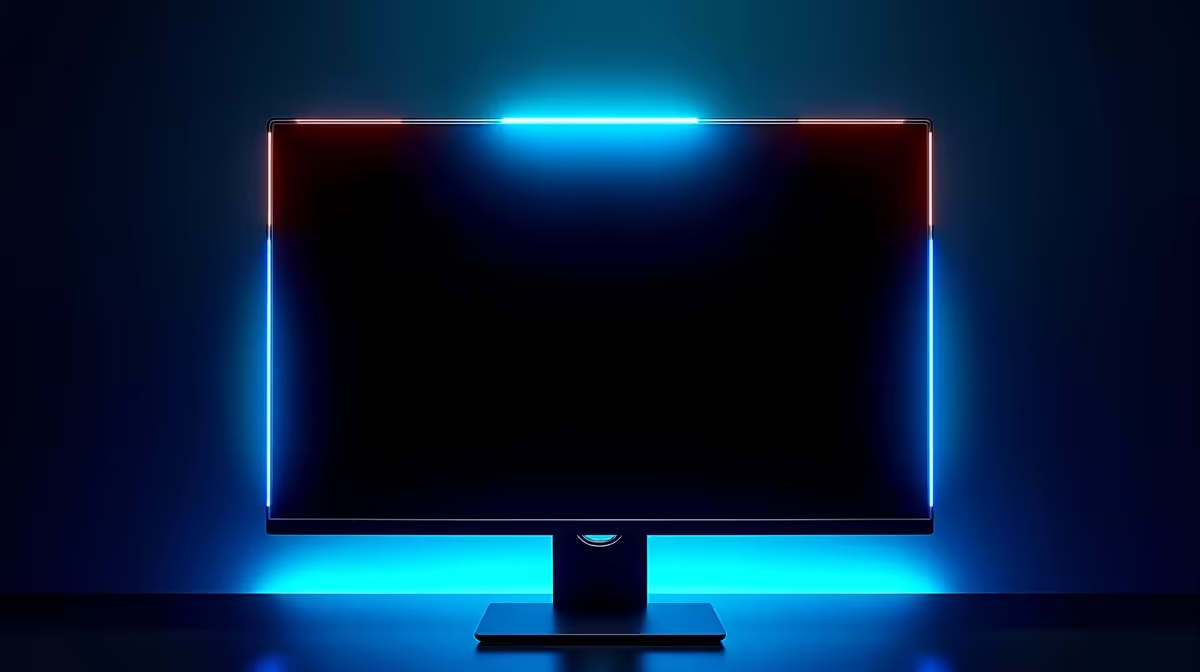
On the other side of the touch OSD vs physical buttons argument are the sleek, futuristic touch-sensitive controls. They represent a move towards minimalist design and a smartphone-like user experience. ✨
Aesthetics and a Cleaner Profile
Let's be honest, touch OSDs look clean. They allow for razor-thin bezels and an uninterrupted, seamless design that looks incredible in any modern setup. If you're building a rig that's as much about aesthetics as it is about performance—especially with high-end 5K and 4K monitors—touch controls often win the style contest.
Intuitive and Feature-Rich Interfaces
A well-designed touch OSD can be incredibly fast and intuitive. Menus are often laid out more logically with on-screen prompts, making it easier to find that one specific setting like "Overdrive" or "VRR". Instead of clicking a "down" button ten times, you can often just tap directly on the option you want.
Pro Tip: Lock Your OSD!
Whether you use touch or physical buttons, most gaming monitors have an "OSD Lock" feature. Activate it before starting a competitive match to prevent any accidental presses or touches from ruining your game. Check your monitor's manual to see how!
Head-to-Head: Which Monitor Control Is Best?
So, how do they stack up in a direct comparison? The choice between touch OSD and physical buttons often depends on what you value most. For many gamers browsing all gaming monitors, this can be a deciding factor.
- Speed: A well-placed joystick is fastest for quick, blind adjustments. A good touch OSD is fastest for deep-diving into complex menus.
- Accuracy: Physical buttons win here. It's almost impossible to misclick a tactile button, while a stray finger can easily hit the wrong spot on a touch panel.
- Use in the Dark: Physical buttons and joysticks are far superior. You can feel your way around without needing to turn on a light.
- Aesthetics: Touch OSDs almost always provide a sleeker, more modern look.
Finding the Right Control for Your Gaming Style
Ultimately, the best monitor control system is the one that fits your needs.
Are you a competitive FPS or MOBA player? The tactile, no-look reliability of a joystick or well-placed physical buttons is probably your best bet, especially on immersive curved gaming monitors where you're fully focused.
Are you a content creator, a hybrid worker, or a gamer who values a clean setup? A responsive touch OSD might be perfect for you. It complements a minimalist desk and makes navigating extensive colour-calibration menus a breeze. This is also true for many portable monitors where space is at a premium. Don't forget that a great setup is also supported by quality monitor accessories like a solid VESA mount to perfect your viewing angle. 🔧
The Verdict: Preference Is King 👑
There is no single winner in the touch OSD vs physical buttons battle. The modern joystick control is a fantastic middle-ground, offering the speed of physical controls with better navigation. However, the best system is the one that you find most comfortable. It should be a tool that helps you, not a hurdle you have to overcome.
Before you make your next purchase, think about when and how you adjust your settings. That will tell you everything you need to know. And if you're looking for an upgrade, be sure to check out the best PC monitor deals in South Africa to find a screen that fits your playstyle and your budget.
Find Your Perfect Display at Evetech
Ready to stop fighting your monitor and start winning your matches? Explore our massive range of gaming displays with every type of control system you can imagine. Shop all gaming monitors now for the crystal-clear advantage you deserve.