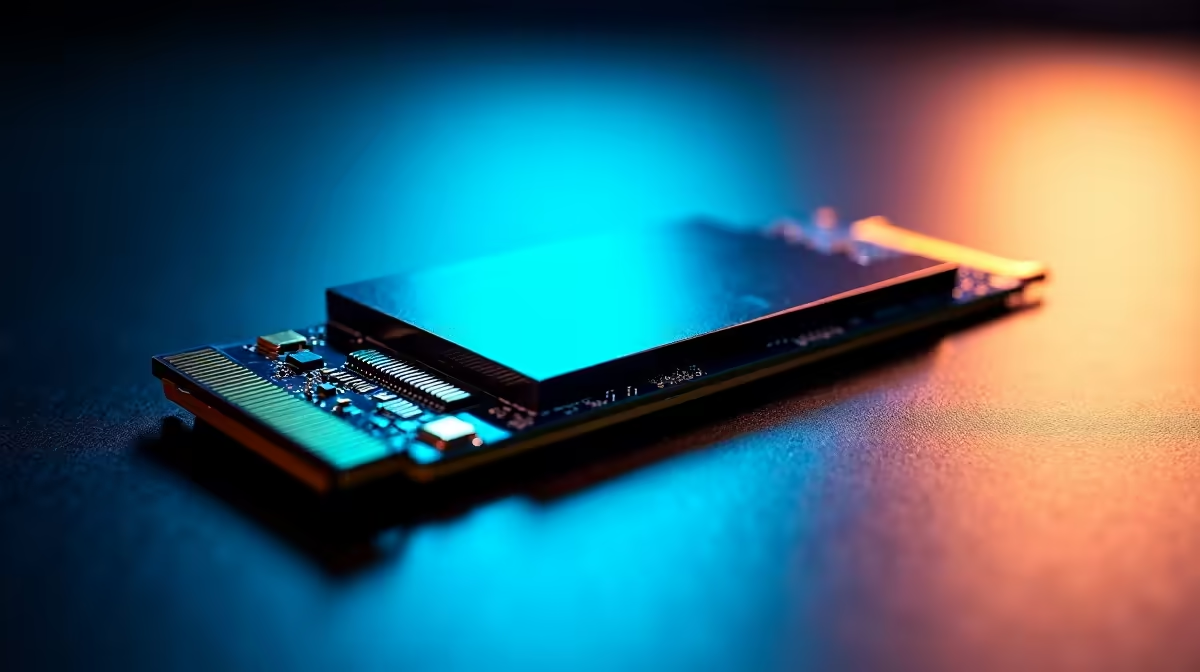
You’ve seen the headlines: SSDs hitting a mind-blowing 14,000MB/s. That’s fast enough to load a 100GB game like Starfield in seconds, not minutes. The marketing hype is real, but let's cut through the noise. For South African gamers building a new rig or planning an upgrade, the big question is… do you really need that much speed? Or is it expensive overkill when your budget could be better spent elsewhere? 🤔
Understanding the New Speed Frontier
So, what does a 14,000MB/s read speed actually mean? These drives are part of the new PCIe 5.0 generation. To put it in perspective, a standard SATA SSD (which already feels snappy) tops out around 550MB/s. A good PCIe 4.0 drive, the current standard for most gaming PCs, hits about 7,000MB/s. This new wave is literally twice as fast as the previous top tier.
While the numbers are impressive, the technology is still in its infancy. For these speeds to matter, the rest of your system—your motherboard and CPU—must also support the PCIe 5.0 standard. Overall, SSDs have come a long way from the days of clunky mechanical hard drives.
The Real-World Impact on Gaming 🚀
Here’s the hard truth: for gaming, there are diminishing returns. While jumping from a hard drive to any SSD is a night-and-day difference, the leap from a 7,000MB/s drive to a 14,000MB/s SSD for gaming is far less noticeable in most current titles. Your initial game load might be a second or two faster, but in-game loading between levels or fast-travel points often sees a minimal, sometimes imperceptible, improvement.
Why? Most games aren't yet optimised to take full advantage of such insane bandwidth. Technologies like Microsoft’s DirectStorage API are designed to change this by allowing the GPU to directly access assets from top-tier NVMe SSDs, but widespread adoption is still on the horizon. For now, a fast PCIe 4.0 drive remains the sweet spot for performance and value.
Check Your Current Speed ⚡
sure how fast your current drive is? Press Ctrl+Shift+Esc to open Task Manager, click the "Performance" tab, and select your C: drive (or other disk). The model name is at the top right. A quick Google search of that name will tell you if it's a SATA, PCIe 3.0, or PCIe 4.0 drive and its rated speeds.
Who Actually Needs a 14,000MB/s SSD?
If not gamers, then who is the target audience for this bleeding-edge tech? The answer lies with content creators and professionals. Think about it:
- Video Editors: Scrubbing through 8K raw video timelines without a stutter.
- 3D Artists: Loading massive texture files and complex scenes instantly.
- Data Scientists: Processing enormous datasets in the blink of an eye.
For these users, time is literally money, and shaving minutes or even hours off their workflow is a massive productivity boost. They are the ones who can truly harness the power of a 14,000MB/s SSD. For them, pairing it with a high-speed external SSD for transferring projects makes perfect sense.
The Price vs. Performance Reality in SA 💰
In South Africa, every rand in your PC build counts. The premium for a brand-new PCIe 5.0 SSD is significant. That extra cash could often be reallocated for a much more tangible gaming performance upgrade.
Consider this: would you rather have a load screen that’s one second shorter, or use that same money to jump from an RTX 4060 to an RTX 4070 for higher frame rates and better visuals? For 99% of gamers, the GPU upgrade is the smarter choice. Before you splurge on the fastest drive on the market, it's wise to browse our complete range of solid-state drives to see what fits your budget. You can often find fantastic value if you check out the latest SSD deals available.
The verdict? A 14,000MB/s SSD for gaming is incredible, future-facing technology. But for now, it's a luxury, not a necessity. Your gaming experience will be just as epic with a quality PCIe 4.0 drive, and your wallet will thank you.
Ready to Find Your Speed Sweet Spot?
Whether you're chasing world records or just want silky-smooth load times, we've got the drive for you. Explore our massive range of SSD deals and find the perfect storage upgrade for your rig today.