Why 1ms Input Lag and Response Time Matter for Apex Legends
You are sliding into the final ring in King’s Canyon, Wingman in hand. Your cursor is on the Wraith’s head, but you miss. Was it your aim, or was it your gear? In the high-stakes world of Apex Legends, South African gamers often battle high pings... making local hardware performance even more critical. Does 1ms input lag actually make a difference for your precision? Let’s break it down.
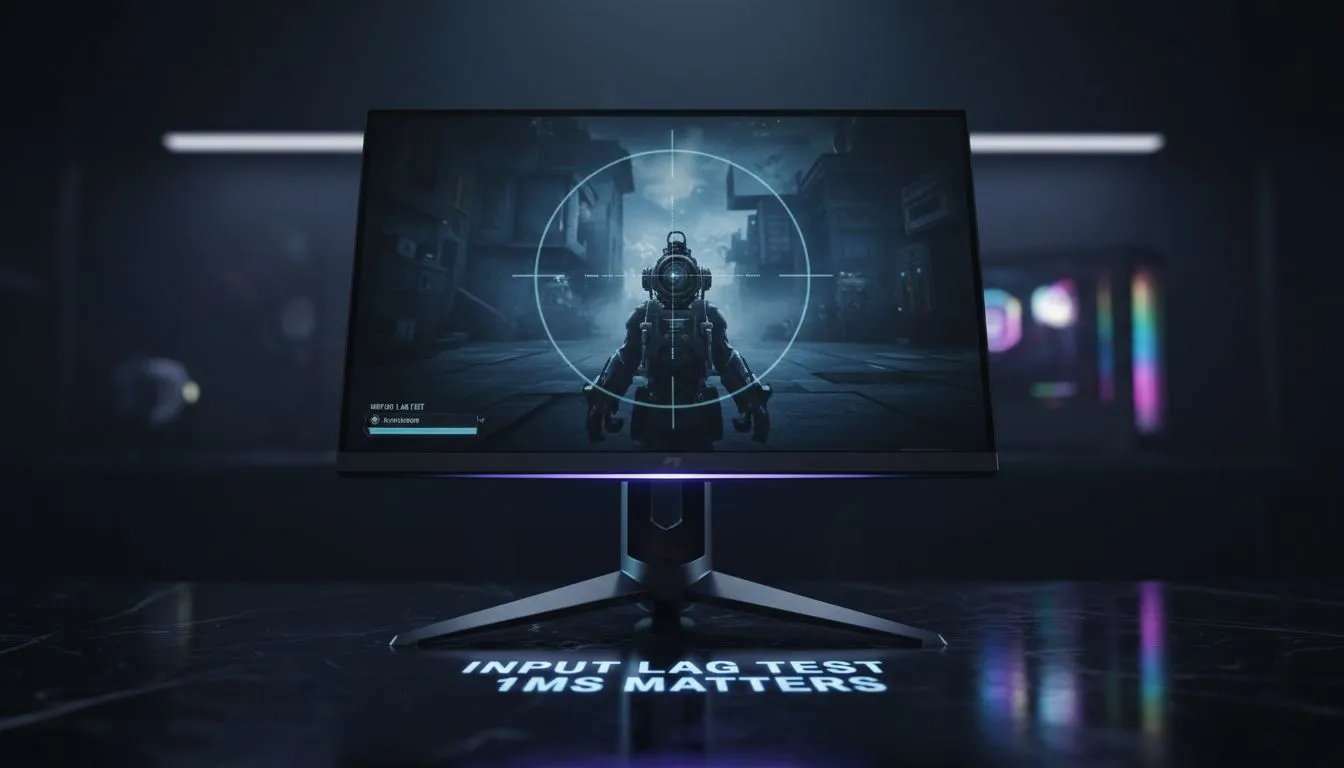
When we talk about monitor speed, we usually mean two things: response time and input lag. Response time is how quickly a pixel can change from one colour to another, while input lag is the delay between your mouse click and the action appearing on screen. If you are looking to upgrade your setup without breaking the bank, you can find the best PC monitor deals that offer the perfect balance of price and performance. For most competitive players, a 1ms response time is the gold standard because it eliminates ghosting... that blurry trail behind a fast-moving Octane.
Finding the Sweet Spot for Competitive Gaming
Not all screens are created equal. While a standard office display might suffice for spreadsheets, the fast-paced nature of battle royales demands something more robust. There is a massive variety of PC monitors available today, but for Apex precision, you need to look at panels specifically built for speed. TN and newer Fast-IPS panels are the champions here, often achieving that coveted 1ms rating while keeping motion blur to an absolute minimum.
Apex Precision Tip ⚡
Always enable 'Nvidia Reflex' or 'AMD Radeon Anti-Lag' in your Apex Legends settings. These technologies work with your high-speed monitor to further reduce system latency, ensuring that your inputs are processed as quickly as possible. This is especially useful when playing on local servers or trying to compensate for higher pings in European lobbies.
If you are serious about climbing the ranks to Predator, browsing through all gaming monitors will show you that high refresh rates (144Hz and above) usually go hand-in-hand with low input lag. The smoother the image, the easier it is for your brain to track targets accurately. For those who want more immersion during their sessions, curved monitors can help fill your peripheral vision, making it easier to spot an incoming third party from the corner of your eye 🚀.
Resolution vs Speed: Making the Right Choice
Many South African gamers wonder if they should sacrifice speed for visual clarity. While 5K and 4K monitors look incredible, they often require significantly more GPU power to maintain high frame rates. If your frame rate drops, your input lag effectively increases. For the ultimate competitive edge, a 1080p or 1440p monitor with a 1ms response time is usually the smarter play for pure performance.
Even if you are a gamer on the move, you don't have to settle for slow displays. Modern portable monitors now feature impressive refresh rates and low lag, perfect for LAN events or gaming away from your main desk. To ensure everything runs smoothly, don't forget the small details... high-quality DisplayPort cables and ergonomic stands from our monitor accessories section can make a noticeable difference in your overall comfort and setup stability ✨.
Ultimately, while 1ms might seem like a tiny number, in a game where every millisecond counts, it provides the peace of mind that your hardware isn't holding you back. When you click that mouse, you want the peace of mind that your hardware is responding at the speed of thought.
Ready to Level Up Your Precision? Don't let lag stand between you and a Champion screen. Whether you need a 1ms competitive beast or a stunning 4K display, we have the right tech for your budget in ZAR. Explore our full range of gaming monitors and dominate the arena today.