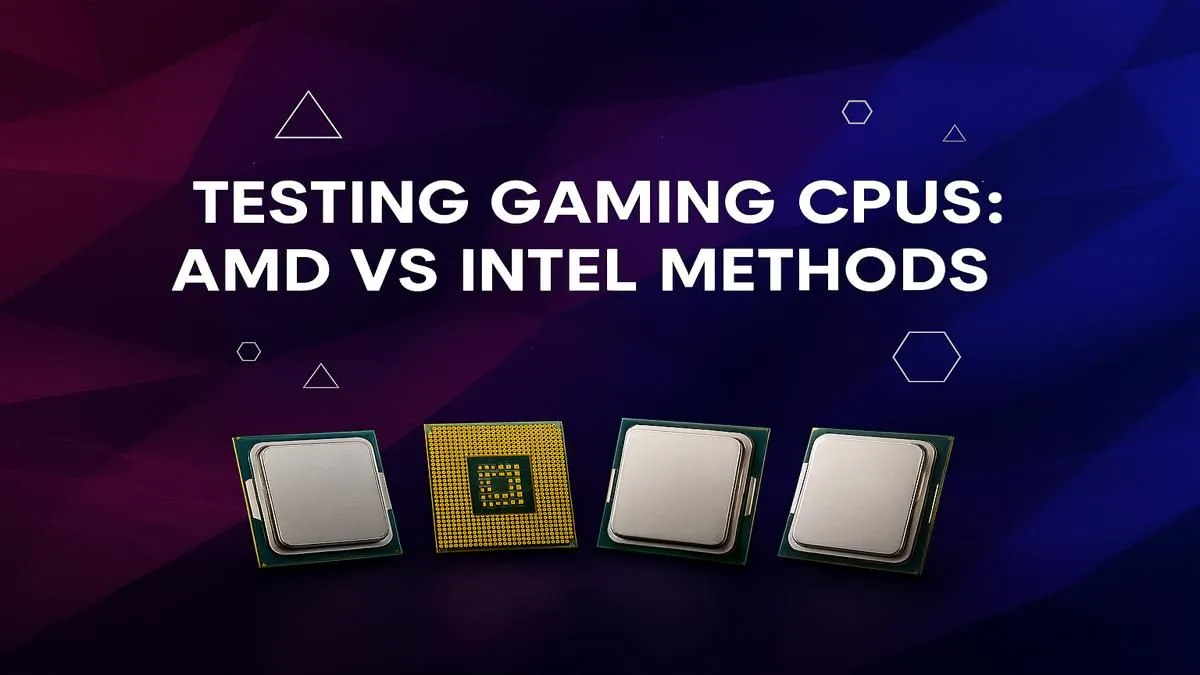
Ever stared at a dozen CPU reviews, each crowning a different "king"? It's a proper mess. One site says AMD is tops, another swears by Intel. The secret isn't just the final FPS number; it's how they get it. Here at Evetech, we're pulling back the curtain on our gaming CPU benchmark process, showing you exactly how we test Team Red against Team Blue, so you can make a choice that’s right for your rig here in South Africa.
Why Our Gaming CPU Benchmark Is Different
Before we dive into the nitty-gritty, let's talk about trust. Any list of numbers can be skewed. Running a CPU with slow RAM or a weak graphics card can bottleneck performance, making even a top-tier chip look average. That's why a transparent, repeatable testing method is so important. Our goal isn't to declare a winner; it's to give you clear, unbiased data so that choosing the right CPU processor for your needs becomes a whole lot simpler.
Our AMD vs Intel Testing Methods Explained 🔧
To ensure a fair fight, we standardise our test environment meticulously. Every component, from the cooler to the storage, is kept identical across tests to isolate the CPU's true performance. This is the core of our AMD vs Intel testing methods.
The Test Bench: A Level Playing Field
Consistency is key. For any given CPU generation, our test bench is locked down. This means the same high-speed RAM kit, the same powerful GPU (like a GeForce RTX 4080 or Radeon RX 7900 XTX), the same NVMe SSD, and the same power supply are used for both the latest Intel CPUs and the most powerful AMD processors. The only variables are the CPU and the motherboard required to support it. This ensures we are measuring the chip, not the surrounding components.
Game Selection & Settings
We test a suite of popular games that South African gamers are actually playing. This includes:
- CPU-Intensive Titles: Games like Counter-Strike 2 or Valorant at 1080p, which rely heavily on single-core speed and push the processor to its limits.
- Graphically Demanding AAA Games: Titles like Cyberpunk 2077 or Alan Wake 2 at 1440p to see how the CPU handles complex workloads alongside a high-end GPU.
All games are run using the same in-game presets and a standardised benchmark run to ensure every test is directly comparable.
Run Your Own Basic Benchmark! 🚀
Want to see how your current CPU stacks up? Most modern games have a built-in benchmark tool in their graphics settings. You can also use software like MSI Afterburner with RivaTuner Statistics Server to display your real-time FPS, CPU usage, and temperatures while you play. It's a great way to spot potential bottlenecks in your own system!
How to Interpret the Benchmark Results
When you look at our results, don't just fixate on the average FPS. Pay close attention to the "1% lows." This number tells you the framerate of the slowest 1% of frames rendered, and it's a much better indicator of smoothness and stutter. A CPU with a slightly lower average FPS but much higher 1% lows will often feel significantly better to play on.
Ultimately, the best CPU depends on your specific needs. Are you a competitive esports player needing every last frame at 1080p? Or a 4K single-player enthusiast who values a smooth, consistent experience above all else? Our gaming CPU benchmark data is designed to help you answer that question for yourself. ✨
Ready to Upgrade Your Rig?
Understanding our AMD vs Intel testing methods is the first step. The next is finding the perfect processor for your budget and gaming style. From entry-level powerhouses to enthusiast-grade silicon, we've got the heart of your next build waiting for you. Explore our complete range of CPUs and find the perfect match today.