Stuttering frame rates during a crucial boss fight? We’ve all been there. For South African gamers, balancing eye-watering visuals with smooth performance often feels like a tough compromise, especially with a tight budget. But what if you could get more FPS without a pricey hardware overhaul? Enter the latest DLSS and FSR updates. These incredible technologies from NVIDIA and AMD are designed to give you a massive performance boost, making high-refresh-rate gaming more accessible than ever. 🚀
What Are DLSS and FSR Anyway?
At their core, both Deep Learning Super Sampling (DLSS) and FidelityFX Super Resolution (FSR) are smart upscaling technologies. They render your game at a lower internal resolution (say, 1080p) and then use sophisticated algorithms to intelligently upscale the image to your monitor's native resolution (like 1440p or 4K).
The result? You get significantly higher frame rates, but the picture on your screen looks almost as sharp and detailed as if it were rendered natively. It’s a clever trick that leverages software to unlock your hardware's hidden potential.
NVIDIA's DLSS: The AI-Powered Powerhouse
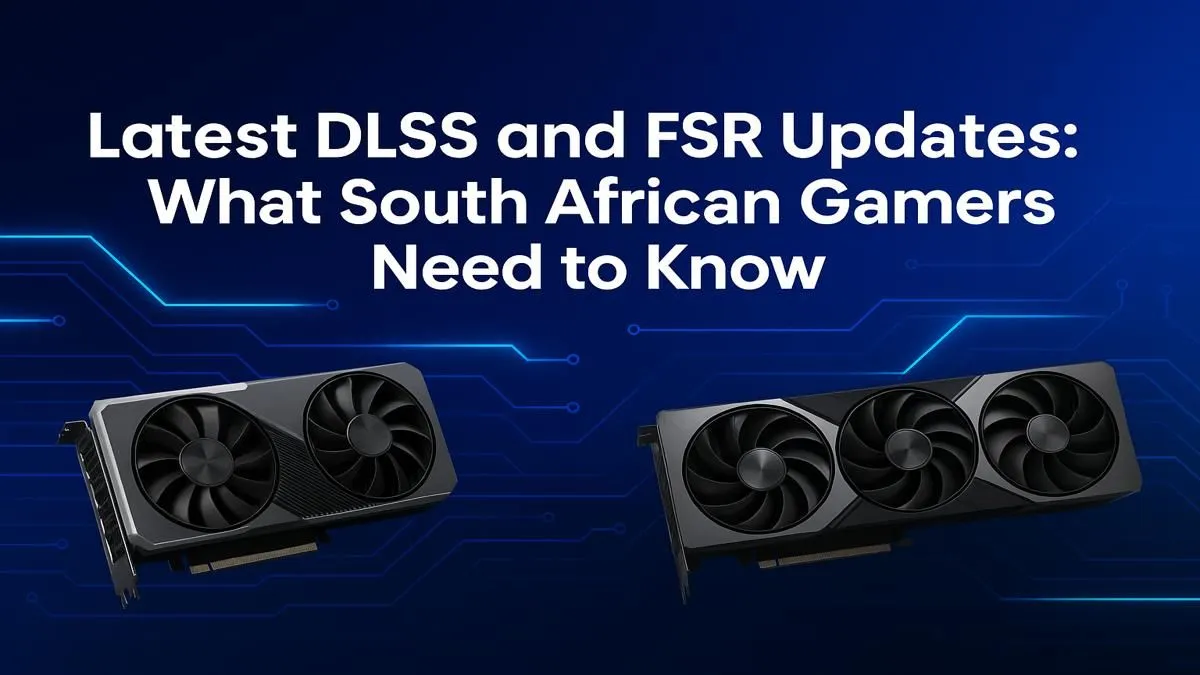
DLSS is NVIDIA's secret sauce, exclusive to their RTX graphics cards. It uses artificial intelligence and dedicated Tensor Core hardware on the GPU to reconstruct the image. The latest versions, particularly DLSS 3 with Frame Generation, create entirely new frames to slot between existing ones, dramatically smoothing out gameplay. To tap into this power, you'll need one of the latest NVIDIA GeForce RTX graphics cards, but the visual fidelity is often considered the best in its class.
AMD's FSR: The Open-Source Hero
FidelityFX Super Resolution is AMD's answer, and its biggest advantage is its open-source nature. This means FSR works on a massive range of GPUs... not just AMD's. It even runs on older NVIDIA cards and integrated graphics. While earlier versions traded a little more image quality for that broad compatibility, the latest FSR updates have closed the gap significantly. It’s a fantastic option available across AMD's lineup of Radeon cards and beyond. ✨
Quick Check: Is Your Favourite Game Supported? 🔧
Both NVIDIA and AMD maintain official lists of supported games on their websites. Before you buy, do a quick search for "NVIDIA DLSS supported games list" or "AMD FSR games list" to see if your go-to titles like Cyberpunk 2077, Alan Wake 2, or Call of Duty can get a performance boost.
The Latest DLSS and FSR Updates: What's New?
Technology moves fast, and recent updates have pushed performance even further.
- DLSS 3.5 with Ray Reconstruction: This isn't just about frames. It uses AI to improve the quality of ray-traced lighting, reducing noise and making reflections look cleaner and more accurate. It's a visual upgrade as much as a performance one.
- FSR 3 with Frame Generation: Taking a page from NVIDIA's book, FSR 3 introduced its own frame generation technology. This provides a huge FPS uplift and, because it's open-source, brings smooth, high-frame-rate gaming to a wider audience than ever before.
For South African gamers, these updates mean you can push your settings higher, enable demanding features like ray tracing, or simply enjoy a buttery-smooth experience on a more modest rig.
So, Which Upscaler Should You Choose?
Deciding between them usually comes down to the graphics card in your PC.
If you own or are planning to buy an NVIDIA RTX 30-series or 40-series card, DLSS is a no-brainer. The image quality is exceptional, and exclusive features like Frame Generation on the 40-series are incredible.
If you're on an AMD card, an older NVIDIA card, or building a PC on a tighter budget, FSR is your champion. Its wide compatibility and impressive performance gains make it an amazing tool for squeezing every last frame out of your hardware. Ultimately, the best way to decide is to see what your budget allows when you browse the latest graphics card deals available in South Africa.
Both technologies are fantastic wins for gamers. They allow us to get more performance for our money, ensuring our games not only look stunning but also run beautifully.
Ready to Boost Your FPS?
Whether you're Team Green or Team Red, the latest DLSS and FSR updates prove that a powerful GPU is your ticket to next-level performance. Explore our huge range of graphics cards and find the perfect engine for your gaming rig today.