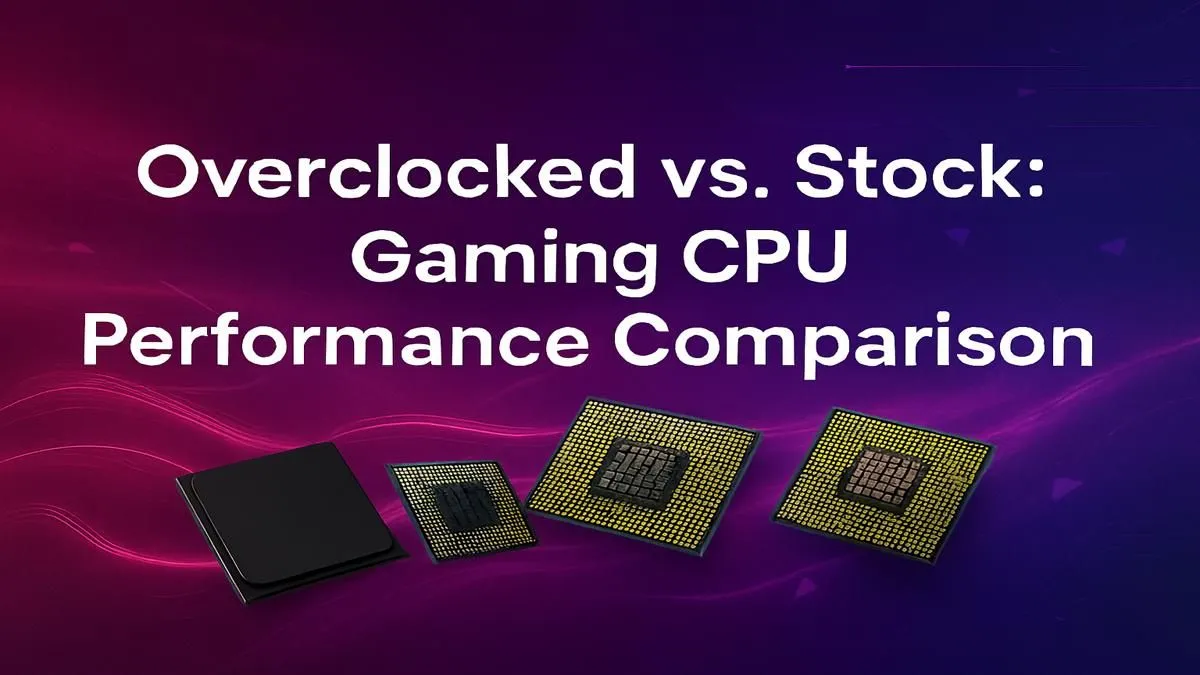
You’ve just unboxed your shiny new CPU, ready to dominate in Apex Legends. But the age-old question pops up: should you run it stock, or push it to its limits with overclocking? For South African gamers, the debate of overclocking vs stock CPU gaming isn't just about raw power; it's about stability, heat, and value for your hard-earned Rands. Is squeezing out that extra 10% performance really worth the effort? Let's find out.
Understanding the Core Debate
At its heart, overclocking is the process of manually increasing a component's clock rate, forcing it to run at a higher speed than the manufacturer certified it for. Think of it as tuning your car's engine... you can get more power, but you also introduce more stress and risk. A stock CPU, on the other hand, runs exactly as intended, using clever built-in technologies like Intel's Turbo Boost or AMD's Precision Boost Overdrive to automatically manage its speed for you.
The appeal of overclocking is obvious: free performance! 🚀 But the reality in 2024 is a bit more complicated.
The Strong Case for Stock CPU Gaming
For the vast majority of gamers, running a CPU at its stock settings is the smartest move. Here’s why:
- Plug-and-Play Simplicity: You install it, and it just works. There’s no need to spend hours in the BIOS tweaking voltages and running stability tests. You can get straight to gaming.
- Guaranteed Stability: Manufacturers spend millions on R&D to guarantee their CPUs run flawlessly at stock speeds. This means fewer crashes, blue screens, and frustrating troubleshooting sessions.
- Impressive Out-the-Box Speed: Modern CPUs are incredibly powerful. A high-end chip will chew through any game you throw at it without breaking a sweat, making the gains from overclocking feel minimal in many real-world scenarios. For most gamers, the GPU is the real performance bottleneck anyway.
- Efficiency and Longevity: Running stock means lower power consumption and less heat. In a warm South African climate, this keeps your room cooler, your electricity bill lower, and can potentially extend the lifespan of your components. Exploring today's powerful CPU processors reveals just how optimised they are for efficiency.
When Does Overclocking Actually Make Sense? 🔧
While stock is great for most, overclocking still has its place. The performance boost becomes truly valuable in a few specific situations. If you're chasing every single frame per second for a competitive edge in titles like Valorant or CS:GO, those extra cycles can make a difference. This is especially true if you are using a high-refresh-rate monitor and your GPU is powerful enough not to be the bottleneck.
Many enthusiasts simply enjoy the process of tinkering and pushing their hardware to the absolute limit. It's a hobby in itself. For them, the satisfaction comes from achieving a stable, high-performance overclock. Both the unlocked Intel 'K' series CPUs and virtually AMD's entire Ryzen lineup are built with these users in mind, offering the freedom to tweak and tune.
Cooling is Key ❄️
Before you even think about overclocking, ensure you have a robust cooling solution. A stock cooler won't cut it. A good aftermarket air cooler or an All-In-One (AIO) liquid cooler is non-negotiable to prevent thermal throttling and keep your system stable, especially during those hot Highveld summers.
Overclocking vs Stock CPU Gaming: The Verdict for SA Gamers
So, is it worth the boost? For most South African gamers in 2024, the answer is likely no. The performance gains in the majority of games are marginal and often not worth the added heat, power consumption, and risk of instability. The money you would spend on a high-end motherboard and cooler to support a decent overclock could often be better invested in a more powerful graphics card, which would deliver a much bigger performance uplift.
Ultimately, the overclocking vs stock CPU gaming choice comes down to you. If you're an enthusiast who loves to tinker and extract every last drop of performance, go for it! ✨ But if you just want a stable, powerful, and efficient machine to enjoy your games on... trust the engineers and stick to stock.
Ready to Power Up Your Gameplay?
The overclocking vs stock CPU gaming debate always comes down to your personal needs. Whether you want out-of-the-box performance or the thrill of tuning, the perfect processor is waiting for you. Explore our huge range of CPUs and find the heart for your next gaming rig.