RX 9070 vs RTX 5070: Best Value for VR Racing?
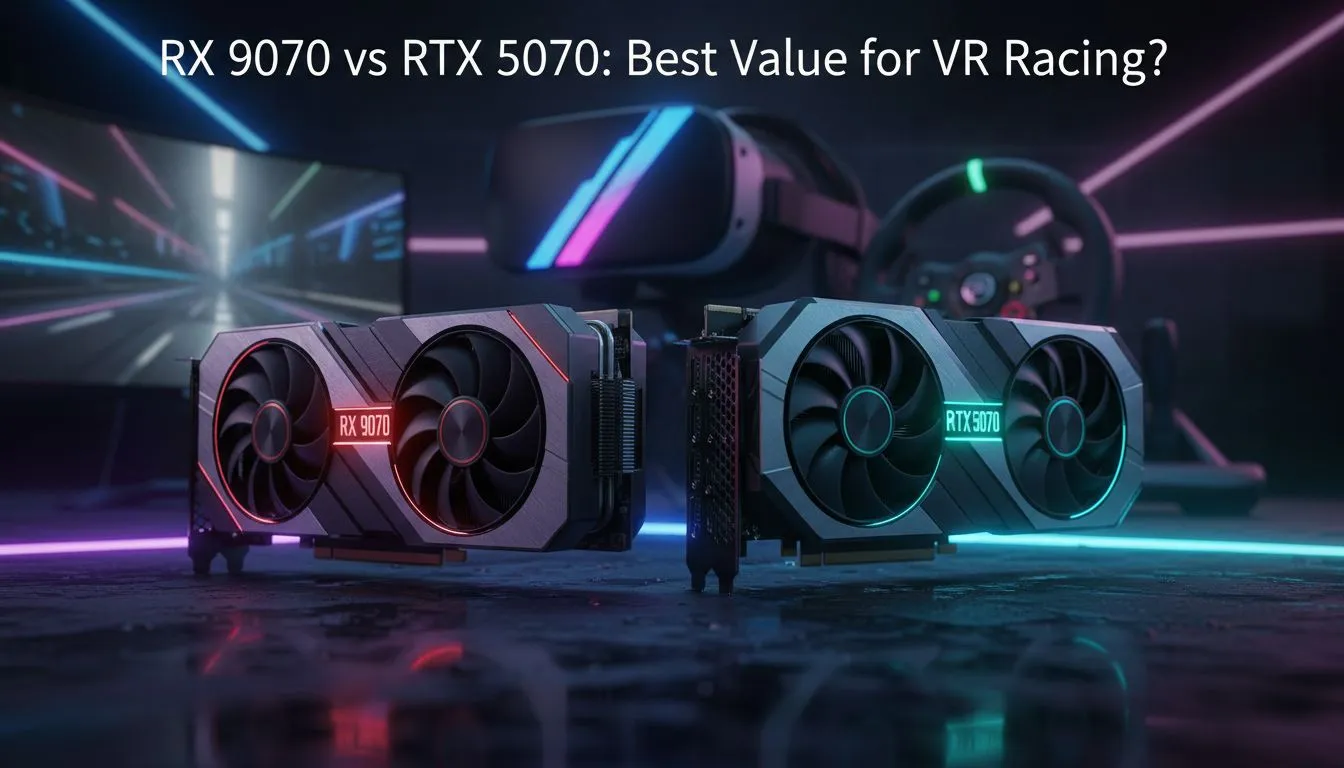
Strapping into a VR racing rig in South Africa shouldn't cost as much as a used Citi Golf. Choosing between the RX 9070 vs RTX 5070: Best Value for VR Racing? is the big question for 2025. Whether you are chasing lap times in Assetto Corsa or drifting in Dirt Rally... the right GPU makes or breaks the immersion. Let's see which card wins the podium. 🏎️
High-Octane Performance for South African Sim Racers
VR racing demands high frame rates and low latency. If your frame rate drops below 90 FPS, you might feel a bit green around the gills. The AMD Radeon RX 9070 is expected to offer massive VRAM pools. This is vital for high-resolution textures in modern racing sims. When you browse the latest AMD Radeon graphics cards, you'll notice the value-to-performance ratio is often hard to beat for raw rasterisation.
AMD’s RDNA 4 architecture focuses on efficiency... which is great for those concerned about power bills in ZAR. However, VR often relies on specific driver optimisations. This is where the competition gets fierce.
NVIDIA’s Tech Edge in the Virtual Cockpit
NVIDIA usually holds the lead in software features. The RTX 5070 is likely to leverage DLSS 4 to keep those frame rates buttery smooth. For many local gamers, the choice comes down to the reliability of Nvidia ATI graphics cards when pushing dual-4K displays inside a headset.
VR Performance Pro Tip ⚡
Always disable 'Motion Blur' and 'Depth of Field' in your racing sim settings when using VR. These effects are designed for flat screens and can cause significant eye strain or nausea in a headset. Stick to raw resolution and high refresh rates for the most realistic experience.
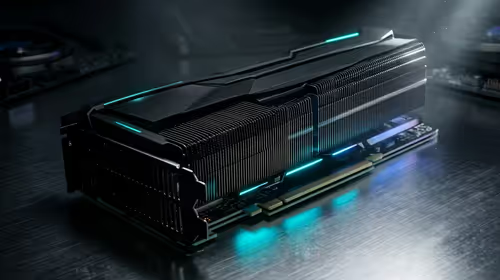
If you prefer a specific aesthetic for your build, looking at MSI graphics cards often reveals superior cooling solutions. Proper cooling is essential when your GPU is pinned at 100% during a 24-hour Le Mans endurance race. ✨
Balancing the Budget and Professional Needs
Not everyone needs the flagship to enjoy the track. Some entry-level racers find success with Intel Arc graphics cards for lighter titles. These cards offer surprising value for 1080p VR sessions.
On the other end of the spectrum, professional sim-racing studios often opt for workstation graphics cards for multi-monitor, high-fidelity setups. But for the average enthusiast at home, the RX 9070 vs RTX 5070: Best Value for VR Racing? debate usually ends with the RTX 5070 taking the lead in features... while AMD wins on pure price-per-frame. 🚀
Ready to Find Your Perfect Match?
The battle for VR supremacy is intense, but your setup deserves the best hardware available in South Africa. Explore our massive range of graphics cards and find the perfect GPU to conquer the track.