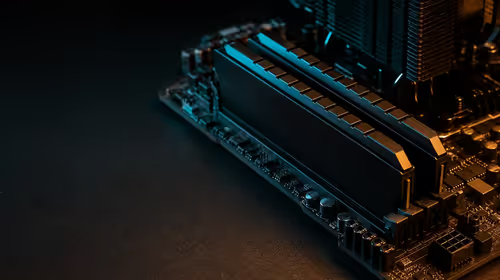
Somewhere between "cheapest board on the shelf" and "features you will never use" sits the sensible middle ground most builders are actually hunting for. A b860m motherboard in the R3,000 to R5,000 range is usually where that middle ground lives, provided you know what to check for.
Quick Answer
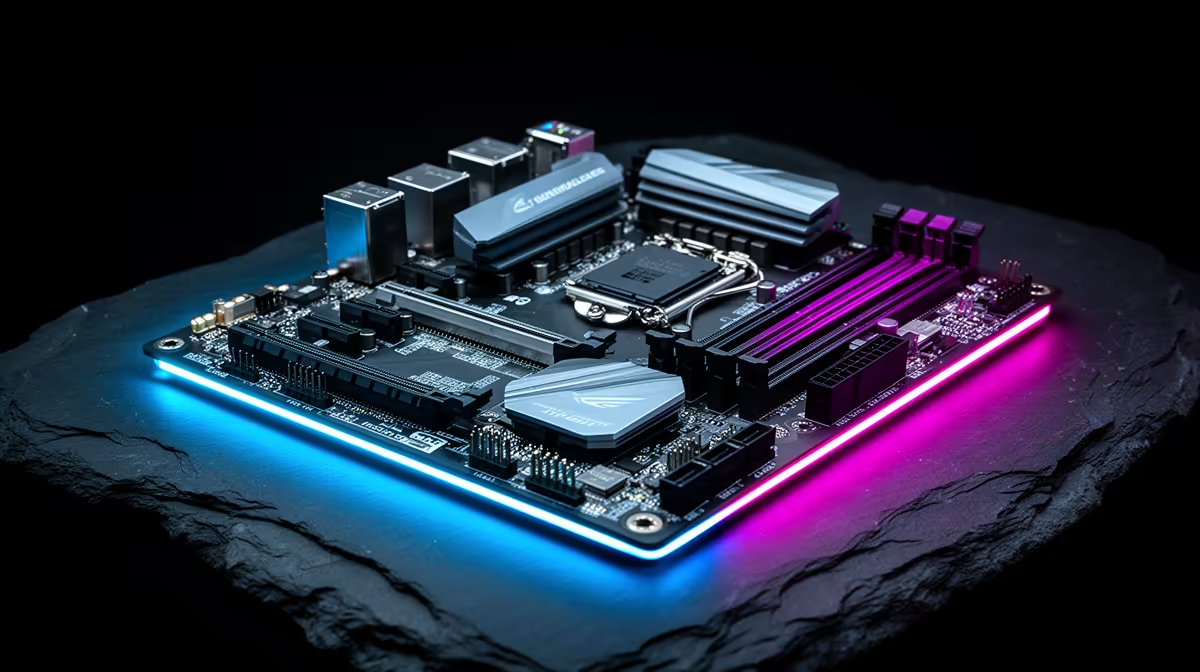
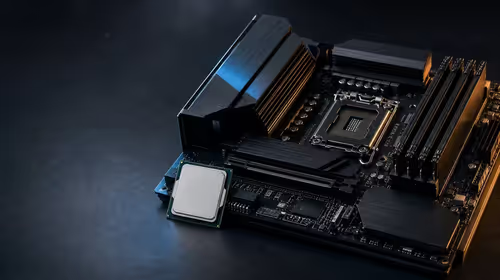
Yes, a Micro-ATX board in the R3,000 to R5,000 bracket is enough for a strong gaming PC, as long as it covers modern essentials like PCIe 5.0 and fast storage. The ASUS B860M MAX Gaming AX sits at R4,499 within that band and includes PCIe 5.0 graphics support alongside triple M.2 slots.
What this budget genuinely buys you
At this price point you can expect a board with a full-size PCIe x16 graphics slot, several NVMe storage slots, and networking that has moved past bare Gigabit Ethernet. These are the features that actually shape day-to-day gaming performance and build flexibility, rather than extras aimed at enthusiast overclockers.
The features worth insisting on
DDR5 memory support, at least one fast M.2 slot, and tool-free installation features all belong on a shortlist at this budget. The ASUS B860M MAX Gaming AX covers all three, plus two additional M.2 slots beyond the minimum.
Where corners commonly get cut
Boards priced well below this range often trim down to two memory slots, a single M.2 slot, or Gigabit-only networking to hit an aggressive price. Those cuts rarely affect raw gaming frame rates directly, but they do limit future upgrades like adding more RAM or a second storage drive down the line.
Is Micro-ATX itself a compromise here
Not in any way that affects gaming. The smaller form factor trims a few unused expansion slots while keeping the graphics slot, memory slots and chipset features intact, so you are not trading performance for a smaller board. This particular board is part of the Intel B860 chipset family, which strikes a fair balance between price and capability.
Long-term value in this price band
A board that already supports PCIe 5.0 and fast Ethernet will still feel current in a few years, which matters if you plan to keep the same motherboard through a future CPU or GPU upgrade. Spending slightly more upfront on a board with headroom usually works out cheaper than replacing a bare-bones board once you outgrow it. Check the wider Intel motherboard selection to see how pricing shifts as features are added or removed.
Frequently Asked Questions
Is R4,499 a reasonable price for a gaming motherboard?
Yes, particularly when it includes PCIe 5.0 graphics support, triple M.2 storage and 2.5Gb Ethernet, features that some pricier boards still lack.
Should I spend more than R5,000 on a motherboard for gaming?
Only if you need extreme overclocking headroom or multiple graphics cards, neither of which matters for a typical single-GPU gaming build.
Does a cheaper board hurt frame rates?
Not directly, since frame rates are driven mainly by the CPU and GPU. A cheaper board mainly limits future expansion and feature set.
What should I avoid in this budget range?
Avoid boards with only two memory slots or a single M.2 slot if you want room to grow your system later without a full motherboard swap.
Is DDR5 support important at this price?
Yes, since DDR5 is now the current memory standard for new Intel builds and ensures compatibility with current and future CPUs.
Will a board in this price band handle a mid-range CPU comfortably?
Yes, a well-built B860M board in this range is designed to pair with mid-range Intel processors without power delivery being a limiting factor.
Ready to see what R4,499 buys in a gaming board?
The ASUS B860M MAX Gaming AX waits near Evetech's Intel B860 motherboard shelf, built to settle whether a mid-range Micro-ATX board covers a serious gaming build.