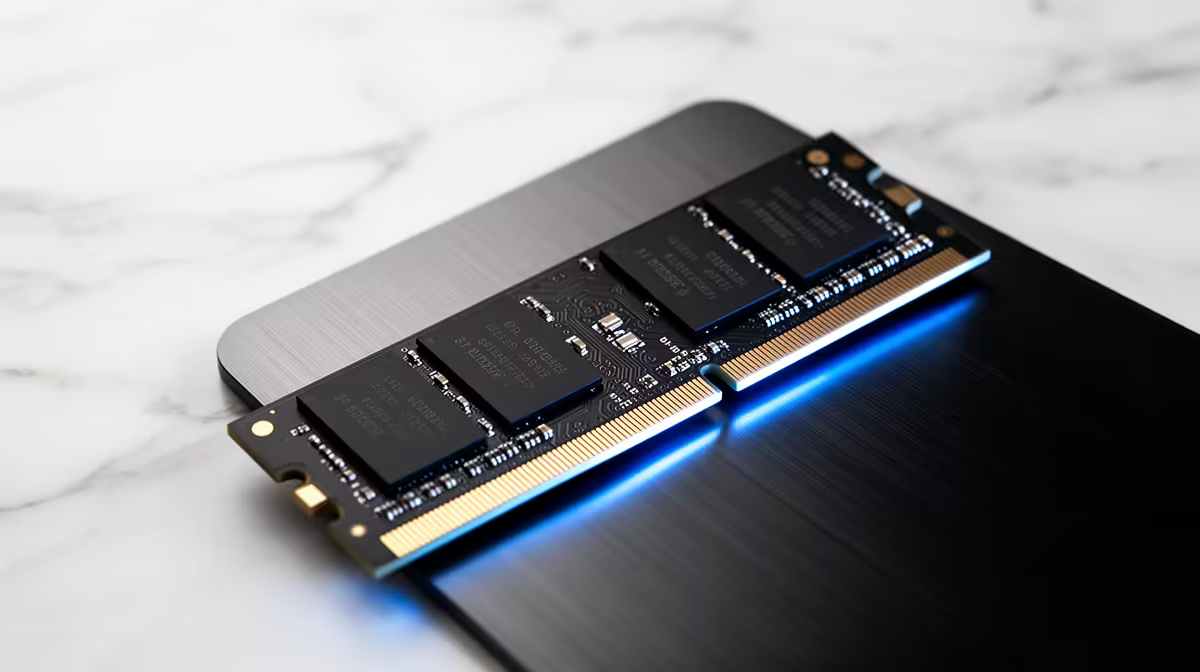
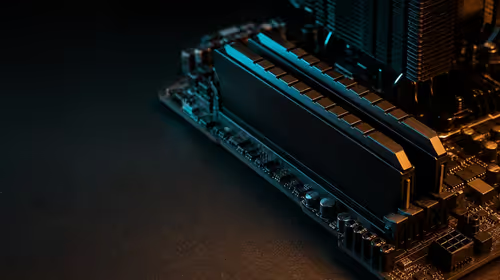
LPDDR means Low Power Double Data Rate memory. It is designed for high bandwidth with tight power use in laptops, handhelds and mobile devices. Manufacturers often solder it close to the processor for signal integrity, package space and energy efficiency, which means the capacity you buy is usually the capacity you keep.
Quick Answer
LPDDR pricing shares the wider DRAM supply cycle, and 2026 supplier material points to growing AI-device demand and constrained low-power memory supply. That does not mean every laptop uses LPDDR or that all notebook prices move together. Check whether the exact model has soldered LPDDR, removable DDR5 SODIMMs or a mixed layout before buying.
Evetech's laptop best sellers help compare memory capacity by exact model. The gaming laptop deals show systems where upgradeable DDR5 and fixed low-power designs serve different priorities.
Why LPDDR Uses Less Power
LPDDR standards use power-saving features, lower operating voltages and packaging designed for mobile systems. The wide, close connection to the processor helps deliver bandwidth without desktop-style removable slots.
Lower memory power supports battery life and reduces heat. The complete laptop still depends on screen, processor, firmware and workload.
LPDDR5X is a generation and speed family, not a capacity promise. Read the exact configuration.
Why It Is Often Soldered
Short controlled traces help signal integrity at high data rates. Soldered packages also save vertical space and let the board designer use a compact memory layout.
The trade-off is serviceability. You cannot add another LPDDR stick later. A failed package can require board-level repair.
Some thin laptops use LPDDR, while many gaming and workstation models retain DDR5 SODIMM slots for capacity and upgrades. Never infer the layout from laptop thickness alone.
How AI Demand Enters the Picture
AI PCs and mobile devices can use more low-power memory, while data centres are also exploring LPDDR-derived high-capacity modules. Micron said constrained supply and AI-powered device demand drove LPDDR5X growth, and its 2026 portfolio extends low-power memory into AI infrastructure.
That demand sits beside HBM and server DRAM in suppliers' investment decisions. It can support higher component costs, though laptop pricing also includes CPU, panel, storage, currency and inventory.
Choose Capacity Up Front
For a soldered laptop, look at your current peak use and expected ownership. Gaming plus voice chat and a browser can outgrow a tight configuration before the processor feels old.
Do not buy a much larger capacity without a workload. Extra unused memory does not make a game faster once paging and capacity pressure are gone.
Check whether the memory runs in the full intended channel configuration and whether part is reserved for integrated graphics.
FAQ
Can LPDDR be upgraded?
Usually no in consumer laptops because it is soldered. Confirm the service manual for the exact model.
Does every laptop use LPDDR?
No. Many gaming and workstation laptops use removable DDR5 SODIMMs, and some combine soldered and slotted memory.
Why can LPDDR affect laptop price?
It shares DRAM manufacturing and faces its own device and AI demand, while the fixed capacity is built into the laptop's total configuration.
Confirm whether the exact laptop uses soldered LPDDR or SODIMMs and buy the capacity its real workload needs for the full ownership period.