Type 1, 2 and 3 Surge Protection Explained
Quick Answer
Type 1 SPDs are used near the installation origin where lightning-current protection is required. Type 2 devices are common in distribution boards for induced and switching surges. Type 3 devices provide point-of-use protection near sensitive equipment.
The correct types and coordination depend on the property, supply, earthing and lightning-protection design. A qualified electrician must handle fixed wiring.
Type 1: Installation Origin
Type 1 devices are designed for high-energy lightning-current duties at the origin in applicable installations. They are selected with the building's external lightning protection and earthing in mind.
They do not belong in a DIY consumer plug. The electrician must assess whether the property requires this layer.
Type 2: Distribution Protection
Type 2 SPDs are used in distribution boards to limit switching and induced surge voltage. They can be installed as a main layer where Type 1 is not required or downstream in a coordinated design.
Selection includes system voltage, discharge rating, protection level, backup protection and wiring layout.
Type 3: Near the Equipment
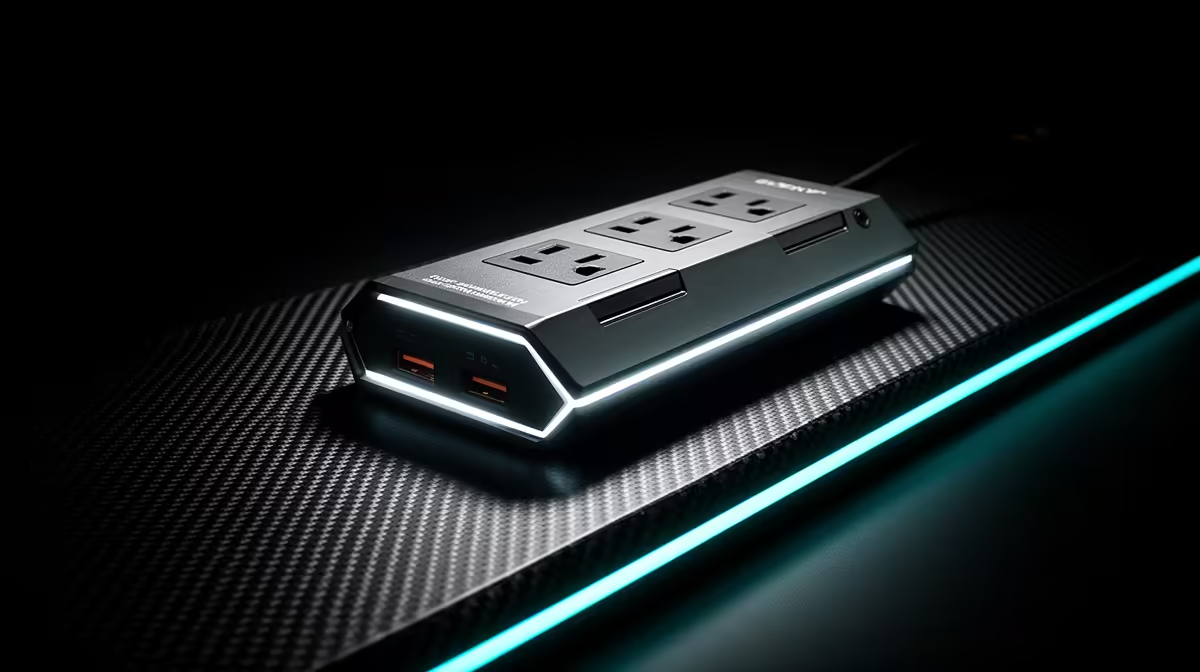
Type 3 protection sits close to sensitive equipment and handles a lower-energy residual surge in a coordinated system. Surge plugs and rated strips can fall into this role.
An ordinary multi-plug is not Type 3 protection without the relevant design and marking.
Coordination Is the Job
Distance and device characteristics affect how layers share energy. More devices do not create a better result by default.
Ask a qualified electrician to specify the fixed layers and compatible point-of-use protection. Keep installation and replacement records.
For the protected PC load, compare Corsair PSUs and power-supply best sellers only when a damaged or unsuitable PSU needs replacement. A new PSU cannot replace the SPD design.
Read the Marking
The product should state its type and electrical ratings. A seller's title or plug shape is not enough.
Check nominal voltage, maximum continuous operating voltage, discharge rating, protection level and status method where applicable. The electrician must match these to the installation.
Do not substitute a Type 3 strip for a board-mounted Type 2 device because both say surge protection.
Maintain the Layers
Ask how each SPD shows end of life and who may replace it. Keep the installation date and model.
Inspect visible point-of-use status after a known event without opening the device. Have fixed-board protection checked through the electrician.
Replace damaged or expired point-of-use gear through an appropriate e-waste route.
FAQ
Does every house need all three types?
No. The requirement depends on the installation and risk assessment. Use a qualified electrician.
Is Type 3 enough for lightning?
It is a point-of-use layer, not a substitute for required upstream lightning-current and distribution protection.
Can I inspect a DB SPD myself?
You can observe an external status window if safely visible, but fixed-board inspection and replacement belong to a qualified electrician.
Ask a qualified electrician which Type 1 and Type 2 layers the property needs, then add compatible Type 3 protection near the PC.