Quick Answer
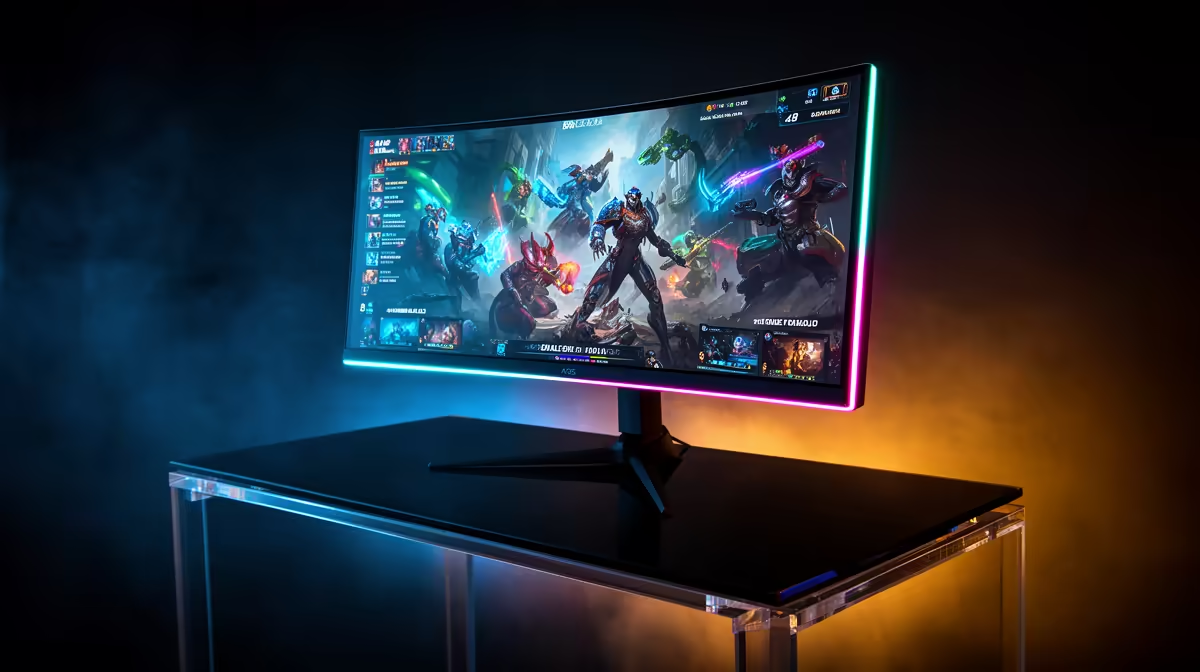
For esports gamers in Pretoria, 240Hz monitors have gone mainstream because prices have fallen and mid-range GPUs can now feed them — a 240Hz 1080p or 1440p panel pairs with an RTX 5060 or RX 9060 XT to push competitive titles past 240 fps. Pretoria's large student and gaming population, backed by solid Gauteng fibre, makes 240Hz mainstream for local competitors. A 24-inch 1080p 240Hz panel is now an attainable upgrade over the old 144Hz default.
Why 240Hz became the new normal
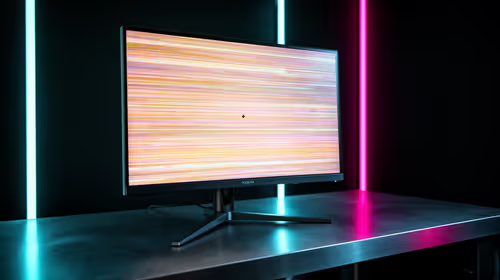
At 240Hz the display refreshes every 4.2ms versus 6.9ms at 144Hz, which sharpens motion clarity and tightens the feel of flick aim in CS2, Valorant and Apex. As panel costs dropped and GPUs like the RTX 5060 began hitting 240+ fps at competitive settings, 240Hz stopped being a luxury and became the default for serious play. Mid-range hardware now feeds it comfortably.
Building a 240Hz rig in Pretoria
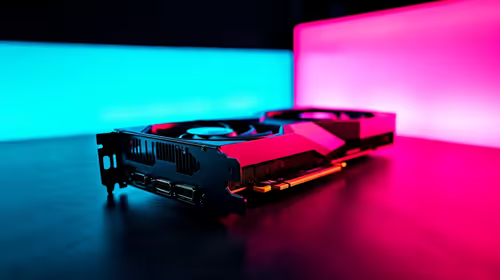
To actually use 240Hz you need the frames to match: an RTX 5060 (around R7,500) or RX 9060 XT drives esports titles past 240 fps at low-to-medium settings, paired with a Ryzen 5 7600 and 32GB DDR5-6000. A 24-27 inch 1080p or 1440p 240Hz panel completes the setup. Enable your monitor's full refresh in Windows display settings so you are not stuck at 60Hz.
FAQ
Is 240Hz worth it over 144Hz?
For esports, yes. 240Hz refreshes every 4.2ms versus 6.9ms at 144Hz, sharpening motion and flick aim. You need a GPU that pushes 240+ fps to feel it.
What GPU feeds a 240Hz monitor?
An RTX 5060 (around R7,500) or RX 9060 XT pushes esports titles past 240 fps at competitive settings. Without those frames, the panel sits underused.
Do I need to enable 240Hz manually?
Yes. Set the full refresh rate in Windows display settings and your monitor's menu, or it may default to 60Hz and waste the panel.
Before you buy
In Pretoria, a 240Hz panel only helps if your GPU pushes 240+ fps — pair it with an RTX 5060 and enable the full refresh in Windows.