Building an AI powerhouse in South Africa? That machine is going to run hotter than a Karoo blacktop in December. Standard cooling just won't cut it when you're training models or running complex inferences for hours on end. Your powerful new PC needs the best cooling for AI PCs to avoid thermal throttling and keep performing at its peak. Let's dive into how to keep your silicon frosty and your projects on track. ❄️
Why AI Workloads Demand Superior Cooling
Gaming is a sprint; AI is a marathon. While a gaming session pushes your GPU in intense bursts, AI tasks like deep learning place a sustained, brutal load on both your CPU and GPU simultaneously. This constant high utilisation generates a massive amount of heat that can overwhelm conventional coolers.
Without an effective AI PC cooling solution, your components will overheat. This triggers thermal throttling, where the hardware automatically slows down to protect itself. The result? Drastically longer processing times, potential instability, and a shorter lifespan for your expensive components.
Air vs. Liquid: Choosing the Best Cooling for Your AI PC
The age-old debate gets a new twist with AI. While both cooling methods have their place, one generally pulls ahead for these demanding workloads.
Traditional Air Coolers
High-end air coolers from brands like Noctua or be quiet! are fantastic. They are incredibly reliable, with fewer points of failure (it's just a heatsink and a fan). For moderate AI tasks or builds where simplicity is key, a premium air cooler can be sufficient. However, they struggle to move a large thermal load out of the case quickly, which can lead to heat-soaking the entire system during long sessions.
All-in-One (AIO) Liquid Coolers
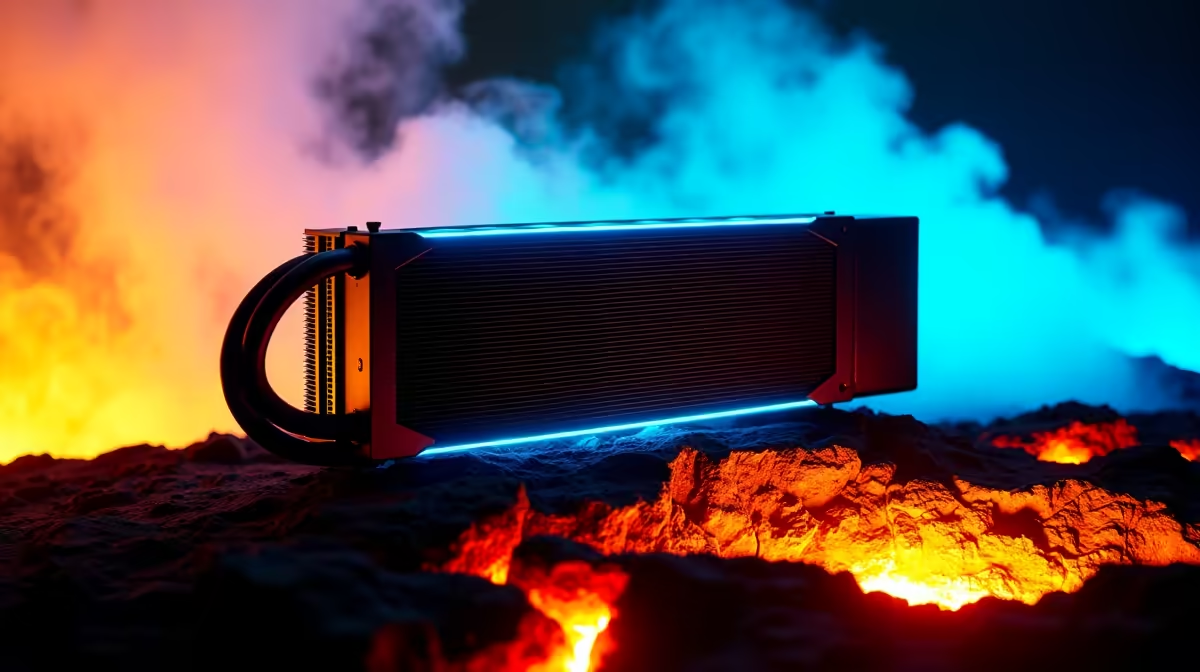
This is where things get serious. AIO liquid coolers use a pump, radiator, and liquid to transfer heat away from the CPU much more efficiently than air. For most AI builds, an AIO is the superior choice.
- Heat Expulsion: AIOs excel at moving heat directly from the CPU to a radiator mounted on the case's edge, expelling it from your system immediately.
- Sustained Performance: They can handle higher thermal loads for longer periods, making them ideal for the marathon sessions typical of AI. The larger the radiator (280mm, 360mm, or even 420mm), the better it will perform.
Considering the intense heat generated by top-tier processors and GPUs found in high-performance NVIDIA GeForce gaming PCs, a robust liquid cooling solution becomes less of a luxury and more of a necessity.
Pro Tip: Customise Your Fan Curve 🔧
Don't just rely on the default "Silent" or "Performance" fan profiles. For AI workloads, head into your BIOS or motherboard software and create a custom fan curve. Set your fans to ramp up more aggressively at lower temperatures (e.g., 70% speed at 60°C) to prevent heat from building up in the first place. It's a small tweak that ensures maximum stability.
Key Factors for Your AI Cooling Setup
Choosing the best cooling for AI PCs involves more than just picking the biggest AIO. You need a holistic approach.
- Case Airflow: The most powerful cooler in the world can't work properly in a sealed hotbox. Ensure your PC case has excellent airflow, with plenty of intake and exhaust fans. This is a fundamental rule whether you're building around components for an AMD Radeon gaming PC or any other platform.
- Component Choice: Modern CPUs and GPUs have a Thermal Design Power (TDP) rating, which gives you an idea of the heat they produce. Always choose a cooler rated well above your CPU's TDP to give yourself thermal headroom.
- System-Wide Thermals: Remember, it's not just the CPU. Your GPU, RAM, and even NVMe SSDs generate significant heat. A well-ventilated case helps cool everything, but for the most demanding builds, you might consider components with their own dedicated heatsinks. This level of thermal management is standard in many purpose-built workstation PCs, which are designed from the ground up for sustained, heavy loads. 🚀
Ultimately, keeping your AI rig cool is foundational to its performance and longevity. By investing in a quality cooling solution, you're not just buying hardware; you're ensuring your machine can deliver the results you need, project after project.
Ready to Build Your AI Powerhouse? Taming the thermal beast of an AI workload is critical. For a machine expertly configured with balanced, high-performance cooling right out of the box, look no further. Explore our range of powerful Workstation PCs and find the perfect rig to accelerate your projects.