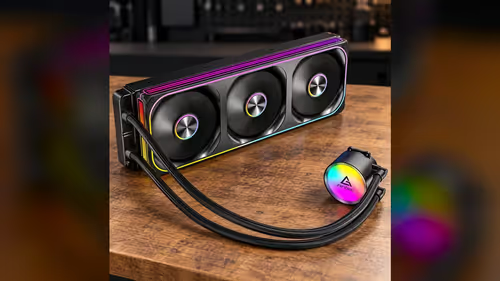
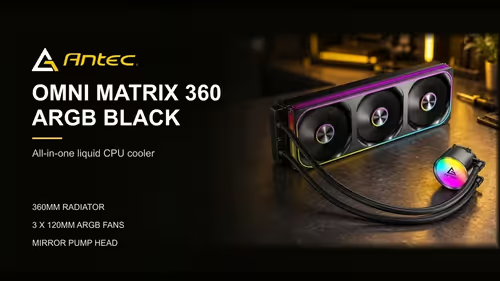
Braided tubing is the part of a liquid cooler you see most, and it is the part that decides how cleanly the loop routes in the case. A braided sleeve protects the inner tube from kinks and abrasion, and it looks neat through a glass panel. It also has to be planned before the block goes on, because the path from the pump head to the radiator sets where the tubes can bend and where they cannot. Here is how to plan the route, what the braid protects against and what to check before you close the case.
Quick Answer
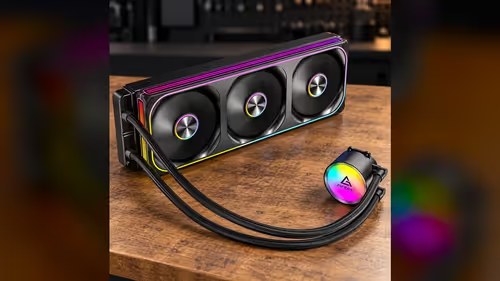
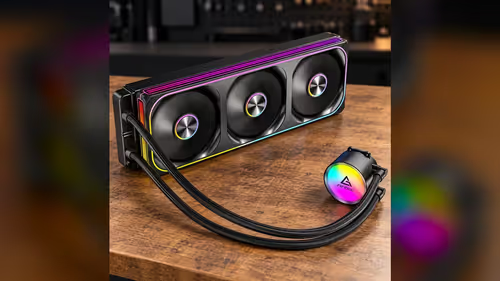
Braided tubing protects the coolant loop, so plan the route before tightening anything. Start with the path from the pump head to the radiator, then check the slack at each bend. The Antec Omni Matrix 360 uses braided tubing and costs R999 at Evetech, and the route should be planned before the block is screwed down.
🧵 What the braid protects against
The braid is a woven sleeve over the inner tube, and it does two jobs. It keeps the tube from kinking when it bends, and it stops the tube rubbing against the case edges and fittings. A kink narrows the path that the coolant takes, and a rub can wear a hole through a thin tube over months. Leave 3cm of slack at each bend so the tube is not pulled tight.
A braid does not make the tube unbendable. Every flexible tube has a tightest bend it can take, and bending beyond that point restricts the flow. The braid makes the tube harder to kink, but routing still needs care.
The braid also looks finished. Through a glass panel, a neat braid shows the loop as a deliberate part of the build, rather than a tangle of tubes behind the board.
🗺️ Planning the route before the block goes on
Start with the pump head and the radiator. The pump head sits on the block, and the radiator mounts to the front or top panel, so the tubing has to bridge the distance between them. Measure that distance with a flexible tape, following the route the tube will take rather than the straight line. Measure the path in centimetres and allow about 3cm more than the straight line.
Mark the bends on the case panel. A bend that comes close to a fan or a radiator fin needs more room, and a bend that is too tight may kink. Plan each bend so the tube has a smooth curve, rather than a sharp turn at the fitting.
Leave slack in the path. A tube pulled tight between the block and the radiator will strain the pump and the fittings, and a few centimetres of slack lets the block move during the mount. Check the slack by moving the radiator slightly while the tube is in place.
🔧 Checking the bends once it is mounted
An AIO arrives sealed, with the coolant already in the loop, so the job is to protect the tubing rather than to fill it. Lay the tube along the planned route before the radiator is screwed down, and check each bend against the case. A bend that touches the panel or a fan blade should be moved before the cooler is fixed in place. Check the bends again after 24 hours of running, when the tube has settled.
Keep the braid clear of the fan blades and the radiator fins. A braid that rests against a fan can rattle at speed, and a braid pressed into the fins can flatten the tube at that point.
Look at the block end as well. The tube should leave the pump head at a gentle angle, and it should not pull on the block when the case panel is moved. A tube that hangs under its own weight near the block is a sign the route needs more slack.
🔍 Checking the loop after the first start-up
Once the PC is running, watch the joints where the tubing meets the block and the radiator for a day. A sealed loop should stay dry, so any damp mark near a joint needs attention straight away. Stop the PC, check the joint, and contact the cooler maker if the mark returns.
Check the pump reading in BIOS as well. A steady reading near the rated 2700RPM confirms the loop is moving, and a reading that drops or disappears is the signal to power down and check the pump lead.
Keep a dry sheet of paper towel under the case for the first few hours. Any drip shows up on the paper before it reaches the board, and a clean sheet after a day is a good sign the loop is settled.
🏠 Working on a bench in a small flat
Most builders in a small flat do the loop work on a desk or a table. Clear the surface, lay out the parts and keep the paper towel in reach. A tidy bench is easier to check than a crowded one, and a small spill is easier to catch on a clean surface.
Store the spare parts in a box with a label. The tubing, fittings and screws are small, and a missing screw is the kind of problem that stops a build for an evening.
The 360mm options, tubing included, are in the liquid CPU coolers range, and everything else is in the CPU coolers category.
Frequently Asked Questions
Why is braided tubing better than plain tubing?
The braid resists kinks and stops the tube from rubbing on the case. It makes the route easier to plan, although the bends still need care.
How do I stop a braid from rattling?
Keep it clear of fan blades and radiator fins, and secure it with a tie or a clip away from moving parts.
What should I check after the first start-up?
Watch the joints for damp marks, confirm the pump reading and check that the tubing has not moved against the case. A dry joint after a day is a good sign.
Can I bend the tubing into a tight curve?
Only within the tube's rated bend. Tighter bends restrict the flow, so plan a gentle curve at each corner.
Planning a liquid loop?
Browse our liquid CPU coolers and plan the tubing route before you add a cooler to your basket.