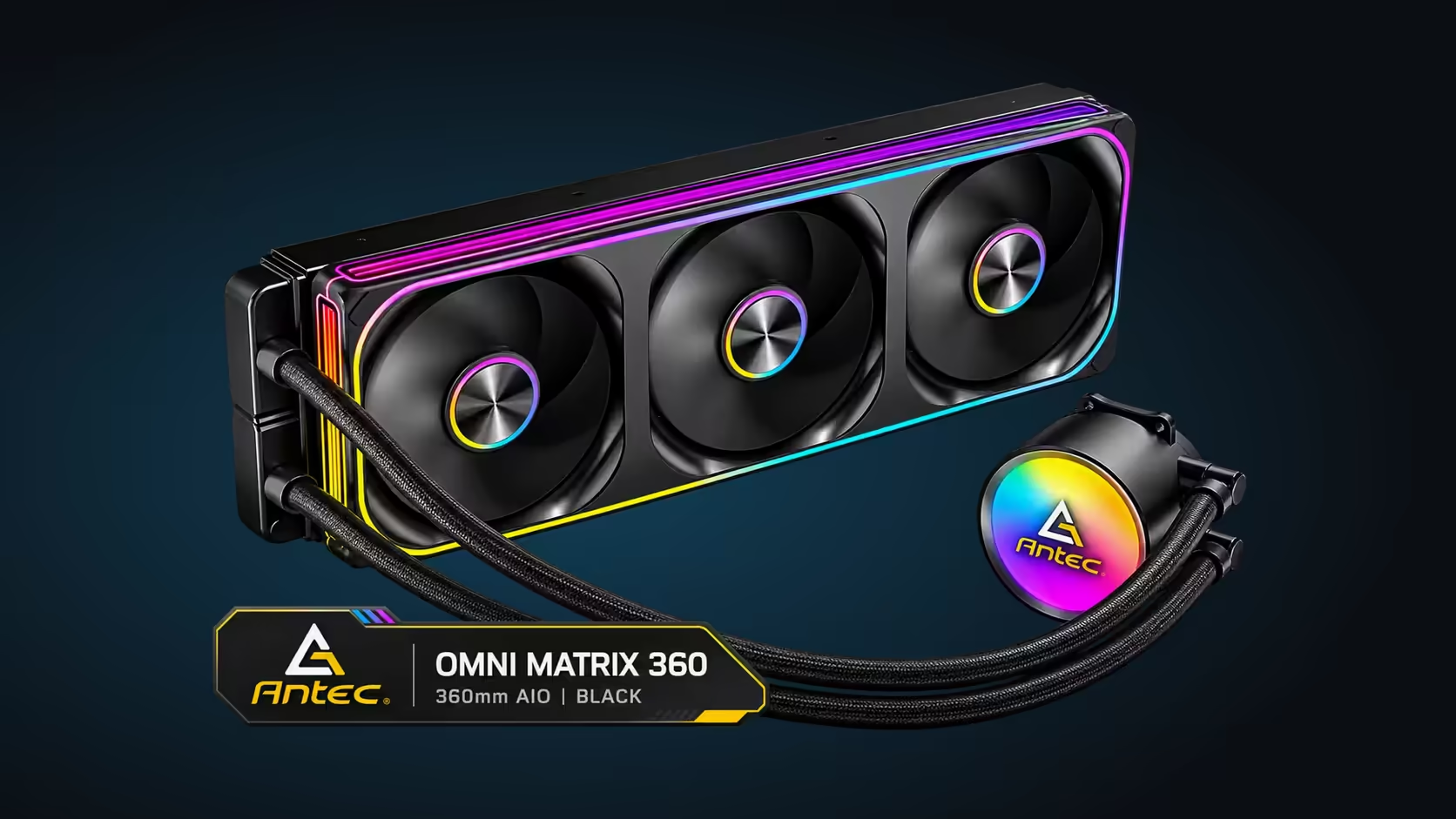
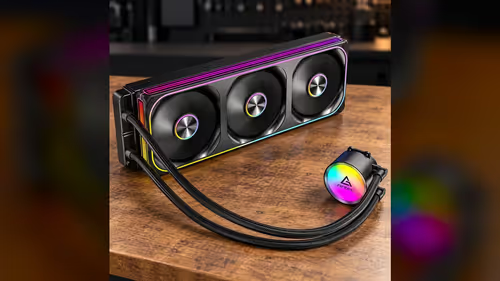
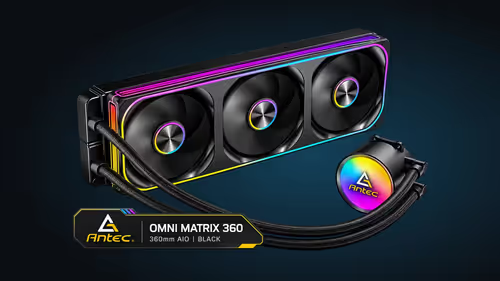
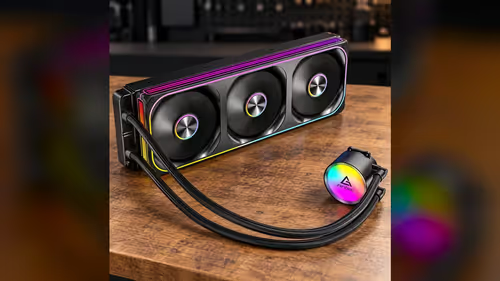
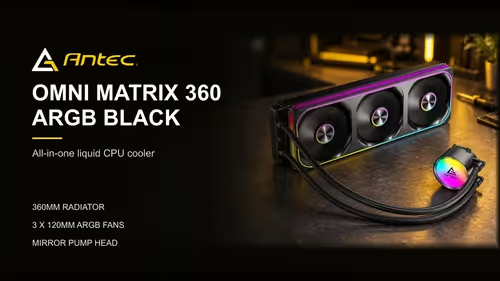
A 360mm radiator asks for a clear run of about 394mm, a depth of roughly 52mm once the fans are mounted and a little breathing room behind it for the tubing. Those three figures are the space budget for the radiator alone, and they are easy to underestimate when the case looks roomy on the spec sheet. Here is how to add up the space a 360mm AIO really needs, what the tubing needs on top of that, and how to leave the radiator a gap it can breathe through.
Quick Answer
A 360mm radiator needs a full slot, plus room for the fans and a gap behind it for the tubing. In practice that means roughly 394mm of length and about 52mm of depth for the radiator and three 120mm fans. The Antec Omni Matrix 360 at R999 needs that full slot in the case, so measure before you commit.
📏 The length: a full slot, not most of one
The radiator is about 394mm long, and that figure is the minimum you need. A slot that is 380mm long will not take it, however much room the case appears to offer. Measure the slot from one edge of the mount to the other, and compare that length with the radiator's own dimensions.
Watch for obstacles along the slot. A front fan, a drive cage or a bracket can sit in the path of the radiator, and each one shortens the usable length. Remove or relocate the obstacle, or choose a different mount, if the clear run comes out short.
Do not forget the screws. Radiator screws and brackets sit at the edge of the mount, and they take up a few millimetres of length. Check the mount's hole positions against the radiator's own mounting points before you decide that the slot is long enough.
📐 The depth: radiator plus fans
Depth is the distance the radiator and fans take up from the case panel. A 360mm radiator is about 27mm thick, and each 120mm fan is about 25mm thick. The three fans sit side by side across the radiator, so they add one fan thickness to the depth rather than three.
In most builds the fans sit on the outside of the radiator, which puts the total depth at about 52mm for the radiator and one layer of fans. Some builds mount the fans on the inside too, and that adds a second layer. Measure from the case wall to the front or top panel, then subtract the depth of the radiator and fans to see how much room is left for the tubing.
A tight depth can crush the tubing or the fan cables against the panel. Leave a few millimetres of space at the back of the radiator, and check the fans' cables before you close the panel.
🪢 The space behind the radiator
The tubing needs room to bend, and the bend has to stay gentle enough to avoid a kink. A kink restricts the flow and can crack the tubing over time, so the gap behind the radiator is more than a cosmetic detail. Plan the tubing path before the radiator goes in, and make sure the path has room for the bends. Leave about 5cm behind the radiator so the tubing has room to bend.
The cables for the fans and the pump need room too. A pump lead that runs behind the radiator and presses against the panel can strain its connector. Route the leads behind the motherboard tray where you can, and tie them off so they do not touch the radiator's fins.
The gap behind the radiator also lets air flow. A radiator pressed hard against the case front or top starves its fans of the air they need, so leave the gap open and check that the case panel has vents where the air can leave.
🧭 Choosing a mount with the right budget
Start with the mount that gives the longest clear run. A top mount is often the longest, and a front mount may share the slot with a fan or a drive cage. Measure both, and pick the one with the most room after the obstacles are counted.
Next, check the depth against the front panel. Many front panels have a limit on how deep the radiator can sit, and a radiator that touches the panel will not fit. Measure from the case wall to the panel, then compare the depth against the radiator and fans.
Finally, leave yourself a margin. A few millimetres of slack in length and depth makes the fitting easier and reduces the risk of a crushed tube. If the numbers come out exactly at the limit, look at a larger case before you buy the cooler.
Our mid tower cases range shows the cases with a 360mm mount, and the full tower cases range gives more room in each direction. The CPU coolers category shows the radiator sizes that suit each case.
Frequently Asked Questions
How long is a 360mm radiator?
It is about 394mm long. The case slot has to be at least that long, and obstacles such as a fan or a drive cage reduce the usable length.
How deep is a 360mm radiator with its fans?
The radiator is about 27mm thick and each 120mm fan about 25mm, so the radiator with one layer of fans comes to roughly 52mm. Add a second layer if the fans sit on both sides.
Why does the gap behind the radiator matter?
It gives the tubing room to bend without kinking, and it lets the fans draw air through the fins. A radiator pressed against the panel can starve for air.
Can a full tower case take a 360mm radiator more easily?
Often yes, because a full tower has more room in every direction. Check the mount and the depth before you buy the cooler.
Measuring a case for a 360mm loop?
Browse our mid tower and full tower cases, and check the radiator slot before you choose a cooler.